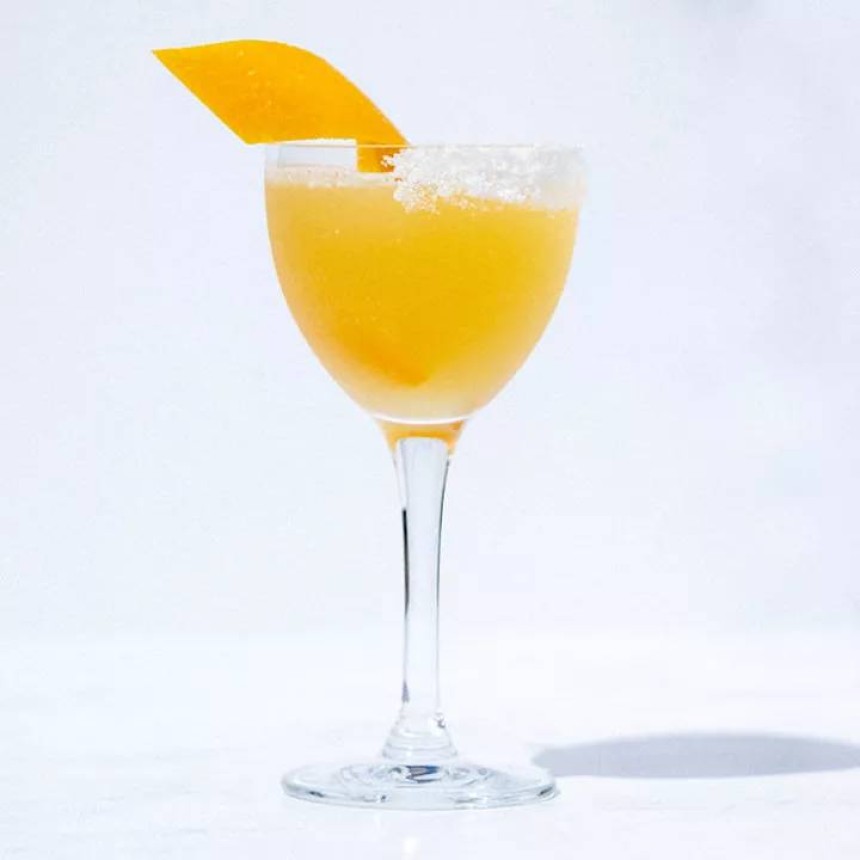

Sidecar
The Sidecar, with a century of history behind it, is probably the most famous of all classic cognac drinks, and it remains a favorite today. The tart, dry cocktail features cognac.
The Sidecar was likely invented around World War I. It graced the pages of two books in 1922: “Harry’s ABC of Mixing Cocktails” by Harry MacElhone and “Cocktails and How to Mix Them” by Robert Vermeire. Both books listed the recipe with equal parts cognac, Cointreau and lemon juice, but subsequent versions altered the ratios, calling for two parts cognac, one part Cointreau and one part lemon. The latter formula is still common today and is used for this recipe.
The sugared rim is optional when making a Sidecar, but considering that this cocktail lands on the drier side of the sweetness spectrum, a few sugar granules with each sip provide a welcome treat.
How the Sidecar got its name is a source of debate: Both a French and English bar claim to have invented the cocktail for a customer who arrived at the location in the sidecar of a motorcycle. That seems plausible enough.
Bar veteran Dale DeGroff, however, says the drink’s name references the mixture that’s left in the shaker after straining and served in a shot glass on the side. This bonus is called, that’s right, a sidecar. You don’t have to serve a little shot alongside your Sidecar, but it’s a sure way to elicit smiles from whomever you’re serving—and it’s a great segue to tell the origin story of the cocktail.
Ingredients
- 1 1/2 ounces cognac
- 3/4 ounce orange liqueur (such as Cointreau)
- 3/4 ounce lemon juice, freshly squeezed
- Garnish: orange twist
- Garnish: sugar rim (optional)
Steps
- Coat the rim of a coupe glass with sugar, if desired, and set aside.
- Add the cognac, orange liqueur and lemon juice to a shaker with ice and shake until well-chilled.
- Strain into the prepared glass.
- Garnish with an orange twist.
What Sidecar actually teaches you
A useful guide turns confusion into a repeatable process. Sidecar should leave you with measurements, shopping rules, and a short practice plan — not vague inspiration.
Core concepts to lock in
- Balance: spirit, sugar, acid, dilution.
- Temperature: cold glassware and solid ice.
- Freshness: citrus, herbs, and vermouth age in real time.
- Seasoning: salt, bitters, and peels change aroma dramatically.
Practice plan for the next seven days
- Day 1–2: master one base recipe for Sidecar.
- Day 3–4: change only one variable at a time.
- Day 5: batch a small pitcher for guests.
- Day 6–7: write your house ratio on a card and stick it inside the bar cabinet.
Gear that matters (and gear that does not)
You need a jigger, shaker or mixing glass, strainer, and peeler. You do not need twelve obscure tinctures on day one. Spend on ice trays and fresh produce before collectible glassware.
Troubleshooting Sidecar
Too hot? Dilute longer or lower the proof. Too flat? Add citrus oils or a pinch of salt. Too sweet? Cut syrup and extend stir time. These micro-fixes keep Sidecar consistent across nights.
Keep learning with AtoZ Vodka
Revisit this guide after a dozen serves. Your palate will change, and so will your preferred ratio. That loop — taste, note, adjust — is the real skill behind every confident pour.
Shopping list for Sidecar
- Primary bottle for Sidecar
- Fresh citrus
- Simple syrup or quality liqueur
- Solid ice
- One reliable garnish
What makes Sidecar worth ordering
Exact ratios and measurements (US & UK)
Ingredient quality checklist
Step-by-step serve method
Common mistakes and easy fixes
When to serve it and what to pair
Ask AI about this article
Pick a prompt, copy it, or open ChatGPT with this article preloaded.
Frequently Asked Questions
What is the best way to make Sidecar at home?
Chill your glass, measure each component for Sidecar, use fresh modifiers, and taste before serving. Small half-barspoon adjustments beat rebuilding the drink.
Which ingredients matter most in Sidecar?
A clean base spirit, fresh citrus or quality vermouth/liqueur, solid ice, and an aromatic garnish. Weak ice and stale modifiers cause most failures.
What measurements should US and UK readers use?
Use a jigger marked in ounces and millilitres. A typical starting point is 60 ml (2 oz) base spirit with 30 ml (1 oz) modifier, then tune to taste.
How do I store bottles used for Sidecar?
Keep spirits upright and away from heat or sunlight. Refrigerate vermouth and other low-ABV modifiers after opening and finish them within a few weeks for best flavour.
Comments 0
Login to Post comments