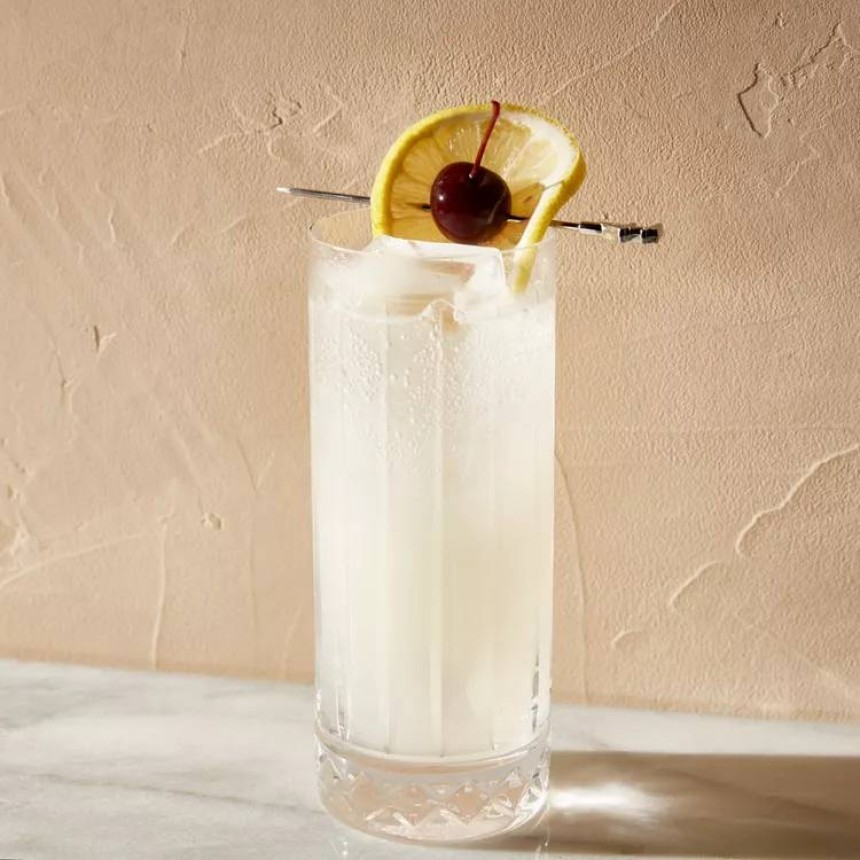

Tom Collins Variations Guide
The Tom Collins is arguably the most recognizable example of the Collins family of drinks. Generally speaking, a Collins simply means a sour cocktail (those involving a spirit mixe.
There’s some debate as to the origin of the Tom Collins. According to drinks historian David Wondrich, the drink is probably derived from the gin punches that gained popularity during the early 19th century. A common story is that an enterprising barkeep who worked for Limmer's Hotel in Lodon, John Collins, named the concoction after himself. However, it's arguable whether Collins actually invented the combination of ingredients, or just helped to bring it to the masses. Regardless, these early iterations of the the cocktail were typically made with either genever or Old Tom gin, resulting in the cocktail eventually becoming known as a Tom Collins rather than John Collins.
The Tom Collins was immortalized in Harry Johnson’s 1882 book, New and Improved Bartender’s Manual: Or How to Mix Drinks of the Present Style, but has been featured in countless iconic bartending manuals since. It has remained popular for over a century, and helped create the template for other sour-sparkling beverages like the French 75 and many modern spritzes.
Why the Tom Collins Works
The Tom Collins is basically just a gin sour that's been lengthened with soda water—essentially a gin-sour spritz. The same building blocks that make any sour drink work are at play here, consisting of a balance of sweet and sour in the form of simple syrup and lemon juice, mixed with a similar volume of distilled spirit.
Gin is commonly associated with sour cocktails, and botanicals of dried lemon or orange peel are such a staple of the category that most gin styles and brands will take well to the additional lemon or lime juice. Soda water helps to provide welcome dilution, allowing the gin's more subtle botanicals to present themselves and avoid being completely overwhelmed by the potent influence of fresh lemon and sugar. The carbonation, in addition to providing texture to the drink, wakes up the palate and keeps it refreshed, to avoid drink fatigue.
All together, the Tom Collins, along with the Highball, helped to popularize the concept of long drinks, which tend to be lower in alcohol by volume and more suitable to sipping over extended periods of time. It's template helped usher in an era where cocktails were seen as refreshment, rather than just a vehicle to consume alcohol.
Ingredients
- 2 ounces London dry gin
- 1 ounce lemon juice, freshly squeezed
- 1/2 ounce simple syrup
- Club soda, to top
- Garnish: lemon wheel
- Garnish: maraschino cherry
Steps
- Add the gin, lemon juice and simple syrup to a Collins glass.
- Fill with ice, top with club soda and stir.
- Garnish with a lemon wheel and maraschino cherry (optional).
What Tom Collins Variations Guide actually teaches you
A useful guide turns confusion into a repeatable process. Tom Collins should leave you with measurements, shopping rules, and a short practice plan — not vague inspiration.
Core concepts to lock in
- Balance: spirit, sugar, acid, dilution.
- Temperature: cold glassware and solid ice.
- Freshness: citrus, herbs, and vermouth age in real time.
- Seasoning: salt, bitters, and peels change aroma dramatically.
Practice plan for the next seven days
- Day 1–2: master one base recipe for Tom Collins Variations Guide.
- Day 3–4: change only one variable at a time.
- Day 5: batch a small pitcher for guests.
- Day 6–7: write your house ratio on a card and stick it inside the bar cabinet.
Gear that matters (and gear that does not)
You need a jigger, shaker or mixing glass, strainer, and peeler. You do not need twelve obscure tinctures on day one. Spend on ice trays and fresh produce before collectible glassware.
Troubleshooting Tom Collins
Too hot? Dilute longer or lower the proof. Too flat? Add citrus oils or a pinch of salt. Too sweet? Cut syrup and extend stir time. These micro-fixes keep Tom Collins Variations Guide consistent across nights.
Keep learning with AtoZ Vodka
Revisit this guide after a dozen serves. Your palate will change, and so will your preferred ratio. That loop — taste, note, adjust — is the real skill behind every confident pour.
What makes Tom Collins Variations Guide worth ordering
Exact ratios and measurements (US & UK)
Ingredient quality checklist
Step-by-step serve method
Common mistakes and easy fixes
When to serve it and what to pair
Ask AI about this article
Pick a prompt, copy it, or open ChatGPT with this article preloaded.
Frequently Asked Questions
What is the best way to make Tom Collins at home?
Chill your glass, measure each component for Tom Collins, use fresh modifiers, and taste before serving. Small half-barspoon adjustments beat rebuilding the drink.
Which ingredients matter most in Tom Collins Variations Guide?
A clean base spirit, fresh citrus or quality vermouth/liqueur, solid ice, and an aromatic garnish. Weak ice and stale modifiers cause most failures.
What measurements should US and UK readers use?
Use a jigger marked in ounces and millilitres. A typical starting point is 60 ml (2 oz) base spirit with 30 ml (1 oz) modifier, then tune to taste.
How do I store bottles used for Tom Collins?
Keep spirits upright and away from heat or sunlight. Refrigerate vermouth and other low-ABV modifiers after opening and finish them within a few weeks for best flavour.
Comments 0
Login to Post comments