Blueberry Vodka Explained: Flavour, Labels and Better Cocktail Choices
What exactly are you buying when a bottle says blueberry vodka , and how should that information change the way you mix it? The name sounds…
- The name sounds straightforward, but bottles can differ sharply in sweetness, alcohol strength, colour and resemblance to fresh fruit.
- By the end of this guide, you will be able to identify the style in front of you and make at least one useful decision: whether to treat it as the base spirit, a flavouring component or a sweeter modifier in a drink.
- In everyday use, blueberry vodka means a vodka-based spirit with blueberry as its principal advertised flavour.
- It is an umbrella description rather than a promise of one production method.
- A homemade infusion made by steeping berries in vodka also fits the casual description, but it is not necessarily comparable with a bottled product formulated for consistency.
What exactly are you buying when a bottle says blueberry vodka, and how should that information change the way you mix it? The name sounds straightforward, but bottles can differ sharply in sweetness, alcohol strength, colour and resemblance to fresh fruit. By the end of this guide, you will be able to identify the style in front of you and make at least one useful decision: whether to treat it as the base spirit, a flavouring component or a sweeter modifier in a drink.
What blueberry vodka is—and is not
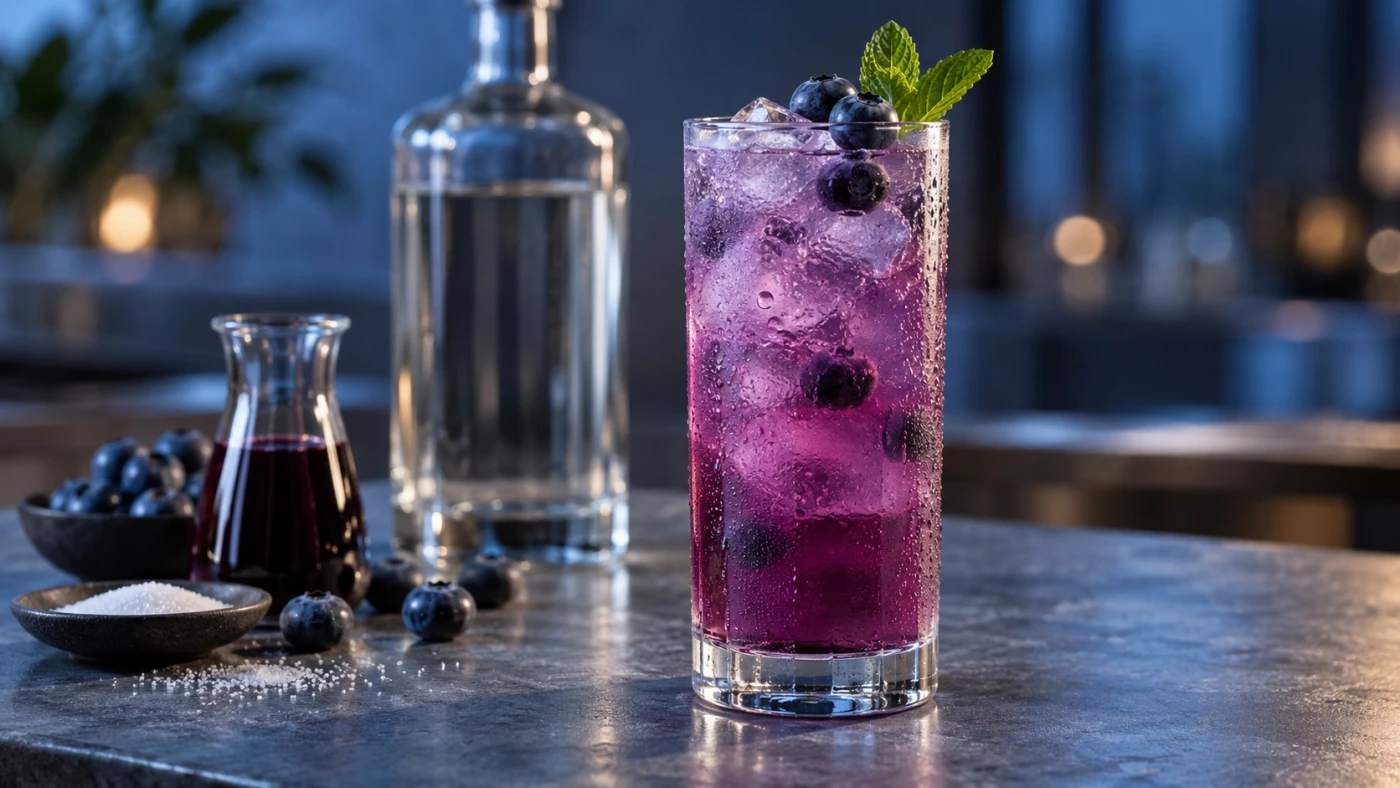
In everyday use, blueberry vodka means a vodka-based spirit with blueberry as its principal advertised flavour. It is an umbrella description rather than a promise of one production method. The flavour might come from natural flavouring preparations, fruit-derived ingredients, other permitted flavouring materials or a combination chosen by the producer. A homemade infusion made by steeping berries in vodka also fits the casual description, but it is not necessarily comparable with a bottled product formulated for consistency.
In the United States, distilled spirits labels must carry an appropriate class, type or other designation. TTB guidance distinguishes vodka from products made with flavouring ingredients and explains that a flavoured product must be designated accordingly. The agency also requires the brand name, alcohol content and class or type designation to appear in the same field of vision. For shoppers, that makes the complete legal designation and ABV more informative than the large decorative words on the front. See the TTB anatomy of a distilled spirits label and its ruling on flavoured vodka.
UK rules and terminology are not identical in every jurisdiction. Government guidance notes differences between Great Britain and Northern Ireland, so consumers should rely on the product's displayed name, ingredients or allergen information where supplied, and stated alcoholic strength rather than assuming that two similarly marketed bottles belong to precisely the same legal category. The official overview is available in the UK guidance on labelling spirit drinks.
Why blueberry is a difficult flavour to judge
A blueberry does not owe its identity to a single dominant aroma compound. Research describes blueberry aroma as an interaction among numerous volatile compounds, with the balance varying by species, cultivar and ripeness. This helps explain why plausible blueberry flavours can point in different directions: floral and fresh, green and lightly herbal, dark and jammy, or overtly sweet and confectionery.
Flavour perception also involves more than aroma. Sugar can make berry notes seem fuller but can hide acidity and reduce definition when overused. Alcohol carries aroma and contributes heat. Acidity supplies contrast and often makes a soft berry profile seem more vivid. Consequently, two bottles with similar blueberry aromas may behave very differently once diluted in a cocktail.
Colour is a particularly weak shortcut. Blueberries contain anthocyanin pigments whose colour and stability are affected by pH, light, oxygen and temperature. A scientific review of blueberry anthocyanins and their stability documents this sensitivity. That supports a limited practical conclusion: a change in hue after adding citrus can be chemically plausible. It does not prove that a drink is unsafe or that a particular bottle contains a specified quantity of real fruit. Nor does an intense purple colour establish flavour quality.
Read the bottle as a mixing specification
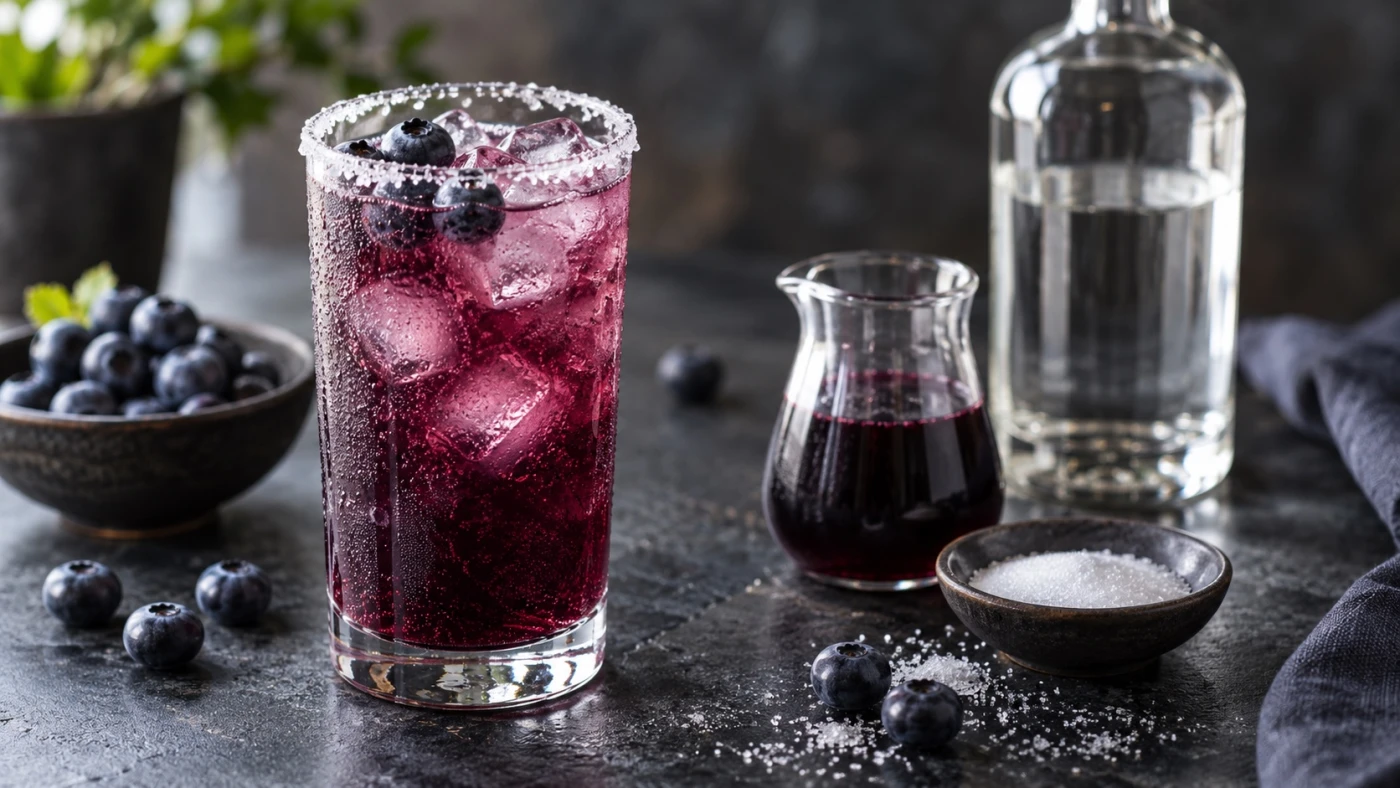
Use three observations together: legal description, ABV and sensory balance. None tells the whole story alone, but together they indicate the role the bottle can play.
| What you observe | What it may imply | Practical response |
|---|---|---|
| Vodka-strength product with restrained sweetness | More likely to function as the main spirit | Build around it as you would another vodka, then add acidity or sweetness gradually. |
| Lower ABV with an obviously sweet palate | May behave more like a sweetened flavour component | Reduce other syrups or liqueurs and avoid assuming a direct swap for plain vodka. |
| Subtle berry aroma | Strong modifiers can cover it quickly | Begin with soda, dry sparkling wine or restrained citrus rather than several competing fruit flavours. |
| Jammy or confectionery profile | The bottle already supplies richness and perceived sweetness | Use tart citrus, unsweetened soda or a dry herbal accent to create contrast. |
| Noticeable alcohol heat | The drink may need dilution as well as flavour balance | Account for ice melt or a longer mixer instead of trying to conceal heat with more sugar. |
These are diagnostic cues, not legal conclusions about production. Unless the producer provides a formula or specific manufacturing information, you usually cannot determine from taste whether the flavour came from whole fruit, an extract or a composed flavour system.
How to apply the concept in cocktails
First taste a small amount of the vodka at room temperature or only lightly chilled. Extreme cold suppresses aroma and can make sweetness harder to assess. Ask three focused questions: Is the blueberry delicate or forceful? Is the finish dry or sweet? Does the alcohol feel soft or hot?
For a delicate, relatively dry style, preserve the aroma. Carbonated water, a modest amount of lemon, or a dry sparkling component can lengthen the drink without burying the fruit. For a sweet, jam-like style, introduce contrast before adding any more sugar. Lemon supplies direct acidity; lime is more assertive and can pull the drink toward a sharper tropical profile. Dry vermouth or a restrained herbal ingredient can add structure, although heavy bitterness may dominate a faint blueberry note.
In a vodka sour or similar shaken format, do not assume the usual sweetener quantity will still work after replacing plain vodka. Add the acidic and sweet components conservatively, taste, and correct one variable at a time. If the drink is dull and syrupy, more dilution or acidity may help; another berry syrup usually will not. If it is thin and aggressively tart, a small sweetness adjustment can restore body.
Blueberry vodka is often easiest to understand in a simple highball before using it in a complex cocktail. A neutral carbonated mixer exposes the bottle's sweetness, aroma and finish. That trial tells you whether the spirit can carry a drink on its own or is better blended with plain vodka when you want blueberry aroma without excessive sweetness.
Common misconceptions
“Blueberry vodka is just plain vodka with blueberries added.” That describes one possible home infusion, not the entire commercial category. Producers may use different permitted flavouring and colouring approaches, and the label should be read for the product's actual designation.
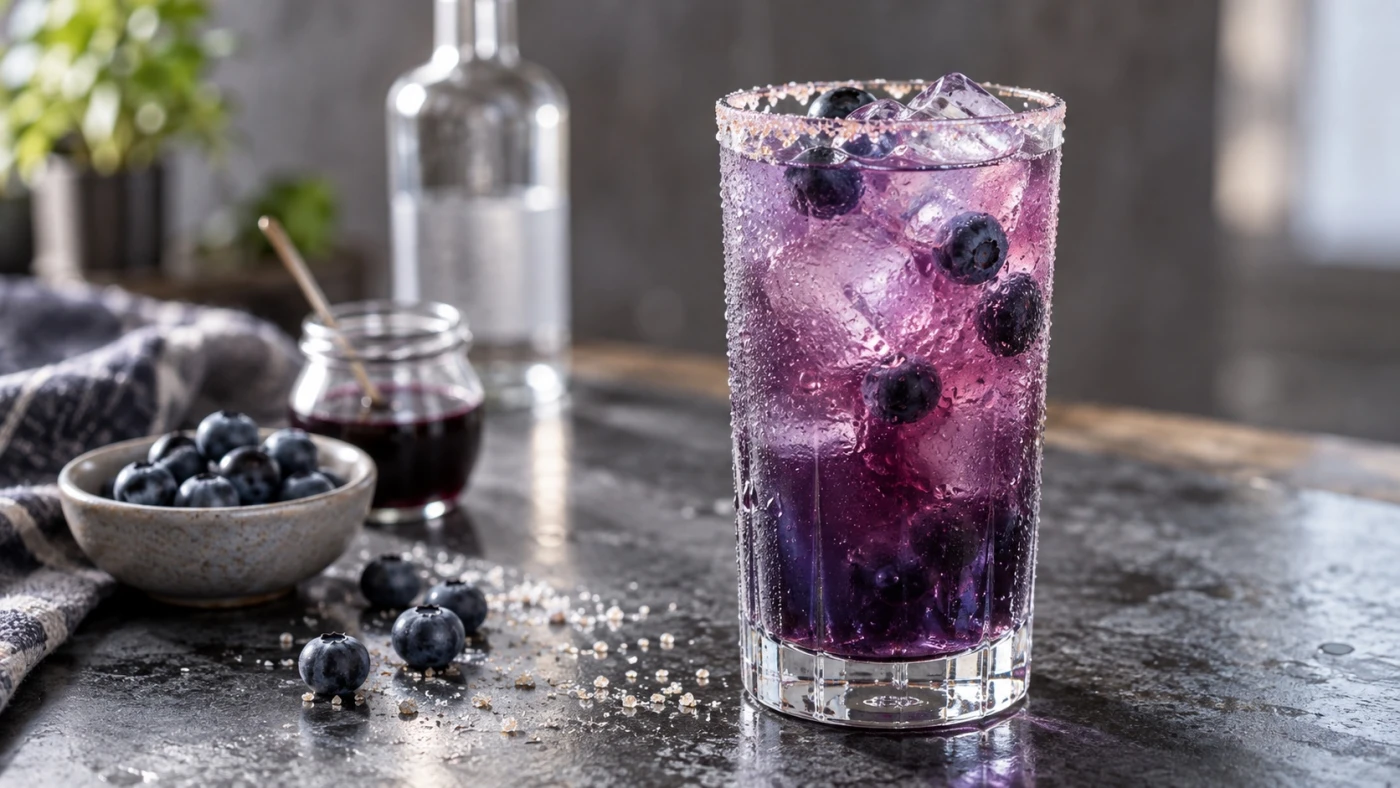
“More colour means more blueberry flavour.” Pigment intensity is not a reliable measure of aroma, fruit content or quality. Colour can also shift as the chemical environment changes.
“All flavoured vodka is sweet.” Flavour and sweetness are separate attributes. Some expressions are dry and aromatic; others contribute enough sweetness to change a cocktail's balance substantially.
“Fresh blueberries will automatically intensify a weak bottle.” Whole berries can add colour, pulp, water, acidity and some aroma, but the result depends on the fruit and preparation. They may change texture more noticeably than aroma, especially when cold or underripe.
“The strongest blueberry aroma makes the best cocktail.” Intensity is only useful in context. A forceful candy-like profile may work in a tall, tart drink but overwhelm a restrained martini-style serve. The better choice is the one whose sweetness, strength and flavour direction fit the intended drink.
What the available evidence cannot tell you
Label rules can clarify how a product must be presented, and food-science research can explain why blueberry aroma and pigment vary. Neither source can rank every bottle or reveal an undisclosed commercial formula. Without producer documentation, claims about a particular brand using whole berries, a specific extraction process or a precise sugar level should be treated as unverified. For buying and mixing, the defensible approach is simpler: read the full designation and ABV, assess sweetness and flavour directly, and adjust the rest of the drink around what is actually in the glass.
Ask AI about this article
Pick a prompt, copy it, or open ChatGPT with this article preloaded.
Frequently Asked Questions
Why does one blueberry vodka taste fresh while another tastes like sweets?
Blueberry aroma is produced by a combination of volatile compounds rather than one defining molecule. Producers can build different interpretations of that profile, while sweetness, acidity and alcohol strength further change how the flavour is perceived.
Should blueberry vodka replace plain vodka in a cocktail without other changes?
Not automatically. First compare the flavoured vodka with the original spirit for sweetness, acidity and intensity. A sweeter replacement may need less syrup or liqueur, while a subtle one may need fewer strongly flavoured modifiers.
Does a deep purple colour prove that blueberry vodka contains more fruit?
No. Colour alone does not reveal the amount or type of fruit material used. Blueberry pigments also respond to factors such as acidity, light and temperature, and commercial products may use permitted colouring.
Comments 0
Login to Post comments