Vodka and Ginger Ale: How the Simple Highball Works
What makes vodka and ginger ale taste balanced rather than merely alcoholic, sweet and fizzy? The answer lies in the relationship between spirit…
- Once you understand those variables, you can choose a sensible proportion, estimate the drink's strength and correct common problems without relying on a rigid formula.
- Vodka and ginger ale is a mixed highball: vodka provides alcohol, body and sometimes subtle flavour, while ginger ale supplies most of the drink's volume, sweetness, aroma and carbonation.
- It is often served over ice in a tall glass.
- That means the useful question is not simply whether the two ingredients work together, but how their proportions change the result.
- It should not automatically be treated as a Moscow Mule.
What makes vodka and ginger ale taste balanced rather than merely alcoholic, sweet and fizzy? The answer lies in the relationship between spirit strength, mixer sweetness, ginger intensity, carbonation and ice dilution. Once you understand those variables, you can choose a sensible proportion, estimate the drink's strength and correct common problems without relying on a rigid formula.
What vodka and ginger ale actually is
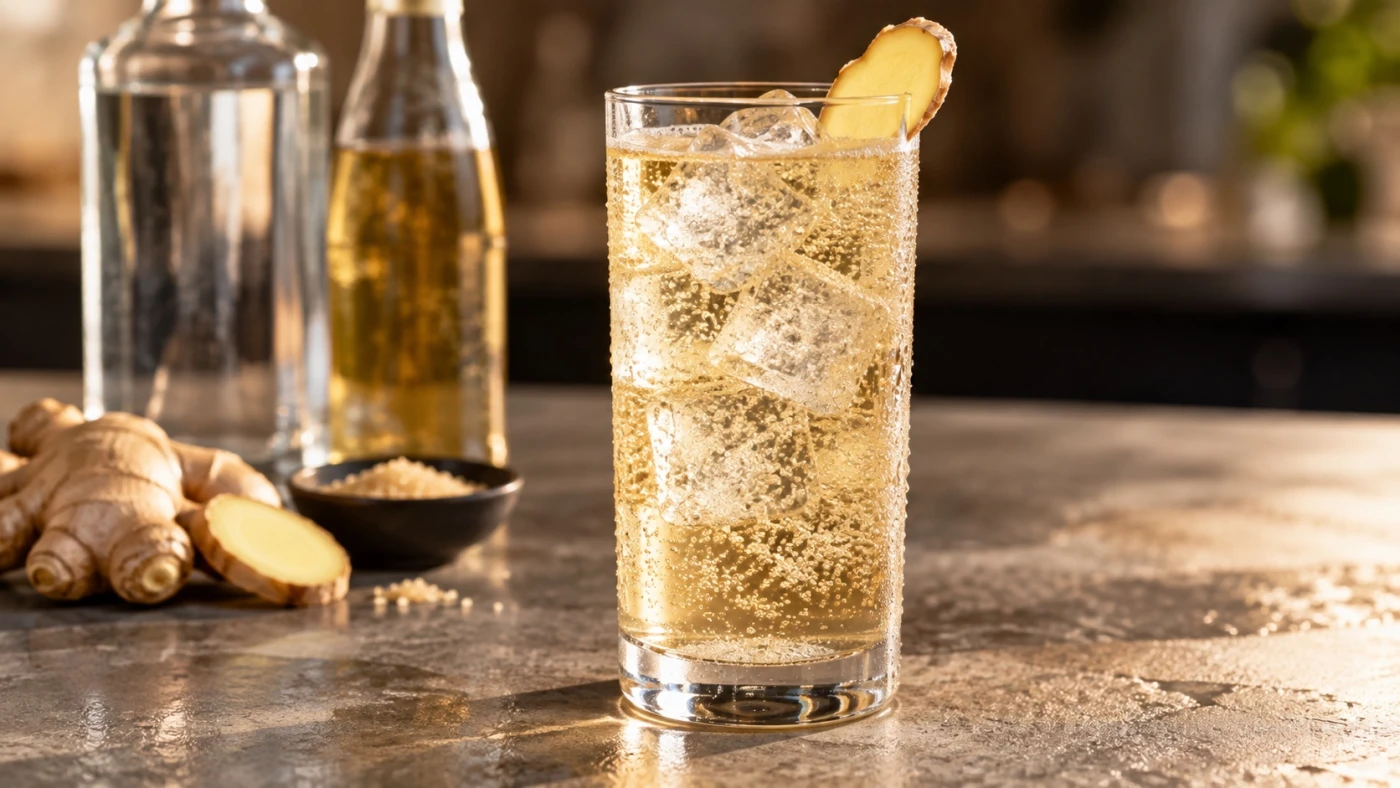
Vodka and ginger ale is a mixed highball: vodka provides alcohol, body and sometimes subtle flavour, while ginger ale supplies most of the drink's volume, sweetness, aroma and carbonation. It is often served over ice in a tall glass.
The name describes a combination rather than one universally codified recipe. Brands of ginger ale vary in sweetness and ginger intensity, and vodkas vary in bottling strength and sensory character. That means the useful question is not simply whether the two ingredients work together, but how their proportions change the result.
It should not automatically be treated as a Moscow Mule. A Mule is generally built around ginger beer and lime. Ginger beer commonly presents a more forceful ginger character, whereas ginger ale is often milder and sweeter. Product styles vary, so the label alone cannot predict exactly how spicy or dry a particular mixer will taste.
Why the balance changes
The vodka sets the alcoholic structure
Vodka is comparatively neutral, but it is not sensory nothingness. Its alcohol concentration affects warmth, weight and the way aromas are perceived. Differences among products may also remain noticeable through texture or faint grain, fruit, mineral or pepper-like impressions, although a strongly flavoured ginger ale can obscure them.
Check the bottle's alcohol by volume rather than assuming every vodka has the same strength. US distilled-spirit labels express alcohol content as a percentage by volume; the US Alcohol and Tobacco Tax and Trade Bureau is the relevant federal authority for labelling and standards.
The ginger ale controls more than ginger flavour
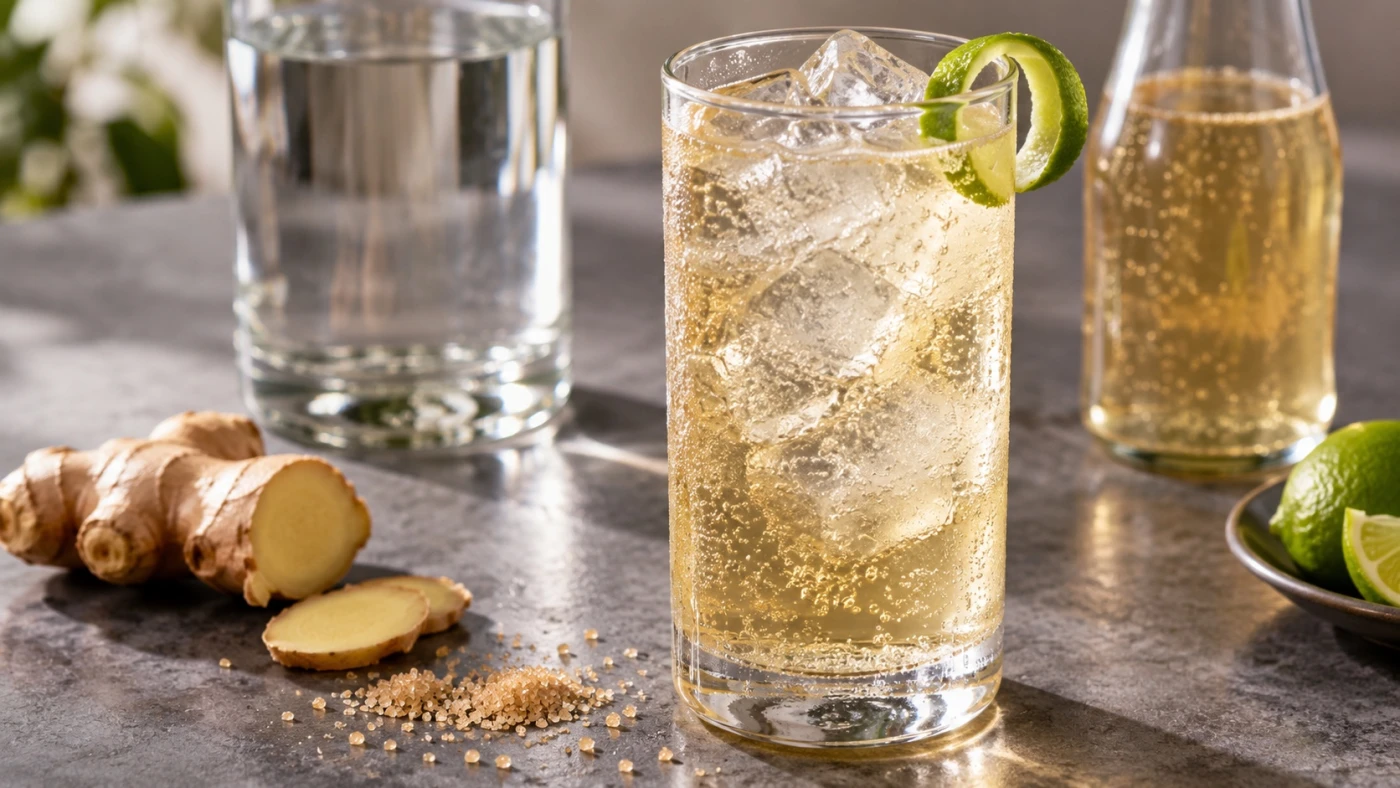
Ginger ale contributes dissolved sugar or sweetener, acidity, ginger flavour and carbon dioxide. Increasing its share usually lowers the drink's alcohol concentration and perceived heat, but it may also increase sweetness. A drier or more assertive ginger ale can therefore support a larger pour without making the highball seem as sugary as a softer product might.
Carbonation also shapes perception. Bubbles can make a drink feel lighter and can carry aroma upward, but that liveliness fades as carbon dioxide escapes. Warm mixer, prolonged stirring and repeated pouring between vessels generally accelerate the loss of fizz.
Ice changes the drink after it is poured
Ice chills the highball and introduces water as it melts. That dilution can soften alcoholic heat and integrate the flavours, but continued melting eventually makes both vodka and ginger taste weaker. The exact amount of dilution cannot be predicted from the ingredient list alone because it depends on ice, starting temperature, glass, room conditions and drinking time.
Cold vodka and cold ginger ale reduce the amount of melting required to chill the drink. A glass well filled with sound ice also tends to remain colder than one containing only a few small, already-wet cubes.
Applying the concept to your next pour
A useful starting proportion is one part vodka to three parts ginger ale. For one drink, that could mean 1.5 US fl oz (about 45 ml) vodka and 4.5 US fl oz (about 135 ml) ginger ale. Those quantities total 6 US fl oz, or about 180 ml, before ice. Build the drink over ice in a 10–12 US fl oz (approximately 300–355 ml) highball glass so the liquid, ice and carbonation have adequate room. Add the ginger ale gently and give the drink only a brief stir.
This is an editorial starting point, not a universal standard. If the drink tastes hot or the ginger disappears, increase the ginger ale. If it tastes like sweet soda with little structure, use a smaller mixer proportion, choose a drier ginger ale or confirm that the vodka measure was accurate. Change one variable at a time so you can identify what improved the balance.
Acidity can help when sweetness feels broad or heavy. A small squeeze of lime changes perceived balance without removing any sugar. Because mild ginger ale is easily covered, add citrus incrementally rather than treating a large lime measure as compulsory.
How strong is vodka and ginger ale?
You can estimate pre-dilution strength by multiplying the vodka volume by its decimal ABV, then dividing by the combined liquid volume. Using 1.5 US fl oz of 40% ABV vodka and 4.5 US fl oz of non-alcoholic ginger ale:
(1.5 × 0.40) ÷ 6 = 0.10, or approximately 10% ABV before ice dilution.
The metric version gives the same result: (45 ml × 0.40) ÷ 180 ml = 10%. Melting ice will reduce the concentration, but the finished value cannot be stated precisely without measuring the added water. A larger glass or more mixer can make a drink look or taste lighter without changing how much pure alcohol was poured, so measure the vodka rather than judging strength by appearance.
Buying decisions that make a practical difference
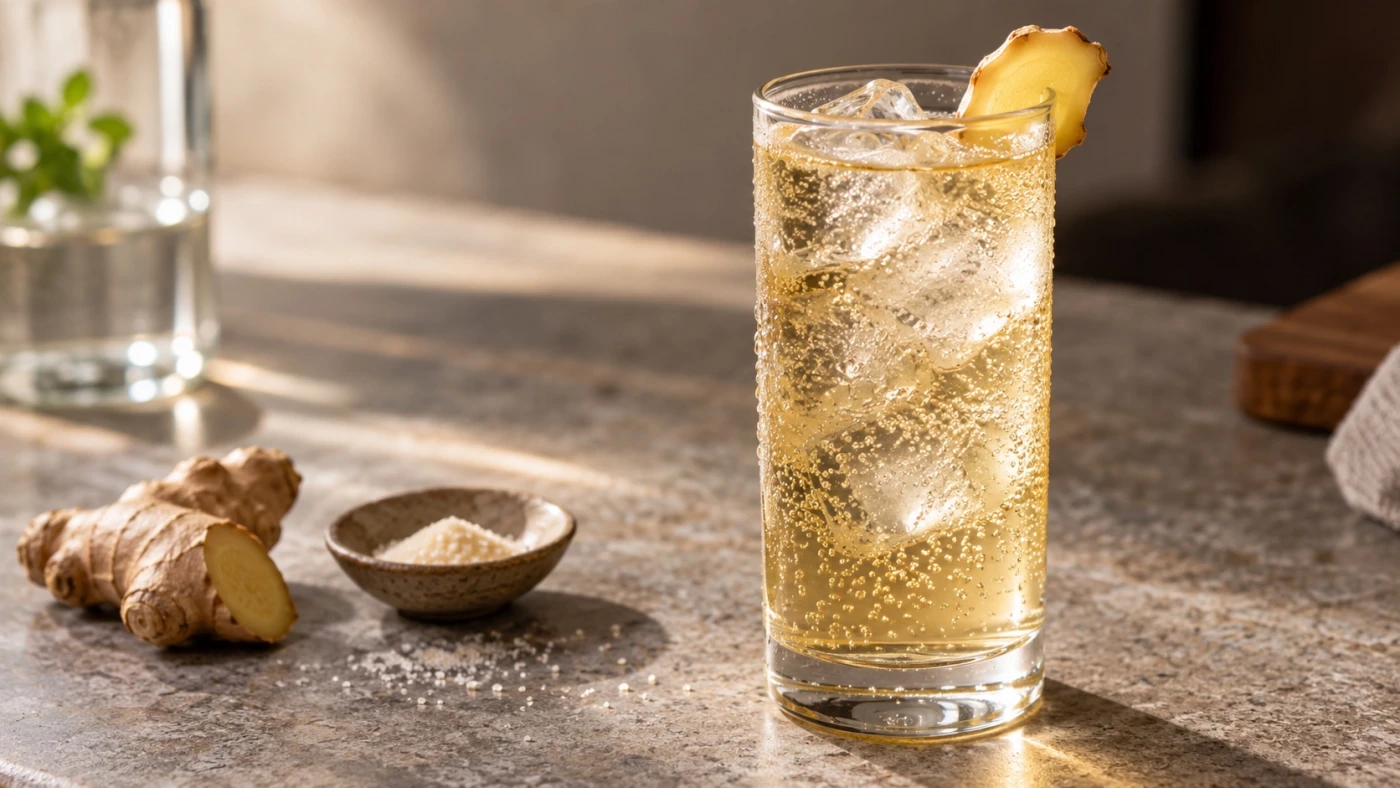
Choose the ginger ale first if you want the most noticeable change. Compare nutrition information where available, then consider whether the product tastes dry, sweet, citrus-led or strongly gingery. Labels can reveal sugar content, but they cannot fully describe perceived sweetness because acidity, flavour intensity and serving temperature also influence it.
For vodka, prioritise the labelled ABV and a flavour profile that suits the mixer. A clean, restrained vodka keeps attention on ginger ale. A more characterful vodka may remain apparent when paired with a lighter mixer. There is no evidence-based reason to assume the most expensive bottle will automatically produce the best highball; compatibility matters more than prestige.
Common misconceptions
“Ginger ale and ginger beer are interchangeable.” They can occupy the same mixer role, but their sweetness, ginger force and carbonation may differ enough to require a new proportion.
“More mixer always makes the drink better balanced.” More ginger ale lowers alcohol concentration, but a sweet mixer can make the drink cloying or hide the vodka entirely. Balance is not synonymous with maximum dilution.
“Vodka quality is irrelevant because ginger covers everything.” Ginger ale can mask subtle distinctions, yet vodka strength, texture and off-notes can still affect the finished drink. The size of the difference depends on both products and the proportion used.
“A fizzy mixer should be stirred thoroughly.” The ingredients need combining, but vigorous or prolonged agitation releases carbonation. A brief, gentle stir is sufficient for a built highball.
“The ratio tells you the exact finished strength.” It provides a pre-dilution estimate only. Vodka ABV must be included in the calculation, and melting ice subsequently changes the concentration.
Evidence and uncertainty notes
The volume and ABV calculations above are arithmetic based on the stated quantities. The guidance on ratio, citrus and product choice is practical editorial advice rather than a claim that one formulation is objectively best. Perceptions such as sweetness, warmth and ginger intensity vary among drinkers and products, while final dilution varies with serving conditions. Use the one-to-three proportion as a controlled starting point, then adjust according to the bottle in front of you.
Ask AI about this article
Pick a prompt, copy it, or open ChatGPT with this article preloaded.
Frequently Asked Questions
Does lime make ginger ale less sweet?
Lime does not remove sugar, but its acidity can make sweetness seem less dominant. Add a small amount first because too much citrus can overpower a mild ginger ale.
Why does my vodka and ginger ale taste watery near the end?
Melting ice lowers both alcohol concentration and flavour intensity. Starting with cold ingredients and using enough solid, fresh ice slows that change; a weak initial pour can also become noticeably thin as dilution increases.
Comments 0
Login to Post comments