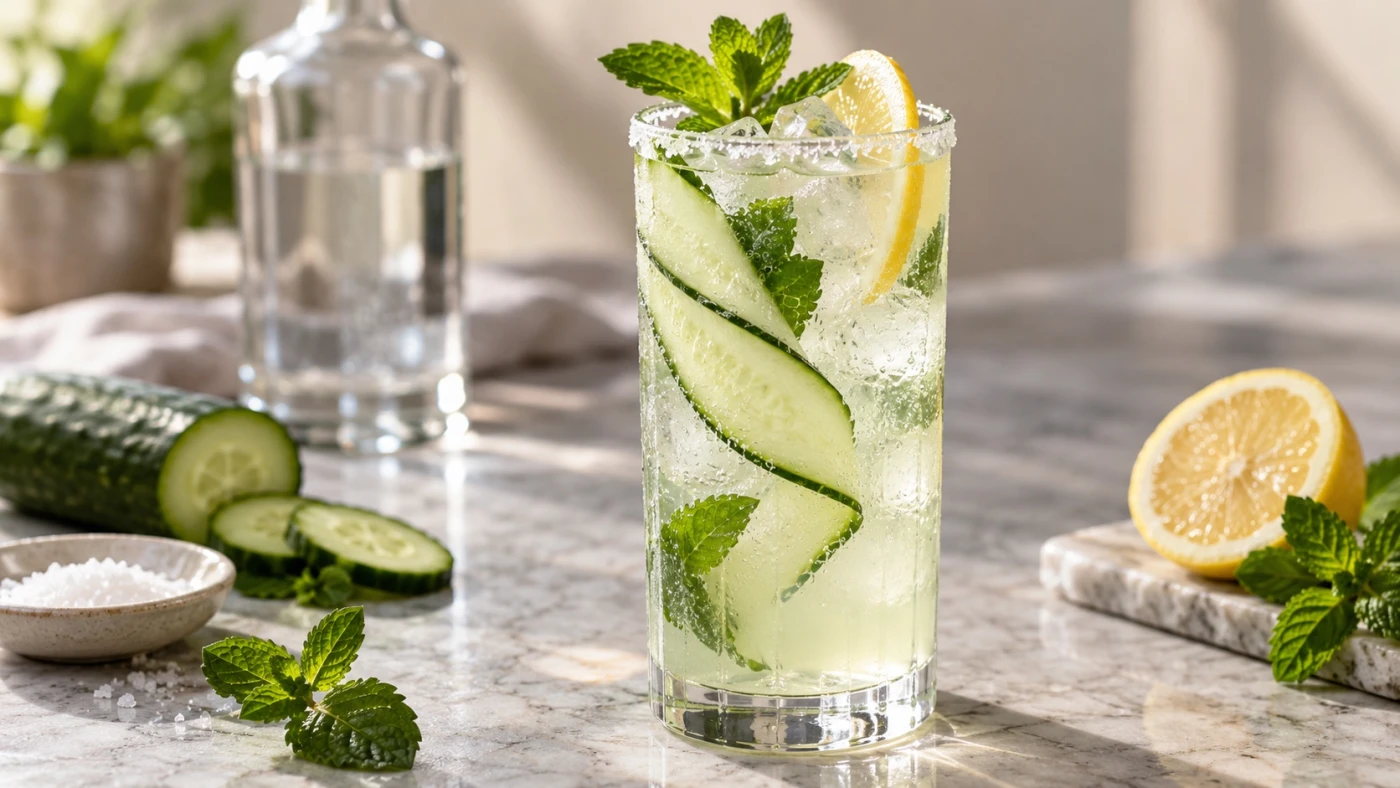

Cucumber Vodka Drinks: How to Control Freshness, Balance, and Dilution
The useful question is not simply which ingredients can be mixed with cucumber and vodka. It is how to preserve cucumber's delicate aroma while keeping…
- It is how to preserve cucumber's delicate aroma while keeping the drink sufficiently bright, concentrated, and balanced.
- Once you understand how muddling, juicing, dilution, acidity, and vodka choice affect that flavor, you can decide whether a drink needs more cucumber, less water, a cleaner spirit, or a different mixing method.
- Aroma: strongest immediately after cutting, muddling, or expressing a fresh garnish.
- Concentration: determined by how much cucumber is used and whether it is muddled, pressed, juiced, or supplied through flavored vodka.
- Water and texture: cucumber juice adds volume and fine solids as well as flavor, so it changes the balance of the entire drink.
The useful question is not simply which ingredients can be mixed with cucumber and vodka. It is how to preserve cucumber's delicate aroma while keeping the drink sufficiently bright, concentrated, and balanced. Once you understand how muddling, juicing, dilution, acidity, and vodka choice affect that flavor, you can decide whether a drink needs more cucumber, less water, a cleaner spirit, or a different mixing method.
What cucumber contributes to a vodka drink
Cucumber is mostly water, but its role is not limited to dilution. Freshly cut cucumber contributes a light green aroma, a cooling impression, and sometimes a soft pulp-derived texture. Those qualities complement vodka because vodka can provide alcoholic structure without necessarily adding a dominant barrel or botanical profile.
That compatibility also creates a challenge: cucumber is easily overwhelmed. Strong citrus, generous syrup, pungent herbs, tonic bitterness, or several flavored liqueurs can leave the cucumber functioning as decoration rather than a meaningful part of the drink.
Think of cucumber flavor as a combination of three variables:
- Aroma: strongest immediately after cutting, muddling, or expressing a fresh garnish.
- Concentration: determined by how much cucumber is used and whether it is muddled, pressed, juiced, or supplied through flavored vodka.
- Water and texture: cucumber juice adds volume and fine solids as well as flavor, so it changes the balance of the entire drink.
Extraction method changes the result
There is no universally best way to introduce cucumber. The right method depends on whether you value immediacy, repeatability, clarity, or convenience.
| Method | What it contributes | Best use | Adjustment to consider |
|---|---|---|---|
| Brief muddling | Fresh aroma, light pulp, variable extraction | One or two drinks made to order | Press gently and double-strain if seeds or pulp would be distracting |
| Fresh cucumber juice | More measurable flavor, water, color, and texture | Repeatable drinks or small batches | Count the juice as liquid when balancing citrus, syrup, and lengthener |
| Thin slices or ribbons | Primarily garnish aroma and visual character | Highballs and spritz-style drinks | Do not assume garnish alone will flavor the whole drink |
| Cucumber-flavored vodka | Convenient, consistent flavor within a given bottle | Fast builds and drinks without pulp | Taste before adding syrup or other flavorings because sweetness and flavor style vary by producer |
Muddling harder does not guarantee a better drink. Once the cucumber has released juice and aroma, additional crushing mainly produces more pulp and liquid. A few firm presses are usually a better starting point than grinding the cucumber into a purée.
Skin, seeds, and cucumber choice
Long, thin-skinned cucumbers are convenient because they generally require little preparation and contain relatively small seeds. A standard garden cucumber can also work; peeling it and removing a watery seed core may give a cleaner texture when the cucumber is especially mature.
The skin is not automatically undesirable. Keeping some of it creates a greener-looking drink and can deepen the vegetal impression. Peeling produces a paler, softer profile. Because cucumber varieties and individual specimens differ, taste a cut end before mixing. If the skin seems unusually assertive, remove it rather than expecting sugar or citrus to conceal it.
Choosing vodka for cucumber drinks
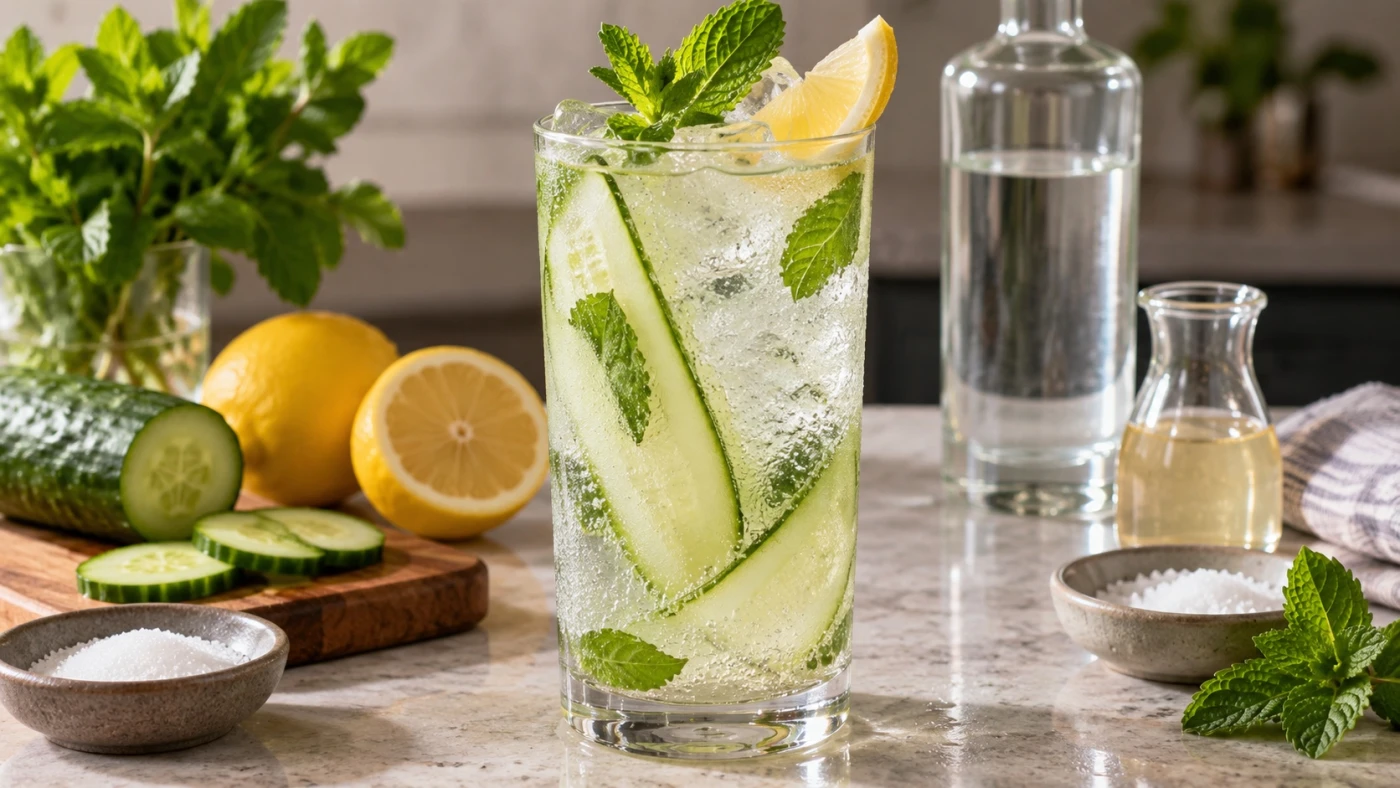
A clean, relatively neutral vodka is the most adaptable choice when cucumber should remain the central flavor. It provides alcoholic weight while leaving room for subtle citrus, herbs, and carbonation.
Neutrality is not mandatory. A vodka with gentle grain sweetness can make a short, spirit-forward cucumber drink feel rounder, while a peppery or citrus-led profile may suit a highball with lemon or lime. The decision is relational: choose a vodka whose noticeable character supports the planned drink rather than selecting a bottle solely because it has the least aroma.
For cucumber-flavored vodka, read the label for alcohol content and producer information, then taste a small amount before building the cocktail. Labeling establishes what the product claims to be, but it cannot tell you whether its cucumber character is fresh, candied, savory, or subtle. US readers can consult the Alcohol and Tobacco Tax and Trade Bureau for official information about distilled-spirit labeling and regulation.
How to balance cucumber with acidity, sweetness, and dilution
Cucumber usually benefits from acidity because acid gives definition to an otherwise soft, watery flavor. Lemon tends to produce a bright, familiar profile; lime can feel sharper and works well with mint or basil. The goal is not to make the drink aggressively sour, but to create enough contrast that the cucumber remains recognizable.
Sweetness should support that acidity rather than become the main flavor. Begin conservatively when using cucumber juice or flavored vodka. If the drink tastes thin, more syrup may only make it sweet and thin. A smaller amount of soda, more acidity, or a slightly higher proportion of vodka may solve the actual problem more effectively.
Dilution arrives from several places at once: the cucumber, melting ice during shaking or stirring, and any soda or tonic added afterward. Add the carbonated portion gradually and taste when practical. This is especially important when changing from muddled cucumber to cucumber juice because the juice introduces a measurable additional liquid.
A worked application: a balanced cucumber vodka highball
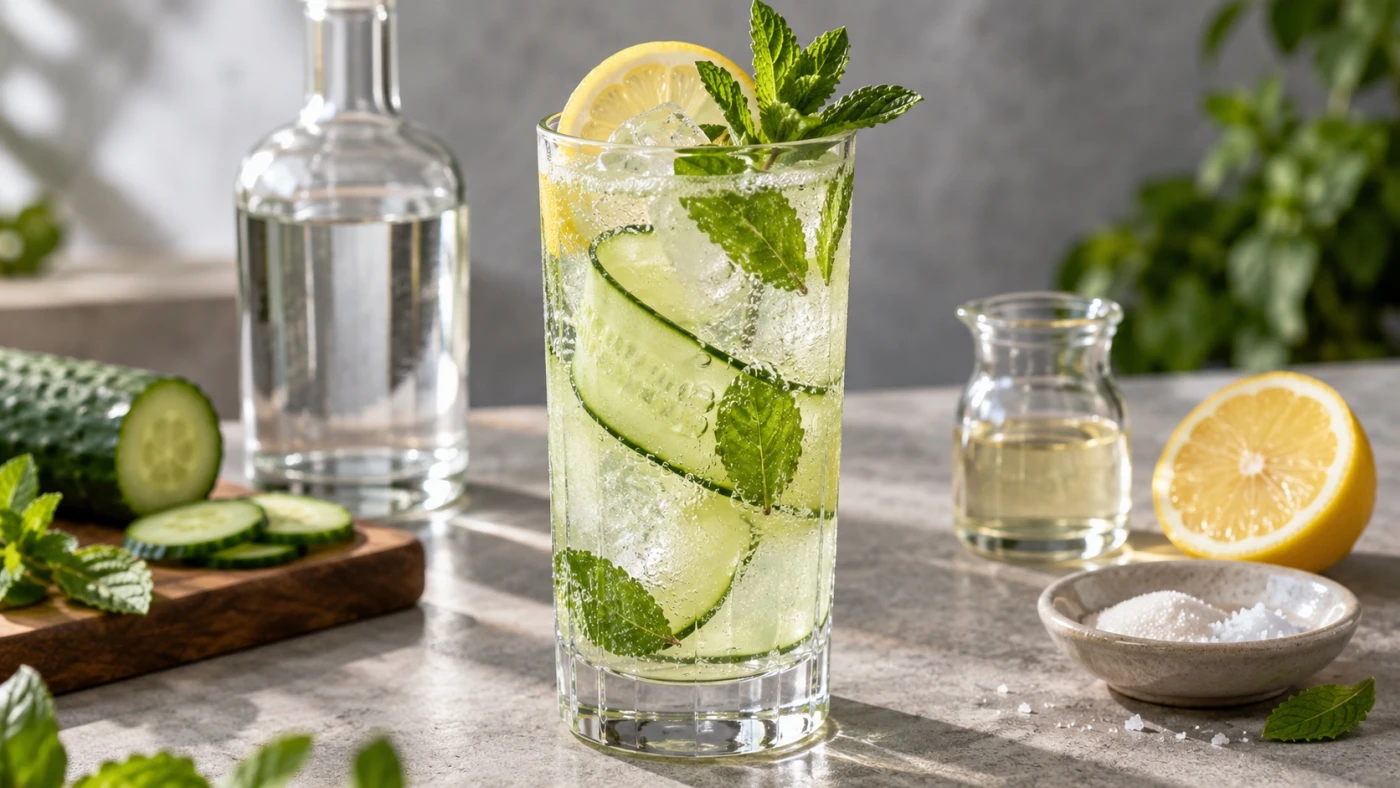
This example shows how the decisions fit together without treating one formula as mandatory. In a shaker, gently press three thin cucumber coins. Add 2 US fl oz (60 ml) vodka, 3/4 US fl oz (22 ml) fresh lemon juice, and 1/2 US fl oz (15 ml) simple syrup. Shake with ice, then double-strain into a 12 US fl oz (355 ml) highball glass containing fresh ice. Add 3 US fl oz (90 ml) chilled soda water and stir briefly.
The measured liquid totals 6 1/4 US fl oz, approximately 187 ml using the rounded metric measures shown. That comfortably leaves room in the stated glass for ice and a cucumber garnish. The shaker contains only 3 1/4 US fl oz, approximately 97 ml, before ice, leaving ample mixing headspace in a standard cocktail shaker.
This structure keeps the cucumber fresh, uses lemon to define it, and limits syrup to a supporting role. If the cucumber is particularly juicy, first reduce the soda rather than automatically adding more sweetness. If using cucumber-flavored vodka instead of fresh cucumber, omit the muddled coins initially, taste the completed drink, and add a fresh cucumber garnish if it needs more immediate aroma.
Practical decisions for different drink styles
- For a crisp highball: use brief muddling or a small measured pour of cucumber juice, a clean vodka, fresh citrus, and restrained soda.
- For a clearer drink: use flavored vodka or finely strained cucumber juice rather than leaving muddled pulp in the glass.
- For a savory direction: retain some cucumber skin and choose one complementary accent, such as dill, dry vermouth, or a small pinch of salt.
- For a softer, spa-water-like profile: use peeled cucumber, gentle citrus, and a cucumber ribbon for aroma, but keep enough vodka and acidity to prevent blandness.
- For advance preparation: cucumber juice provides easier portion control than muddling each drink, although its fresh color and aroma can change after preparation. Make only what is reasonably needed and judge it by smell, appearance, and taste rather than assuming a universal holding time.
Common misconceptions
“More cucumber always creates more flavor.” More cucumber also means more water and pulp. Beyond a point, increasing it can weaken the drink's structure instead of intensifying its aroma.
“Cucumber must be peeled and deseeded.” Neither step is universal. Preparation should reflect the cucumber in front of you and the desired color, texture, and vegetal intensity.
“Only completely neutral vodka works.” Neutral vodka is dependable, but subtle grain, citrus, or pepper notes can be useful when they align with the other ingredients.
“A cucumber garnish will flavor the whole drink.” A garnish contributes aroma near the surface, especially as the glass approaches the nose. It does not necessarily provide the concentration created by muddling, juice, or flavored vodka.
“If a cucumber drink is weak, it needs more sugar.” Thinness is often a dilution or acidity problem. Diagnose the balance before sweetening it.
Evidence and uncertainty
The mixing guidance above is an editorial framework based on ingredient behavior and transparent drink arithmetic, not a claim that one recipe or vodka brand is objectively best. Cucumber variety, ripeness, cut size, ice, shaking duration, flavored-vodka formulation, and personal taste all affect the result. Where those variables cannot be standardized, tasting and making one controlled adjustment at a time is more reliable than treating a fixed ratio as a scientific rule.
Ask AI about this article
Pick a prompt, copy it, or open ChatGPT with this article preloaded.
Frequently Asked Questions
Should cucumber be peeled for vodka drinks?
Peeling is optional. Use peeled cucumber when you want a pale, clean, delicate result. Leave some skin on when a greener aroma and color suit the drink, but taste the cucumber first because thicker or more assertive skin can dominate a subtle mixture.
Why does my cucumber vodka drink taste watery?
The drink may contain too much cucumber juice, excessive shaking dilution, or more soda than its citrus and sweetness can support. Treat cucumber as part of the drink's water contribution and add any carbonated lengthener gradually.
Which herbs work well with cucumber and vodka?
Mint emphasizes cooling freshness, basil adds a savory green note, and dill moves the drink in a distinctly culinary direction. Use one deliberately rather than combining several herbs that compete with cucumber's relatively quiet aroma.
Comments 0
Login to Post comments