

Dry Shake vs Reverse Dry Shake: How to Build Better Cocktail Foam
A dry shake is an ice-free shake used to aerate cocktails containing egg white, aquafaba or another foaming ingredient. In the standard method, it comes…
- In the standard method, it comes before the shake with ice.
- A reverse dry shake uses the same two stages in the opposite order: chill and dilute with ice first, strain the ice away, then shake again without ice.
- Add the measured cocktail ingredients and foaming agent to the shaker without ice. For a typical single sour, 15–25 ml (about 1/2–3/4 oz) egg white is a practical starting range. Aquafaba varies by product, but 20–25 ml (about 2/3–3/4 oz) is a useful starting point.
- Seal the shaker carefully and shake hard for 10–15 seconds .
- Open it, add ice and shake for another 10–15 seconds , or until the shaker is thoroughly cold.
A dry shake is an ice-free shake used to aerate cocktails containing egg white, aquafaba or another foaming ingredient. In the standard method, it comes before the shake with ice. A reverse dry shake uses the same two stages in the opposite order: chill and dilute with ice first, strain the ice away, then shake again without ice.
These techniques matter when foam contributes to the drink rather than merely decorating it. A well-made foam softens the first sip, carries aroma and gives sours and fizzes a smoother texture. The skill transfers readily between vodka sours, fruit sours, spirit-forward sours and alcohol-free drinks containing a suitable foaming agent.
Dry shake and reverse dry shake compared
| Method | Order | Useful when | Main trade-off |
|---|---|---|---|
| Dry shake | No ice, then ice | You want a dependable method with good ingredient integration | The final iced stage can knock some air from the mixture |
| Reverse dry shake | Ice, strain, then no ice | You want a dense, conspicuous foam cap | It requires an extra strain and the shaker can be harder to seal during the warm final shake |
Neither technique is automatically superior. Foam also depends on the recipe, foaming ingredient, shaker space, ice, shaking force and serving delay. Treat the order of operations as one variable rather than a guarantee.
How to perform a standard dry shake
- Add the measured cocktail ingredients and foaming agent to the shaker without ice. For a typical single sour, 15–25 ml (about 1/2–3/4 oz) egg white is a practical starting range. Aquafaba varies by product, but 20–25 ml (about 2/3–3/4 oz) is a useful starting point.
- Seal the shaker carefully and shake hard for 10–15 seconds.
- Open it, add ice and shake for another 10–15 seconds, or until the shaker is thoroughly cold.
- Strain promptly into the prepared glass. Fine-strain if the drink should have a smooth surface without ice chips or fruit pulp.
The first stage develops aeration; the second provides chilling and dilution. Because a warm shaker may not contract into as firm a seal as a cold one, hold both parts securely during the dry stage.
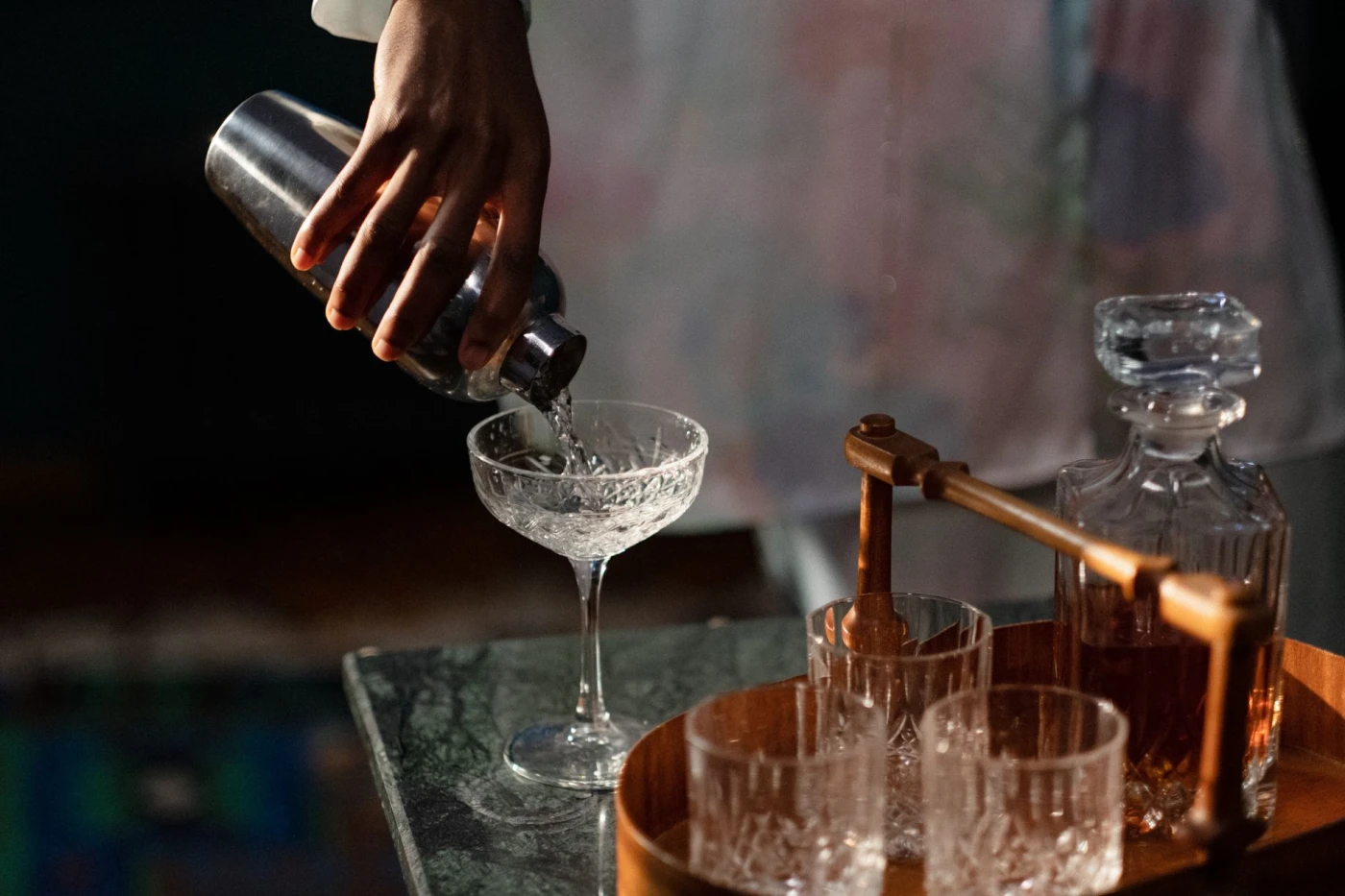
How to perform a reverse dry shake
- Add the cocktail ingredients, foaming agent and ice to the shaker.
- Shake hard for 10–15 seconds, until adequately chilled and diluted.
- Strain the mixture into the smaller shaker tin or another clean vessel, removing all ice. Discard the spent ice.
- Return the liquid to the shaker, reseal it and shake without ice for 10–15 seconds.
- Pour immediately. Fine-straining is optional if the first strain already removed the ice fragments and solids.
The final ice-free stage can leave the newly aerated structure undisturbed by a subsequent collision with ice. That is one plausible reason reverse-shaken drinks often appear to have a dense cap, although foam behaviour varies enough that the result should not be treated as universal.
Control time, ice and dilution separately
Only the iced stage meaningfully chills and dilutes the drink. If a reverse dry shake tastes watery, shortening the final dry shake will not correct it; review the iced shake instead.
- Time: Start with 10–15 seconds per stage. Extend the ice-free stage by about five seconds if the foam is thin, rather than automatically prolonging both stages.
- Ice: Use enough solid ice to move forcefully inside the shaker. A small amount of wet, rapidly melting ice can add dilution before the drink becomes properly cold.
- Shaker space: Leave room for the liquid to travel. An overfilled shaker restricts movement and makes vigorous shaking difficult.
- Serving delay: Pour promptly. Even successful foam evolves after shaking, and some separation is normal.
For a new recipe, keep its measurements and ice constant while comparing methods. Changing the sweetener, foaming-agent quantity and shake order at once makes the result difficult to diagnose.

Apply the technique to different drinks
| Drink style | Good starting method | Adjustment to consider |
|---|---|---|
| Vodka sour with citrus and egg white | Standard dry shake | Try the reverse method if you want a more distinct white cap over the drink |
| Fruit purée sour | Dry shake | Fine-strain; pulp can interrupt a smooth surface and make the foam look coarse |
| Aquafaba sour | Either method | Adjust the quantity in small increments because viscosity and foaming performance vary between products |
| Long fizz topped with soda | Dry shake | Add the carbonated component gently after shaking; never shake it in a sealed tin |
| Drink with no protein or foaming substitute | Ordinary iced shake | A separate dry stage usually offers little benefit |
Vodka is especially useful for learning the comparison because its relatively restrained flavour makes changes in texture easy to notice. The lesson still transfers: decide whether the recipe needs foam, establish dilution during the iced stage, then choose the shake order that produces the desired texture.
Diagnose common foam failures
Little or no foam: Confirm that the recipe contains enough suitable foaming ingredient. Leave more shaker space, shake more forcefully or add roughly five seconds to the ice-free stage. Excessive oil or fat from ingredients or equipment may also interfere with foaming, so use a clean shaker.
Large, coarse bubbles: Give the drink a more vigorous ice-free shake and fine-strain it. Pulpy juice, ice fragments and loose solids can make the surface irregular.
Foam collapses almost immediately: Check whether the recipe is unusually dilute or contains only a token amount of foaming agent. Serve promptly and compare a controlled batch with slightly less iced-shake time.
Too much foam and too little liquid beneath it: Reduce the foaming agent in 5 ml increments or shorten the ice-free stage. More foam is not necessarily better if it dominates the first several sips.
The drink is warm: The dry stage cannot replace sufficient contact with ice. Extend the iced shake or use colder, more solid ice.
The drink is cold but watery: Use less-melted ice, shorten the iced stage or pre-chill the glass. Do not try to solve dilution by weakening the aeration stage.
The shaker leaks during the dry stage: Dry shaking does not create the same cold seal as shaking with ice. Use an appropriately matched shaker, avoid overfilling and keep a secure hand over both sections. If leakage persists, the reverse method may be easier because its shaker is already cold before the ice-free stage.
How to tell when the technique worked
Judge the whole drink, not foam height alone. A successful result should have fine rather than visibly soapy bubbles, a cohesive layer across the surface, a smooth first sip and enough liquid below the foam to preserve the recipe's balance. The drink should also be properly cold without tasting thinned out.
To choose between methods for an unfamiliar cocktail, begin with the standard dry shake. If its flavour and dilution are right but the foam seems loose or indistinct, repeat the same recipe with a reverse dry shake. Keep the ingredients, ice and timings unchanged. That simple comparison turns the technique into a transferable tool: chill and dilute deliberately, aerate deliberately, and change only the variable connected to the problem you are trying to solve.
If using egg white, choose pasteurised egg products when appropriate for the people being served and follow local food-safety guidance. Crack shell eggs into a separate container rather than directly over the finished ingredients, so a damaged egg or shell fragment does not spoil the entire drink.
Ask AI about this article
Pick a prompt, copy it, or open ChatGPT with this article preloaded.
Comments 0
Login to Post comments