
How to Double Strain a Cocktail for a Smoother, Silky Texture
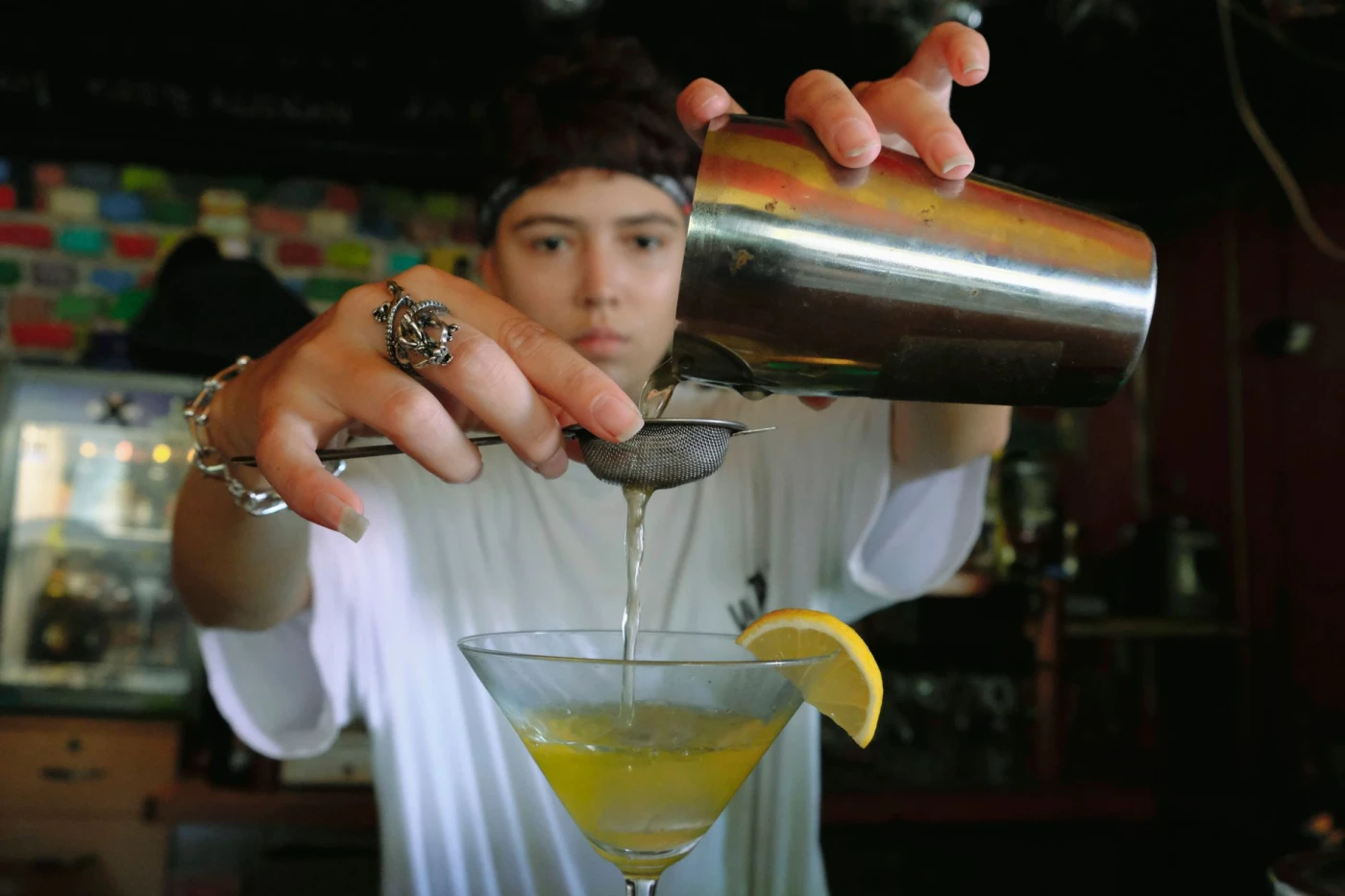
Double straining , sometimes called fine straining, means pouring a cocktail through two strainers at the same time. A Hawthorne strainer fitted to the…
- It can give a shaken vodka sour, Cosmopolitan, fruit Martini, or herb-infused drink a cleaner, more uniform mouthfeel.
- It does not make every cocktail thicker or creamier; rather, it removes coarse material that can interrupt an otherwise smooth texture.
- Egg white or aquafaba, especially if small coagulated strands are visible
- Ice that has cracked into fine chips during a vigorous shake
- The decision should follow the intended drinking experience.
Double straining, sometimes called fine straining, means pouring a cocktail through two strainers at the same time. A Hawthorne strainer fitted to the shaker holds back the main ice, while a small fine-mesh sieve positioned over the serving glass catches citrus pulp, herb fragments, fruit seeds, egg strands, and tiny ice chips.
The technique matters most when a cocktail is served straight up, without fresh ice to disguise stray particles. It can give a shaken vodka sour, Cosmopolitan, fruit Martini, or herb-infused drink a cleaner, more uniform mouthfeel. It does not make every cocktail thicker or creamier; rather, it removes coarse material that can interrupt an otherwise smooth texture.
When should you double strain a cocktail?
Double strain when the ingredients or shaking method are likely to leave unwanted solids in the drink. It is particularly useful for cocktails containing:
- Fresh lemon, lime, grapefruit, or other pulpy juice
- Muddled mint, basil, rosemary, cucumber, berries, or chilli
- Fruit purée or ingredients containing small seeds
- Egg white or aquafaba, especially if small coagulated strands are visible
- Ice that has cracked into fine chips during a vigorous shake
The decision should follow the intended drinking experience. A vodka sour served in a coupe usually benefits from fine straining because the target is a clean liquid beneath an even foam. A rustic smash served over crushed ice may not: small herb pieces and ice fragments can be part of that drink's character.
Double straining is also usually unnecessary for a stirred cocktail. Large, cold stirring ice produces fewer chips than vigorous shaking, and a Julep or Hawthorne strainer will normally provide sufficient filtration. Avoid automatically fine-straining every drink; very thick mixtures can drain slowly, while some crushed-ice and blended drinks are meant to retain texture.
How to double strain, step by step
- Prepare the serving glass first. Chill the glass if the cocktail will be served up. Once shaking stops, unnecessary delay allows more ice to melt into the drink.
- Shake the cocktail as its recipe directs. For many citrus-based drinks, roughly 10–15 seconds of firm shaking with solid ice is a practical starting point, but ice size, freezer temperature, shaker size, and ingredients all affect chilling and dilution.
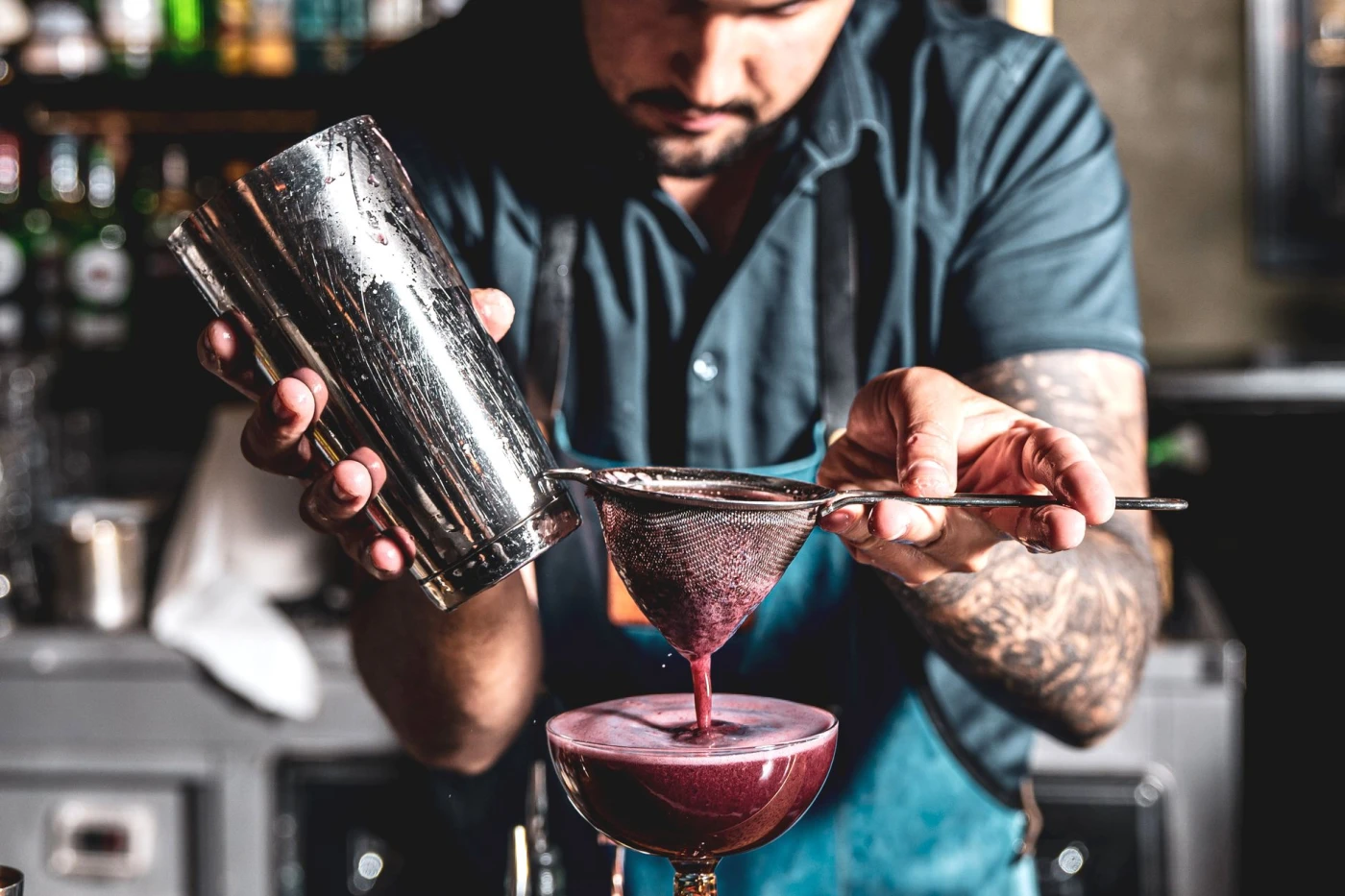
- Fit the primary strainer. Place a Hawthorne strainer securely over the opening of a tin shaker. If using a three-piece cobbler shaker, its perforated cap performs this first-strainer role.
- Position the fine strainer. Hold a clean, dry fine-mesh sieve 2–5 cm, or about 1–2 inches, above the centre of the serving glass. Keeping it close limits splashing.
- Pour through both strainers. Hold the shaker in your dominant hand and the fine strainer in the other. Pour in a steady stream rather than dumping the contents abruptly.
- Let the final liquid pass. A gentle shake of the sieve can help, but do not press pulp or herbs through the mesh. Pressing defeats the purpose by forcing fine solids into the glass.
Serve the drink promptly. Straining separates the cocktail from its shaking ice, but it cannot reverse excess dilution that occurred before the pour.
Control the pour without changing the drink
Straining time should be brief relative to the shake. Most standard-size cocktails should pass through a clean fine-mesh strainer in several seconds. If the flow slows to isolated drips, the mesh is probably clogged rather than usefully filtering.
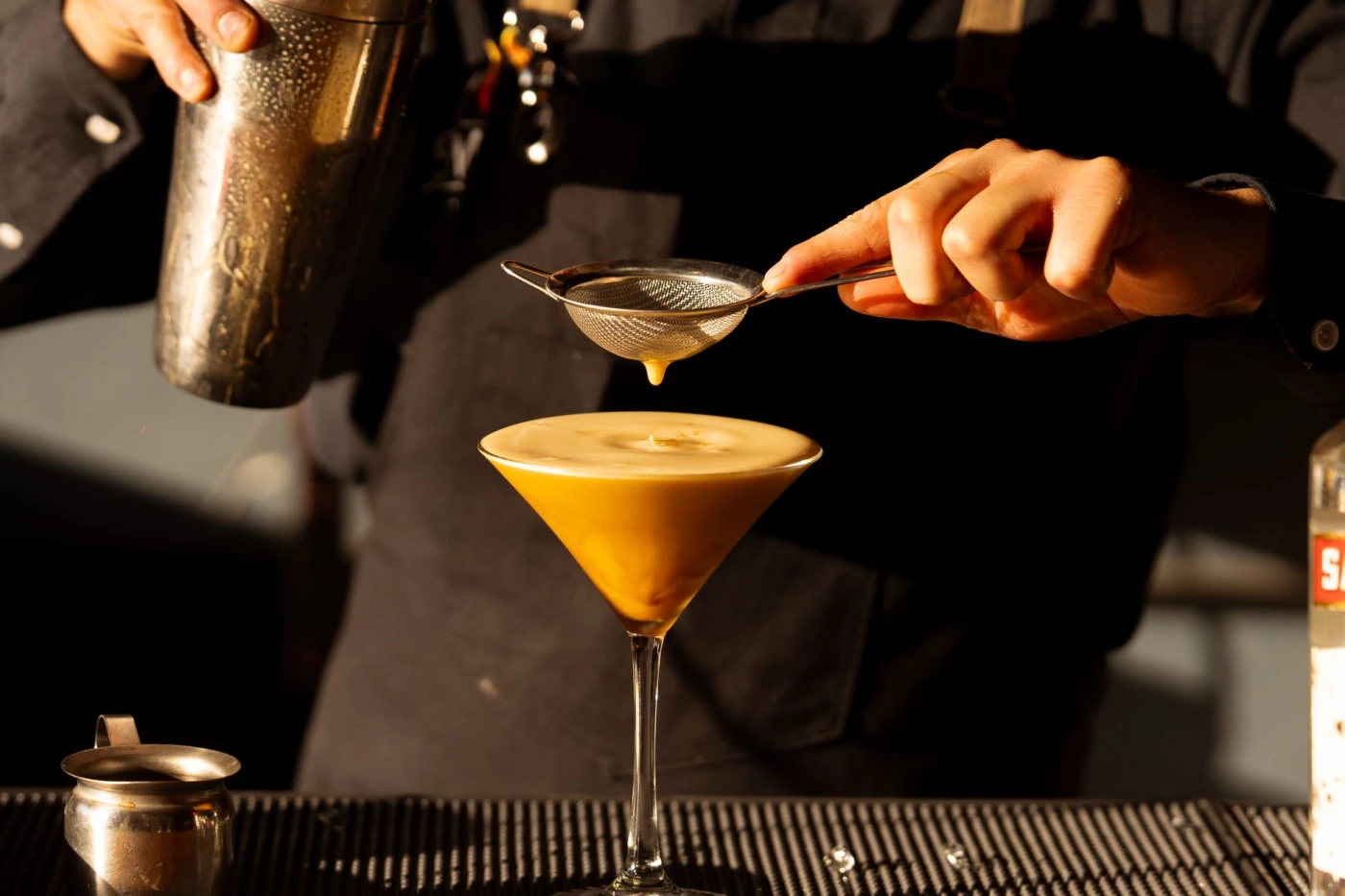
For a cocktail with muddled herbs or berries, close the Hawthorne strainer's spring gap by pressing it more firmly against the shaker opening. This catches more material before it reaches the finer sieve. With a foam-topped sour, pour continuously and keep the sieve level; repeated stopping and aggressive tapping can disrupt how the foam settles.
The technique affects filtration, not the recipe's planned dilution. Shake until the drink is appropriately chilled and diluted, then strain immediately. Shaking for extra time merely because a fine strainer is waiting can produce a thinner drink, especially when using small, wet, or partially melted ice.
Common double-straining problems
The strainer clogs. Thick purée, abundant pulp, or finely muddled herbs can coat the mesh. Use a slightly coarser fine strainer, muddle more gently, or allow the primary strainer to catch more solids. Rinse the sieve immediately between drinks.
The cocktail splashes outside the glass. The sieve is probably too high, off-centre, or receiving the liquid too quickly. Lower it to within 1–2 inches of the rim and begin with a controlled stream.
Ice chips still appear in the drink. Check the mesh for damage and make sure the entire stream passes through its centre. Liquid running over the rim of an overfilled sieve bypasses the second filtration stage.
The finished drink tastes watery. Double straining itself is rarely the main cause. More likely causes include prolonged shaking, warm or undersized ice, a delayed pour, or excess water already clinging to wet ice.
The drink loses desirable texture. The mesh may be unnecessarily fine for a thick or intentionally pulpy cocktail. Use a less restrictive sieve or single-strain the drink when its recipe depends on suspended fruit, spice, or crushed ice.
How to tell whether it worked
A successfully double-strained cocktail should have no conspicuous ice shards, seeds, torn leaves, or fibrous pulp unless they were deliberately added as garnish. The surface should look composed rather than littered with fragments, and each sip should feel consistent from beginning to end.
Judge success against the drink, not against a universal idea of smoothness. In a fruit-forward vodka cocktail, the result may still have body from juice or purée, but it should not contain distracting seeds or fibres. In a vodka sour, the liquid should be clean beneath the foam. In a shaken Martini-style drink, removing ice chips prevents them from floating on the surface and continuing to melt.
The transferable rule is simple: use two-stage filtration when small solids would interfere with the cocktail's intended presentation or mouthfeel. If those particles contribute positively to the style, a single strain is the better choice.
Ask AI about this article
Pick a prompt, copy it, or open ChatGPT with this article preloaded.
Comments 0
Login to Post comments