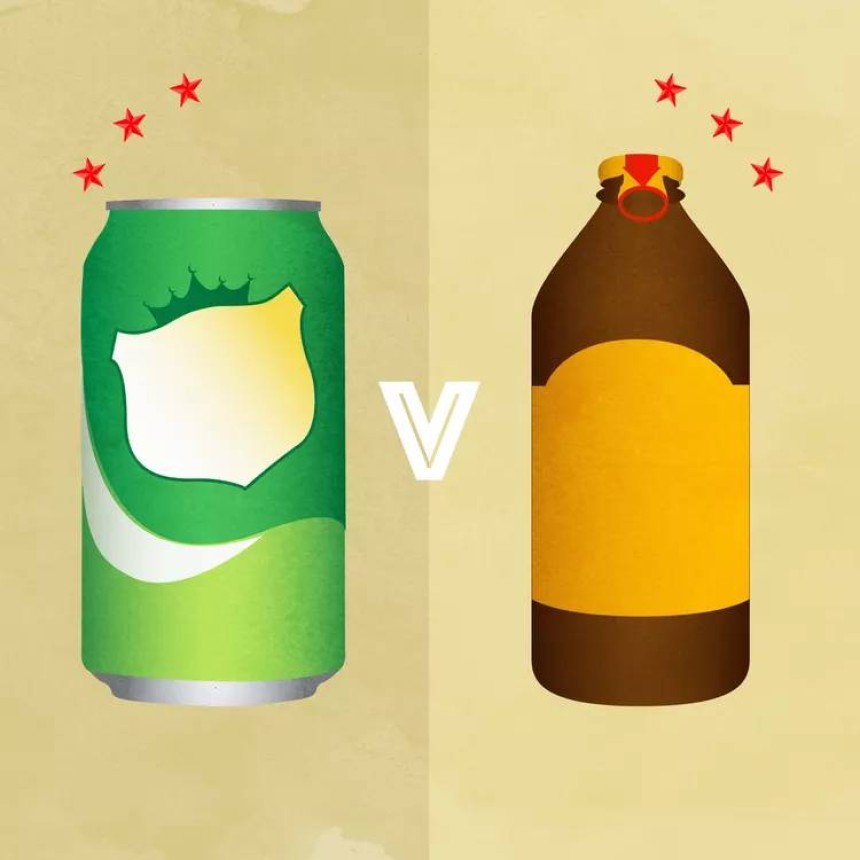

Ginger Ale vs. Ginger Beer: Breaking Down the Differences
Although the terms were once used interchangeably, ginger ale and ginger beer grew apart during the 19th and 20th centuries. They’re now decidedly different drinks, with diverging.
So, which bubbly ginger drink is right for your home bar? Here’s a guide to
What Is Ginger Beer?
For millennia, people made drinks out of ginger, a rhizome renowned for both its flavor and medicinal properties. Ginger beers are believed to have originated in the United Kingdom in the 18th century, and historians have unearthed advertisements for bottled iterations from the early 1800s.
The first ginger beers were bright, bracing brews made effervescent via fermentation, and they typically contained 2–3% alcohol by volume (ABV) as a result. The drink’s popularity in the Caribbean grew in tandem with British colonization and ginger cultivation. According to contemporary analysts, North Americans currently consume the most ginger beer worldwide, drinking up to 35% of a global market worth nearly $5 billion.understanding the differences between ginger ale and ginger beer.
Many modern ginger beers combine fresh, finely grated ginger with sugar and citrus; some commercial bottlings are made with artificial dyes and flavors. Certain producers amplify the beers’ spicy flavors by including capsaicin, a component of chili peppers. While you can make ginger beer with forcibly added carbon dioxide, traditional versions get their bubbles from a symbiotic culture of bacteria and yeast (SCOBY), a fermenting agent also used to make kombucha.
Most commercial ginger beers are non-alcoholic, but some contain trace amounts of up to 0.5% alcohol. Others, like Crabbie’s Original Alcoholic Ginger Beer, Goslings Stormy Ginger Beer, and Royal Jamaican Alcoholic Ginger beer, have anywhere from 1% to nearly 5% ABV.
Delicious on its own, ginger beer features prominently in cocktails like the Dark and Stormy and Moscow Mule, both of which complement its piquancy with fresh lime juice.
What Is Ginger Ale?
Once synonymous, ginger ale and ginger beer evolved into different drinks during the temperance movement of the late 19th and early 20th centuries. In response to activists that targeted ginger beer for its mild alcohol content, some producers began to position ginger ale as a non-alcoholic alternative that got its bubbles from artificial carbonation rather than fermentation.
In 1904, after years of tinkering, Canadian pharmacist John J. McLaughlin created a not-too-sweet custom ginger beverage, later marketed as Canada Dry Ginger Ale.
As the 20th century progressed, ginger ale became a popular soft drink and, following the 1933 repeal of Prohibition, mixer in whiskey or rye highballs. Ginger ale is typically sweeter and less spicy than ginger beer, and many modern versions contain caramel coloring and other artificial dyes and flavorings. It rarely contains capsaicin, though the peppers aren’t legally prohibited.
Can You Substitute Ginger Ale for Ginger Beer in Cocktails?
In a pinch, in a home bar with no one watching, you could use ginger ale to make drinks akin to Moscow Mules or Dark and Stormys, but the results would be less balanced and sweet to the point of cloying. You’re better off mixing ginger ale into drinks that classically include it, like a Pimm’s Cup or Presbyterian. Or, consider fixing yourself a cocktail where ginger ale and ginger beer can be used interchangeably, such as the Gin Buck.
Ask AI about this article
Pick a prompt, copy it, or open ChatGPT with this article preloaded.
Comments 0
Login to Post comments