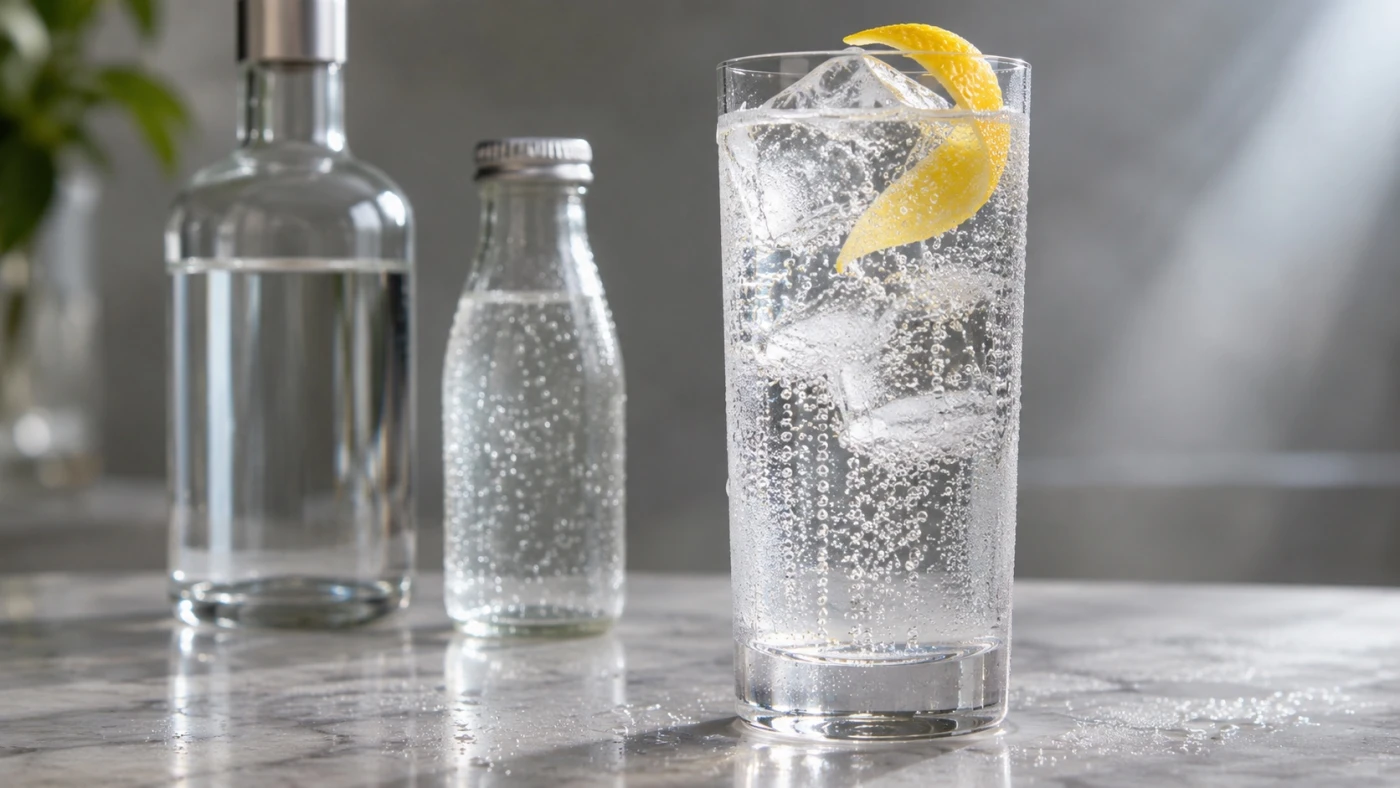

How to Preserve Carbonation in Vodka Highballs
Why does one vodka highball stay lively while another turns quiet within minutes? The useful question is not simply how much soda to add, but how…
- Once you understand those factors, you can choose an appropriate mixer format and build a colder, livelier highball without complicated equipment.
- The bubbles rising through a finished highball are part of that release: carbonation is not a permanent ingredient that can be locked into an open glass.
- A useful working model is that warmer liquid, rough handling and unnecessary exposure encourage carbonation to escape sooner, while cold ingredients, controlled pouring and prompt service help retain more of the drink's initial liveliness.
- The condition of the mixer and the way it is handled can be as important as the choice of spirit.
- Chill the carbonated mixer before opening it.
Why does one vodka highball stay lively while another turns quiet within minutes? The useful question is not simply how much soda to add, but how temperature, pressure, agitation, ice and service affect the carbonated mixer after it is opened. Once you understand those factors, you can choose an appropriate mixer format and build a colder, livelier highball without complicated equipment.
What preserving carbonation actually means
Carbonated water contains dissolved carbon dioxide held under pressure. Opening the container removes much of that pressure, after which gas gradually leaves the liquid. The bubbles rising through a finished highball are part of that release: carbonation is not a permanent ingredient that can be locked into an open glass.
Preservation therefore means slowing avoidable gas loss between opening the mixer and drinking the highball. It does not mean keeping every bubble. A useful working model is that warmer liquid, rough handling and unnecessary exposure encourage carbonation to escape sooner, while cold ingredients, controlled pouring and prompt service help retain more of the drink's initial liveliness.
This matters especially in a simple vodka highball. Vodka contributes no carbonation of its own, and the drink often has few strongly flavored components to distract from a flat or watery texture. The condition of the mixer and the way it is handled can be as important as the choice of spirit.
The four decisions that make the greatest practical difference
Start colder
Chill the carbonated mixer before opening it. If practical, chill the vodka and serving glass as well. This is more effective than assembling the drink with warm components and then stirring for a long time over ice, because prolonged stirring introduces extra movement while the drink is already exposed to the air.
Ice still matters, but it should maintain the drink's temperature rather than do all the cooling work. Cold, solid pieces are preferable to ice that has been sitting in meltwater. Very fragmented ice creates more contact points where bubbles can form, while wet ice also adds immediate dilution.
Open the mixer at the last useful moment
Prepare the glass, ice, vodka and any noncarbonated additions before opening the mixer. Once opened, pour what you need and close the container promptly if any remains. Avoid opening a bottle early merely to make the workspace look ready.
Container choice is part of the technique. If you usually make one drink, a smaller container may give you a fresher pour with less leftover mixer. If you are making several drinks together, a larger bottle may be reasonable. The useful buying decision is to match the package to the amount you normally serve, not to assume that one format is universally superior.
Pour with control
Add the vodka and other still ingredients before the carbonated mixer. Then tilt the glass slightly, when its shape and ice allow, and pour the mixer gently down the inside wall rather than splashing it directly onto the top of the ice. The goal is a smooth pour with limited foaming, not an elaborate ritual.
A narrow highball glass also exposes less liquid surface than a broad, shallow vessel holding the same amount. Glass shape will not compensate for a stale mixer, but it can support the broader aim of limiting unnecessary exposure and keeping the drink cold.
Mix less and serve sooner
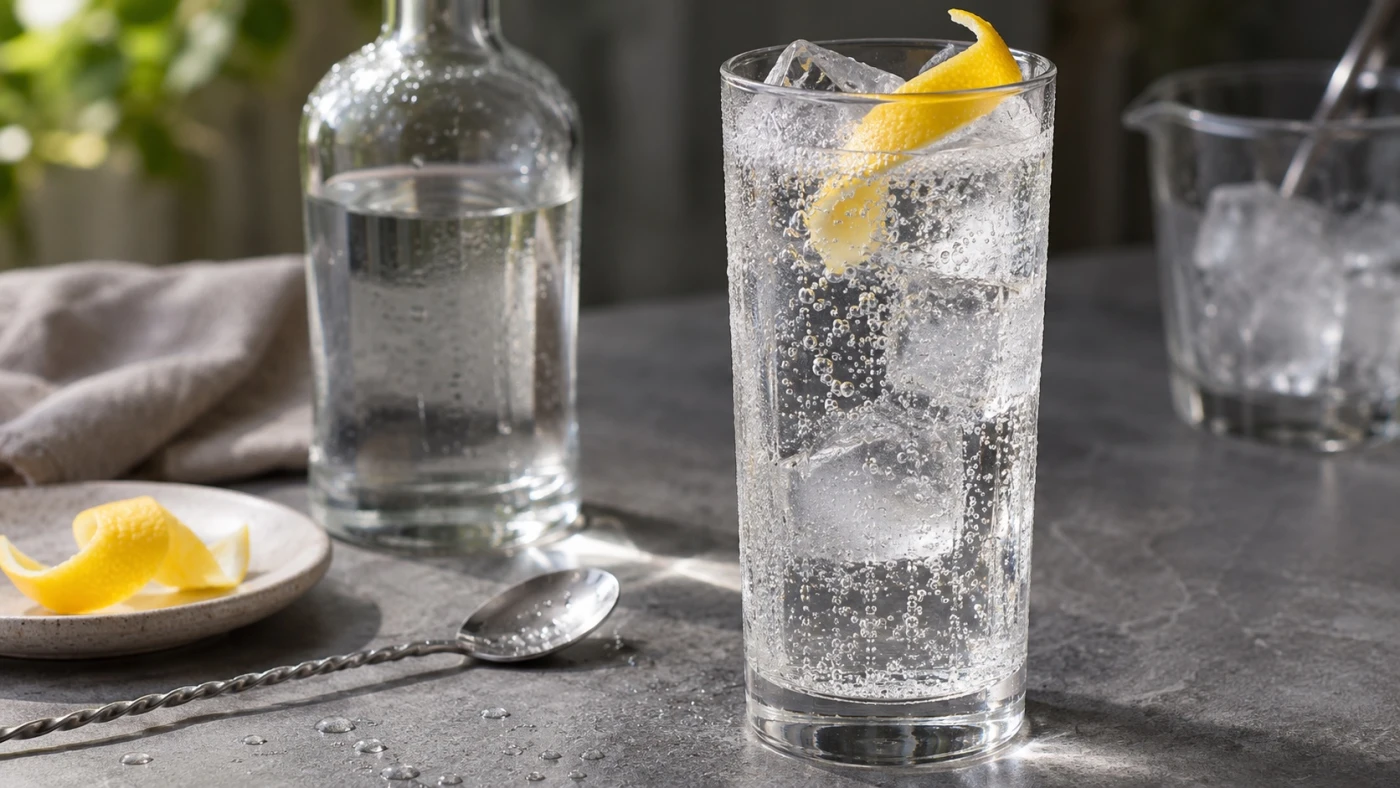
Do not shake a completed carbonated highball. After adding the mixer, use one gentle lift or a short turn of a bar spoon only if the drink needs integration. Aggressive stirring creates visible turbulence and can accelerate foaming without producing a better drink.
Serve the highball as soon as it is assembled. Garnishes should be ready beforehand so the finished glass is not left waiting. If a citrus peel or wedge is used, add it carefully rather than dropping it forcefully through the drink.
A practical build sequence
This is a handling sequence rather than a fixed recipe:
- Chill the mixer and, where convenient, the vodka and glass.
- Prepare the garnish before opening anything carbonated.
- Fill the glass with cold, solid ice.
- Add the measured vodka and any still ingredients.
- Open the mixer and pour it gently down the inside of the glass.
- Give the drink one restrained mixing motion only if necessary.
- Garnish carefully and serve immediately.
The central decision is simple: do the work that requires movement before carbonation enters the glass.
Common misconceptions about fizzy highballs
“More stirring creates more fizz.” Stirring may make bubbles more visible because gas is leaving the liquid. That visible activity should not be confused with preserving carbonation.
“Pouring from higher up improves the drink.” A dramatic pour can produce a lively-looking head, but it also creates splashing and foaming. For retention, a short, controlled pour is the more defensible choice.
“A straw keeps the drink carbonated.” A straw changes how the drink reaches the mouth; it does not repressurize an open glass or restore lost gas.
“More ice always means more dilution and less fizz.” Ice quality and temperature matter more than a simple piece count. Plenty of cold, solid ice can keep a highball colder and reduce the need for extended stirring, although all ice will eventually melt.
“Cold vodka can revive flat soda.” Chilled vodka helps the finished drink stay cold, but it cannot replace carbon dioxide that has already escaped from the mixer.
What technique cannot control
Exact carbonation retention varies with the mixer, its initial condition, container, serving temperature, glass shape, ice and the time spent drinking. Without controlled measurements, it would be misleading to promise that one pouring method retains a specific percentage of carbonation or keeps a highball fizzy for a fixed number of minutes.
Use the principles comparatively instead: colder is generally more helpful than warmer, a fresh container more helpful than one repeatedly opened, and a gentle late pour more helpful than vigorous mixing. These choices cannot stop gas loss, but they reduce avoidable losses and make the result more repeatable.
The decision to remember
For a livelier vodka highball, arrange the process around the carbonated mixer: chill everything you reasonably can, complete the disruptive steps first, open the mixer late, pour gently, stir minimally and serve promptly. When buying mixer, choose a container size that closely matches how much you normally use after opening. That combination addresses both the science of gas loss and the practical reality of making drinks at home.
Ask AI about this article
Pick a prompt, copy it, or open ChatGPT with this article preloaded.
Frequently Asked Questions
Should vodka be chilled before making a highball?
Chilled vodka is useful because it reduces the amount of stirring needed to cool the finished drink. It cannot rescue a flat mixer, but it helps you assemble and serve the highball with less agitation.
Should you stir a vodka highball after adding soda?
Only if the drink needs it. A single gentle lift or brief turn with a bar spoon is usually more appropriate than vigorous or prolonged stirring. Adding the vodka before the mixer also reduces how much integration is required afterward.
Do small mixer cans preserve carbonation better than large bottles?
They can be the more practical choice when one small container closely matches what you will pour. The advantage comes from opening a fresh portion rather than repeatedly reopening a partly used bottle; the best format therefore depends on how many drinks you are making.
Does adding more ice make a vodka highball go flat?
Not automatically. Plenty of cold, solid ice can cool the drink quickly and reduce the need for extra stirring. Warm, wet or heavily fragmented ice is less helpful because it melts readily and presents more surfaces from which bubbles can form.
Comments 0
Login to Post comments