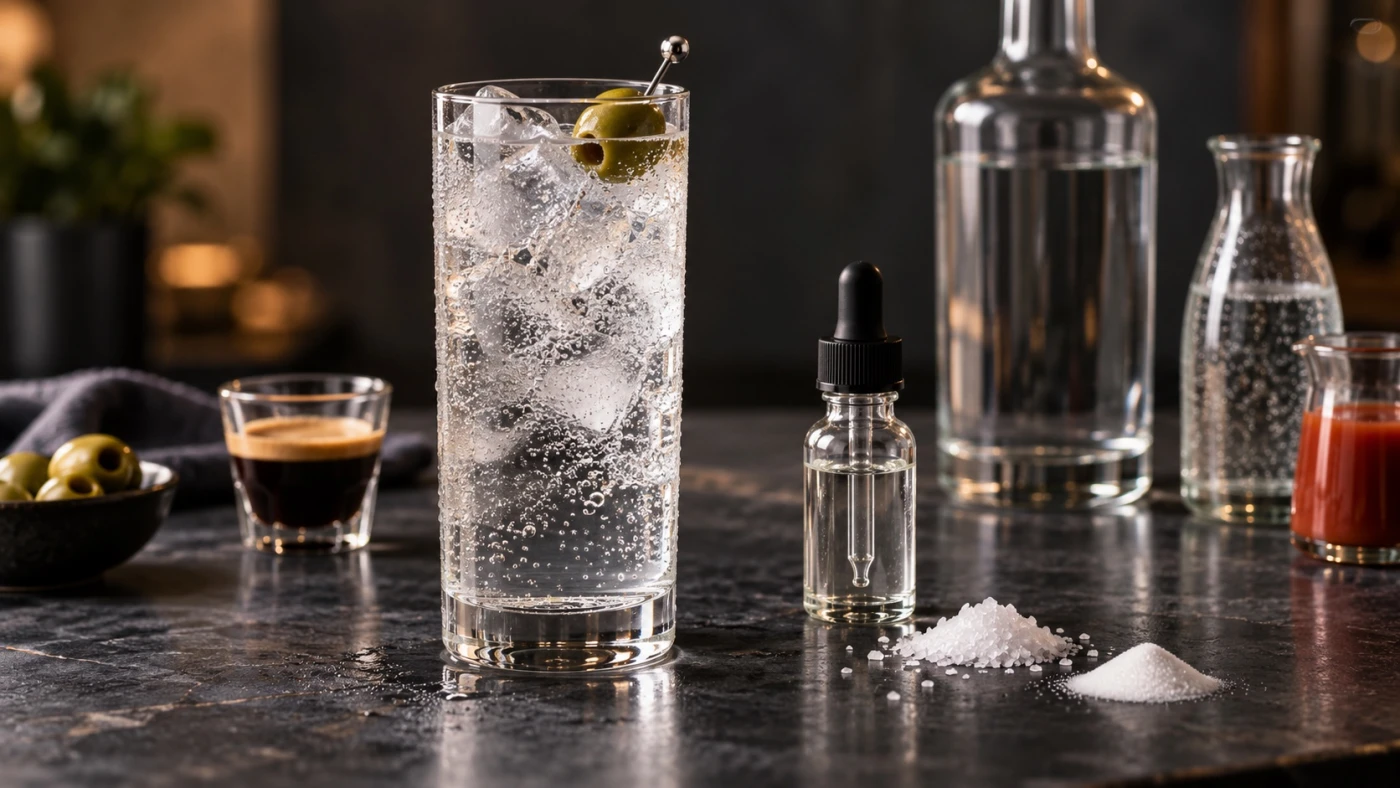

Saline Solution in Cocktails: Why a Pinch of Salt Improves Vodka Drinks
Saline solution is salt dissolved in water and dispensed by the drop to season a cocktail precisely. In a well-dosed vodka drink, it should not announce…
- In a well-dosed vodka drink, it should not announce itself as saltiness.
- Instead, it can make citrus seem clearer, reduce the prominence of bitterness, and bring savory or fruit flavors into better focus.
- Because vodka often contributes less overt flavor than aged or botanical spirits, small changes to the surrounding ingredients can be especially noticeable.
- Saline is therefore useful in drinks such as Vodka Martinis, Bloody Marys, citrus-forward sours, and vodka highballs—but the same tasting method transfers to many other cocktails.
- Salt can alter how several tastes are perceived together.
Saline solution is salt dissolved in water and dispensed by the drop to season a cocktail precisely. In a well-dosed vodka drink, it should not announce itself as saltiness. Instead, it can make citrus seem clearer, reduce the prominence of bitterness, and bring savory or fruit flavors into better focus.
The technique matters most when a drink tastes technically balanced but still seems flat, thin, sharply bitter, or disconnected. Because vodka often contributes less overt flavor than aged or botanical spirits, small changes to the surrounding ingredients can be especially noticeable. Saline is therefore useful in drinks such as Vodka Martinis, Bloody Marys, citrus-forward sours, and vodka highballs—but the same tasting method transfers to many other cocktails.
What saline changes—and what it cannot fix
Salt can alter how several tastes are perceived together. At the very low concentrations used in cocktails, it may make bitterness less prominent and increase the contrast between sweet, sour, savory, and aromatic elements. The exact effect depends on the drink and the drinker, so treat saline as a sensory adjustment rather than a guaranteed chemical shortcut.
Saline does not add acidity, sweetness, aroma, or body. It cannot rescue oxidized vermouth, tired citrus, excessive dilution, or a fundamentally poor ratio. Correct those problems first. Then use saline when the drink's components are sound but need greater definition.
Make a 20% cocktail saline solution
A 20% solution is concentrated enough to be practical in a dropper bottle while still allowing controlled adjustments.
- 20 g fine salt
- 80 g water
Combine the salt and water in a clean container and stir until the crystals disappear. Warm water speeds dissolution, but let the solution cool before using it. Transfer it to a clean dropper bottle and label it “20% saline” with the preparation date.
This is a percentage by weight: 20 g salt plus 80 g water makes 100 g solution. Measuring 20 g of salt into 100 ml of water produces a different concentration. Plain, additive-free salt gives the most predictable result; strongly flavored salts turn seasoning into a separate ingredient.
Make a small batch, keep the bottle clean and closed, and discard the solution if it becomes cloudy, develops an unusual odor, or has visible growth. Salt solutions at cocktail strength should not be assumed to remain safe or stable indefinitely.
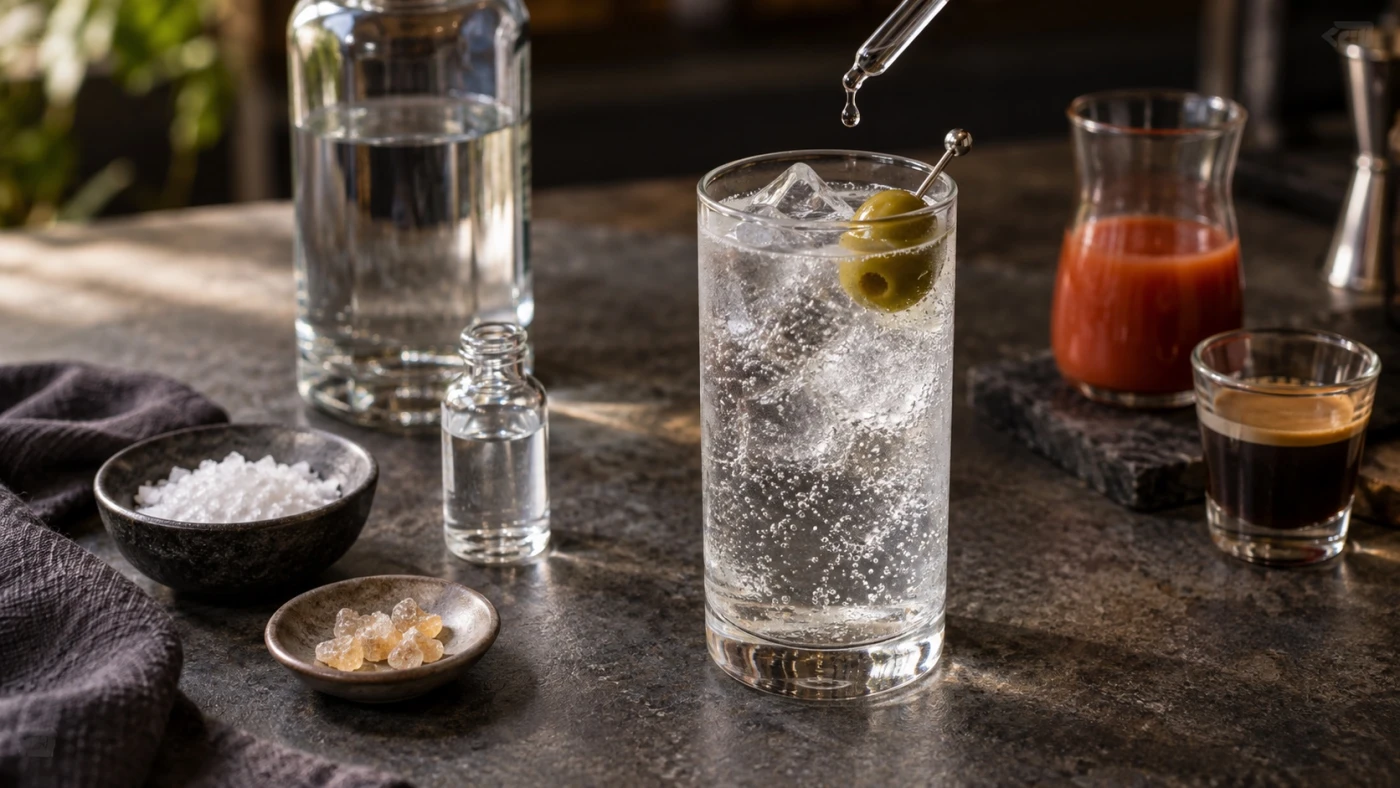
How to season a cocktail by taste
- Prepare the drink normally. Use the intended ingredients, ice, shaking or stirring time, and serving temperature.
- Add two drops of 20% saline. Mix thoroughly. In a built highball, give the drink a gentle lift with a bar spoon; in a stirred or shaken drink, saline can be added before mixing.
- Taste the complete drink. Look for clearer flavors and better integration, not obvious salt.
- Increase one drop at a time. Mix and taste after every addition. Stop when the improvement levels off.
- Record the dose. Dropper openings vary, so a repeatable house measurement is more useful than assuming every drop has the same volume.
For consistent batches, calibrate the dropper: count how many drops produce 1 ml of solution, then calculate the volume used per drink. If your bottle releases 20 drops per milliliter, for example, each drop is approximately 0.05 ml.
Starting points for different vodka drinks
| Drink style | Starting dose of 20% saline | What to assess |
|---|---|---|
| Vodka Martini | 1–2 drops | Whether the vodka and vermouth seem more connected without losing the drink's clean finish |
| Vodka sour or citrus-forward drink | 2 drops | Whether citrus tastes more defined and bitterness is less distracting |
| Vodka soda or long highball | 2–3 drops | Whether flavor remains distinct after carbonation and dilution |
| Bloody Mary or savory vodka drink | Start with 1–2 drops only if the mixer is not already well salted | Total seasoning from tomato juice, sauces, brines, and garnishes |
| Espresso vodka cocktail | 1–2 drops | Whether roast bitterness softens without the drink becoming savory |
These are calibration points, not universal prescriptions. A small, spirit-forward drink may need less saline than a tall drink containing several ounces or millilitres of mixer. Commercial tomato juice, tonic water, brine, and other prepared ingredients can already contain sodium, so taste before adding more.
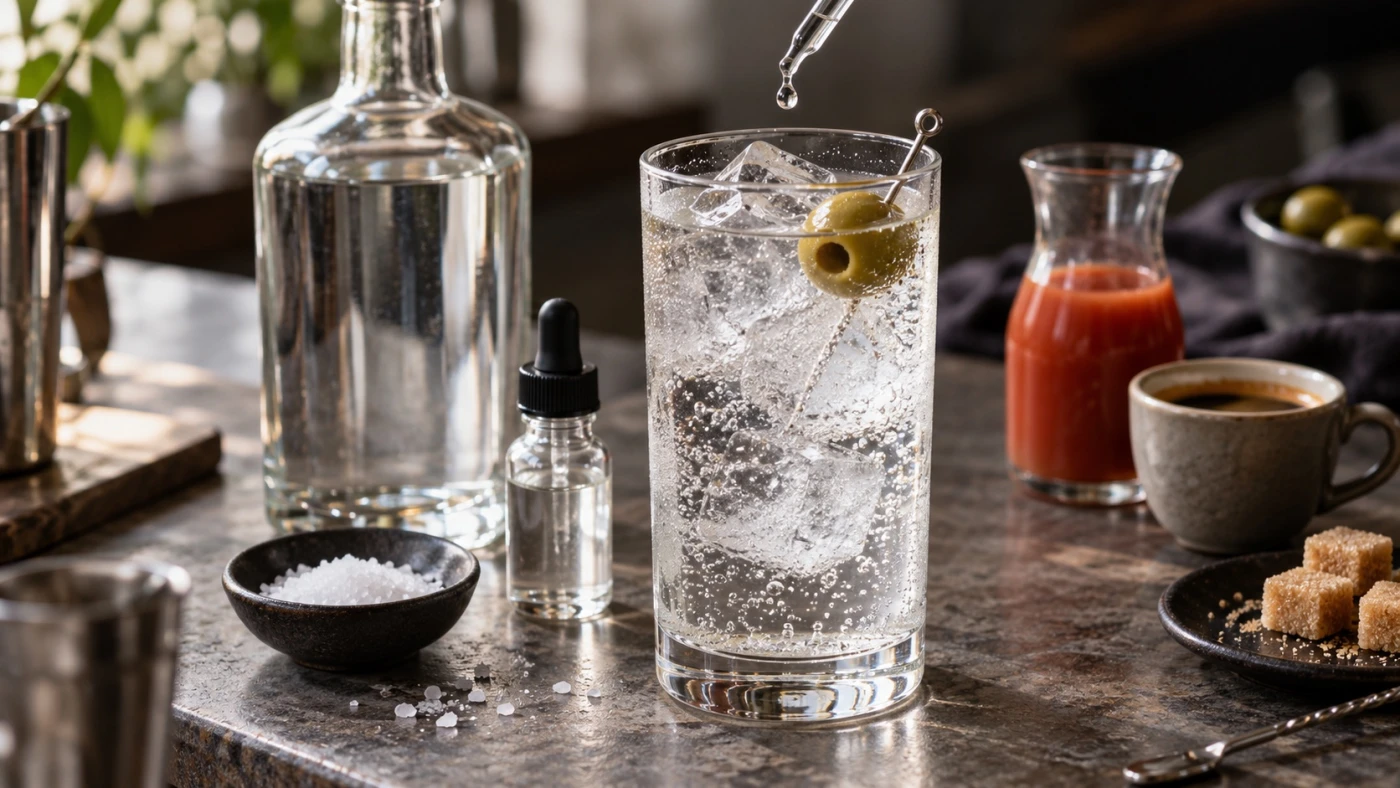
Account for ice, time, and dilution
Seasoning should be evaluated at the drink's intended serving condition. Shaking or stirring introduces water, while melting ice continues to dilute drinks served on the rocks. A dose that seems prominent in an undiluted sample may become subtle after chilling; conversely, repeatedly adding saline while tasting a warming drink can lead to overseasoning.
For a drink served straight up, add saline before shaking or stirring so it disperses evenly, then assess the finished cocktail. For a highball, build the complete drink—including carbonation—before making the final judgment. For a drink served over ice, taste soon after serving and again after a minute or two if slow dilution is part of its normal experience.
When batching, establish the dose in one fully diluted serving first. Multiply that measured volume by the number of servings, but initially add only about three-quarters of the calculated saline to the batch. Chill, mix, taste a representative sample, and add the remainder only if needed.
Diagnose common saline mistakes
The drink tastes salty. The dose has passed the useful threshold. Dilute the mistake by adding more of the unsalted cocktail in its original proportions. Extra citrus or sugar alone will change the drink's balance rather than simply reversing the salt.
Nothing seems to change. Confirm that the bottle contains the intended concentration and that the dropper is working. Mix the drink completely, then compare small samples with and without saline. If the flavors are stale or the base recipe is badly balanced, correct that underlying issue instead of continuing to add drops.
The first sip works, but later sips become harsh or thin. This usually points to temperature or ice dilution rather than insufficient salt. Review the ice, glass temperature, stirring or shaking time, and serving format.
A savory drink becomes heavy or briny. Count every source of salt, including tomato juice, olive brine, hot sauce, Worcestershire-style sauce, and seasoned garnishes. Saline may be unnecessary when those ingredients already provide enough seasoning.
Results change from one session to another. Salt measured by spoon can vary with crystal size, and drops vary among bottles. Weigh the solution, use the same dropper, and record both the recipe and final dose.
How to recognize the right dose
The successful dose is usually the last addition that improves the drink without becoming identifiable. Citrus may seem more vivid, a bitter finish may feel less dominant, or separate components may read as one coherent flavor. The cocktail should still taste like its ingredients—not like salted water.
A useful calibration exercise is to divide one finished vodka cocktail into three small samples. Leave the first unsalted, add two drops to the second, and add four drops to the third. Taste them side by side at the same temperature. The goal is not to select the saltiest sample; it is to identify where clarity improves and where the effect begins to flatten or become intrusive. Once you can locate that threshold, you can apply the same taste-adjust-record process to a new drink.
Ask AI about this article
Pick a prompt, copy it, or open ChatGPT with this article preloaded.
Comments 0
Login to Post comments