
How to Make Oleo Saccharum for Brighter Vodka Citrus Cocktails
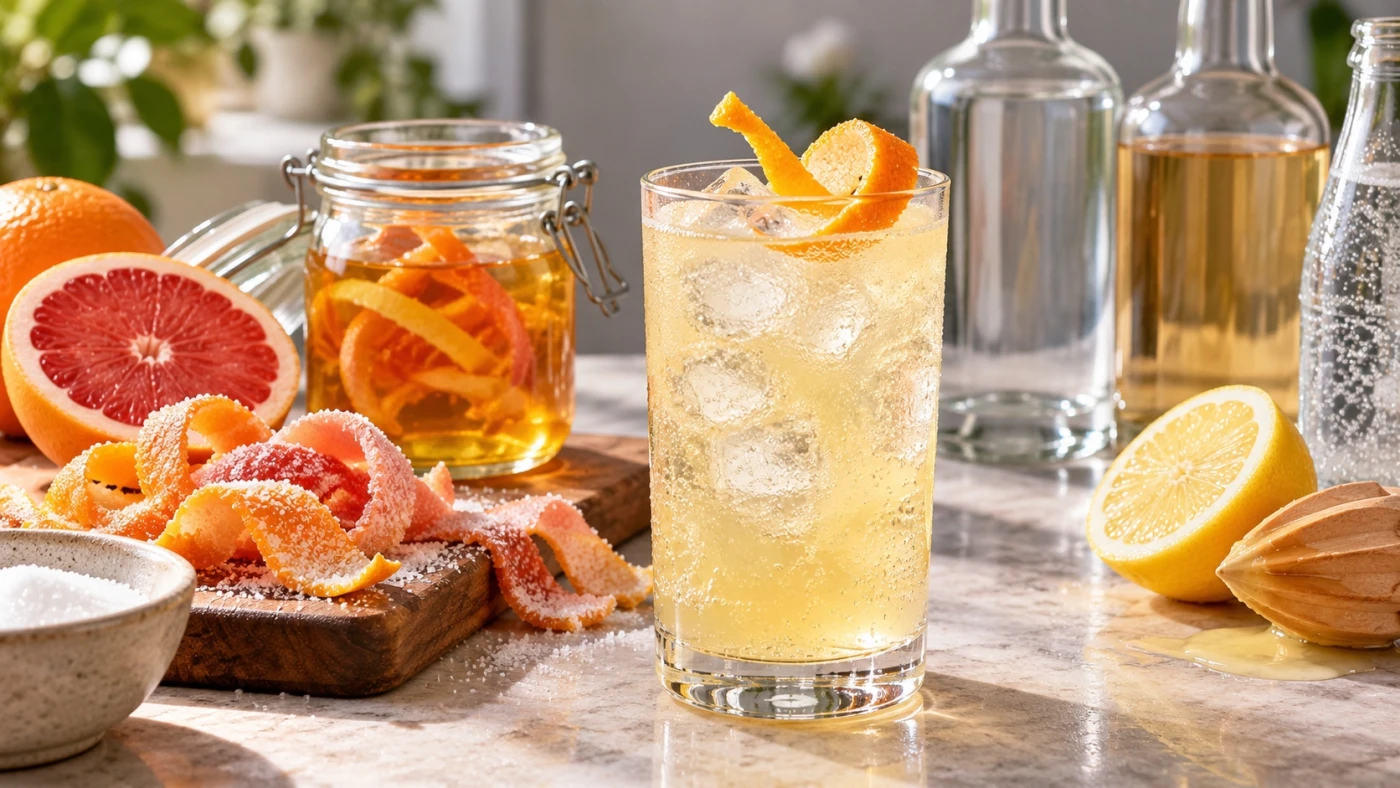
Oleo saccharum is a syrup made by combining citrus peel with sugar until the peel releases aromatic oils and moisture. It matters when a vodka drink…
- It matters when a vodka drink needs more citrus fragrance and depth without simply becoming more acidic.
- That distinction is especially useful with vodka.
- Because vodka generally contributes less fruit or botanical flavor than spirits such as rum or gin, the difference between plain simple syrup and a peel-rich citrus syrup can be easy to notice.
- Weight is more reliable than volume because strips of peel leave large air gaps in a measuring cup.
- The 1:1 ratio is a starting point, not a rule: a little more sugar can help coat an awkwardly large batch of peel, while a lower-sugar batch may produce less syrup and dissolve less consistently.
Oleo saccharum is a syrup made by combining citrus peel with sugar until the peel releases aromatic oils and moisture. It matters when a vodka drink needs more citrus fragrance and depth without simply becoming more acidic. Fresh juice supplies tartness and some aroma; oleo saccharum emphasizes the character of the peel—the part you smell when twisting a strip of lemon or orange over a glass.
That distinction is especially useful with vodka. Because vodka generally contributes less fruit or botanical flavor than spirits such as rum or gin, the difference between plain simple syrup and a peel-rich citrus syrup can be easy to notice. The technique transfers across sours, Collins-style drinks, punches, spritzes and alcohol-free mixers.
A scalable starting formula
Use equal weights of prepared citrus peel and granulated sugar for a dependable first batch:
- 100 g citrus peel, from roughly 4–6 lemons or 2–4 oranges, depending on size
- 100 g granulated sugar, about 1/2 cup
Weight is more reliable than volume because strips of peel leave large air gaps in a measuring cup. The 1:1 ratio is a starting point, not a rule: a little more sugar can help coat an awkwardly large batch of peel, while a lower-sugar batch may produce less syrup and dissolve less consistently.
Lemon gives a sharp, familiar citrus aroma. Orange is rounder and sweeter-smelling. Grapefruit brings floral bitterness, while lime is vivid but can become pithy quickly. Mixing peels works well; record the weights so a successful blend can be repeated.
How to perform the technique
- Wash and dry the fruit. Use sound, fresh citrus. Dry surfaces prevent stray water from diluting the first extraction.
- Remove broad strips of peel. Use a sharp vegetable peeler and leave most of the white pith on the fruit. A few thin traces are harmless; thick pith contributes unnecessary bitterness.
- Combine by weight. Put 100 g peel and 100 g sugar in a clean, nonreactive bowl or jar.
- Massage for 1–2 minutes. Press and rub the sugar firmly into the colored side of the peel. The sugar may become slightly damp and fragrant.
- Cover and rest. Leave the mixture for 4–8 hours at cool room temperature, stirring or shaking it once or twice. If the room is warm, or if holding it overnight, refrigerate it and allow more time.
- Strain. Press the peels gently to recover the syrup, but do not grind or pulverize them. If undissolved sugar remains, stir in 15 ml (1/2 oz) warm water at a time—only enough to dissolve it.
- Bottle and chill. Transfer the syrup to a clean container, label it with the citrus and date, and refrigerate. For conservative home use, make small batches, use within about one week and discard it sooner if it develops mold, fermentation, an off odor or an unexpected fizzy character.
A useful working model is that rubbing damages tiny oil-bearing structures in the colored peel, while sugar draws out moisture and forms a concentrated syrup around those aromatic compounds. Exact yield varies with the fruit's freshness, peel thickness and water content, so sensory cues are more dependable than expecting a fixed volume.
How to tell when it has worked
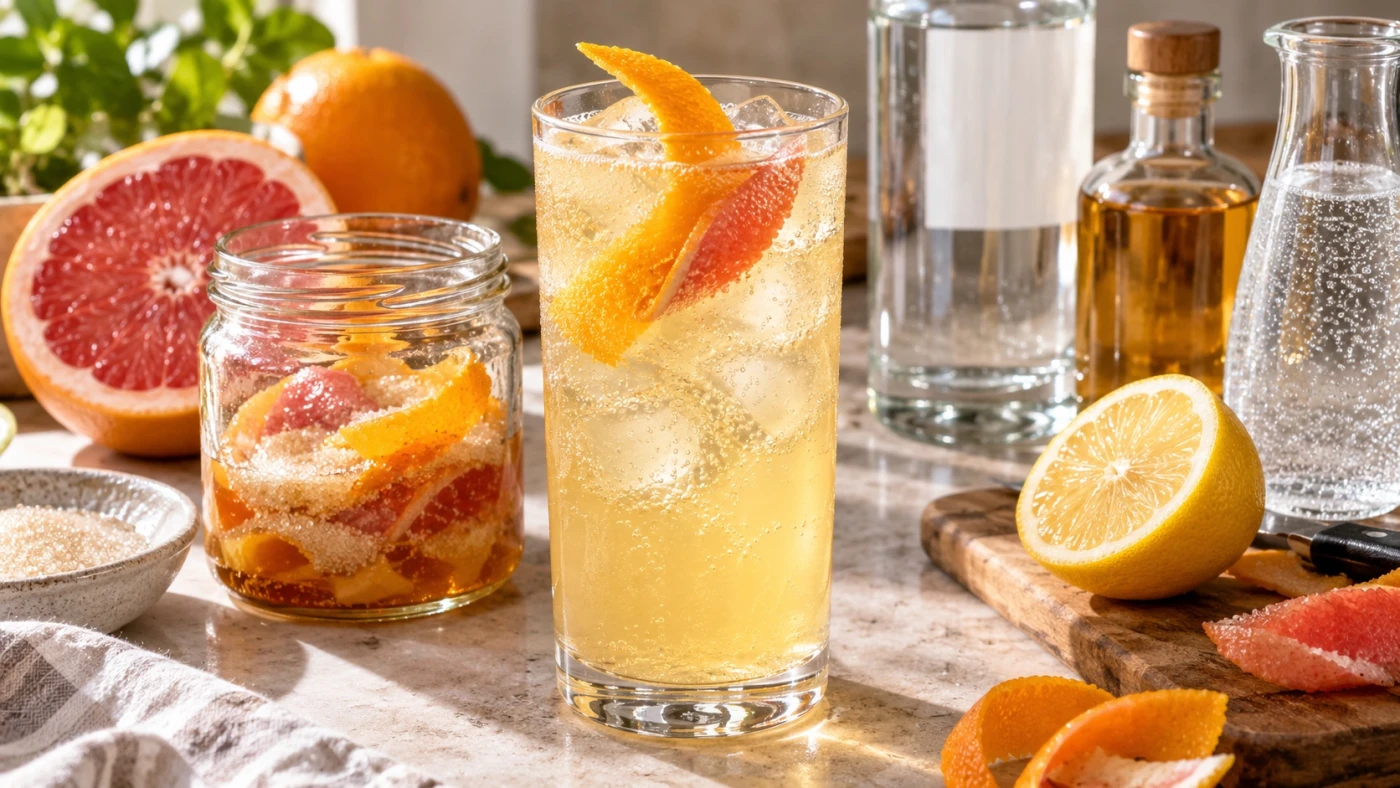
A successful batch has a strong, fresh peel aroma before it reaches the nose, visible syrup pooled around the fruit and peels that look glossy and somewhat softened. Taste a drop diluted with a little water. It should be intensely aromatic and sweet, with bitterness acting as an accent rather than the dominant flavor.
Do not wait for every sugar crystal to disappear before judging the extraction. Citrus with relatively dry peel may release plenty of aroma but not enough water to dissolve all the sugar. A measured splash of warm water after extraction solves that problem without muting the syrup prematurely.
Apply it to different vodka drinks
Treat oleo saccharum as a flavored sweetener. When adapting an existing drink, replace its simple syrup rather than adding oleo on top of the original sugar.
- Vodka sour: Begin with 60 ml (2 oz) vodka, 22.5 ml (3/4 oz) fresh lemon juice and 15 ml (1/2 oz) lemon oleo saccharum. Shake with ice and strain. If it tastes sharp, add another 5 ml (1 teaspoon) syrup; if soft or candied, reduce the syrup next time.
- Vodka Collins: Shake 45 ml (1 1/2 oz) vodka, 22.5 ml (3/4 oz) citrus juice and 15 ml (1/2 oz) oleo saccharum with ice. Strain over fresh ice and add 60–90 ml (2–3 oz) chilled soda water. Carbonation spreads the peel aroma, but it also reduces perceived sweetness.
- Spirit-forward vodka drink: Stir 60 ml (2 oz) vodka with 7.5 ml (1/4 oz) orange oleo saccharum and bitters, if desired. Use a small amount because there is no juice or soda to dilute the sugar.
- Batch or punch: Add the oleo in stages and taste the fully diluted mixture. A syrup that seems balanced in a single shaken drink may become dominant when multiplied.
These are application formulas, not one mandatory cocktail. The transferable principle is to choose the peel for aroma, use juice for acidity and adjust the syrup according to the drink's final dilution.
Control time, temperature, ice and dilution
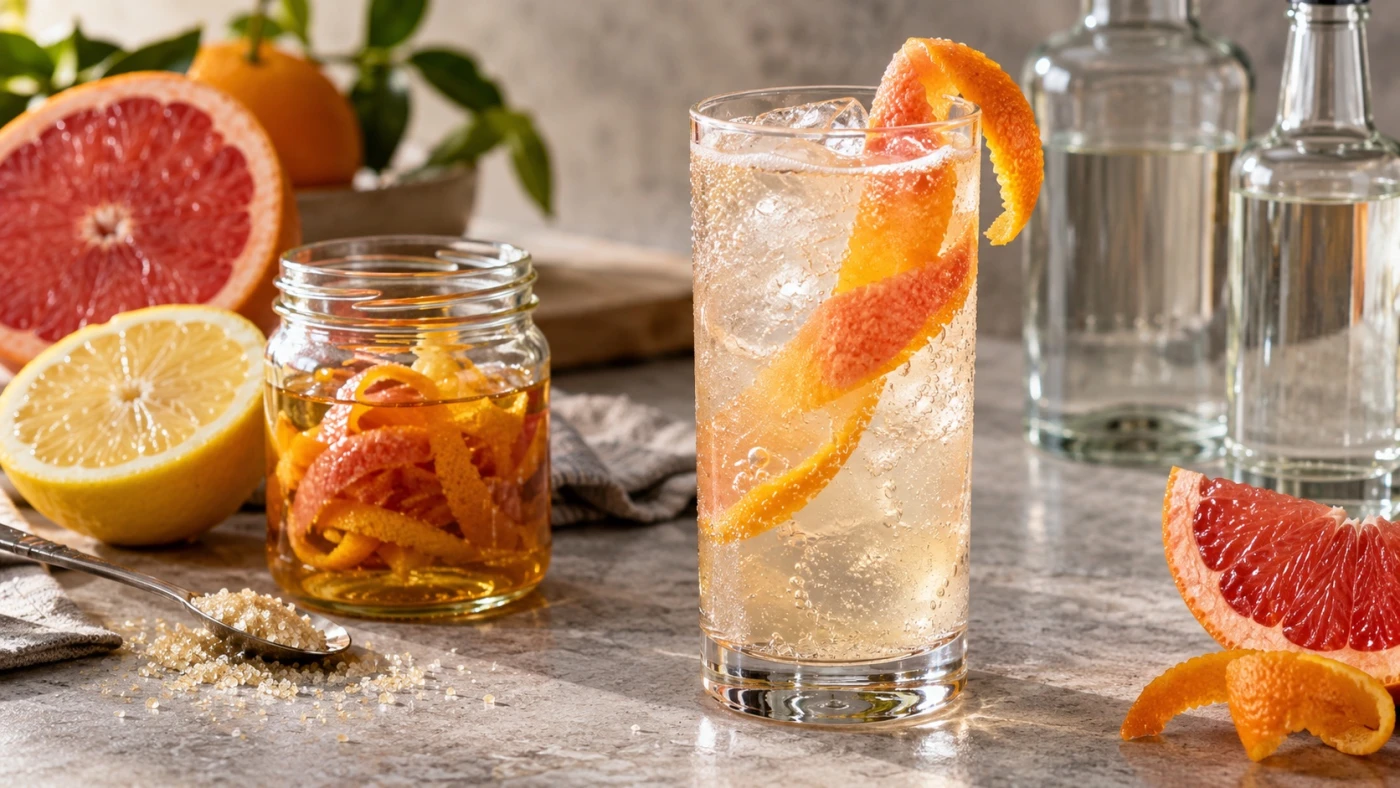
Time: Four hours can be enough for fresh lemon or orange peel; a drier batch may need eight hours or an overnight refrigerated rest. Extending the rest indefinitely does not guarantee more useful aroma and can increase bitterness when substantial pith is present.
Temperature: Moderate warmth speeds dissolving, but heating the peel directly can change its fresh aroma. If sugar remains after extraction, add a little warm water to the strained syrup instead of cooking the entire mixture.
Ice: Oleo saccharum does not determine a cocktail's dilution by itself. Shake citrus-forward drinks with plenty of cold ice, and stir spirit-forward drinks when clarity and a smoother texture are preferred.
Dilution: The syrup is concentrated, so evaluate it in the finished drink. Shaking, melting ice and soda water all lower sweetness and aromatic intensity. Change one variable at a time: first syrup, then acid, then final dilution.
Diagnose common failures
| Problem | Likely cause | Practical fix |
|---|---|---|
| Weak aroma | Old fruit, too little rubbing or peel with little colored zest | Add freshly peeled zest, massage again and rest longer; use fresher citrus next time |
| Harsh bitterness | Too much white pith, crushed peel or an unnecessarily long extraction | Strain promptly and blend with a sweeter, cleaner batch; peel more shallowly next time |
| Dry, grainy mixture | The peel released too little water to dissolve the sugar | Finish the extraction, strain, then add warm water in 15 ml (1/2 oz) increments |
| Syrup tastes good but disappears in the drink | Too much soda, juice or ice dilution | Increase oleo in 5 ml (1 teaspoon) steps or reduce another diluting ingredient |
| Cocktail tastes like citrus sweets | Too much oleo or too little acidity | Reduce the syrup first; then adjust fresh juice in small increments if needed |
| Muddy mixed-citrus flavor | Too many peel varieties or no dominant citrus | Build around one main peel and use a smaller amount of a second for contrast |
The technique succeeds when the drink smells distinctly of fresh peel while remaining balanced enough that vodka, acidity and dilution still have clear roles. Once that relationship makes sense, the same method can be transferred to almost any citrus-led vodka cocktail.
Ask AI about this article
Pick a prompt, copy it, or open ChatGPT with this article preloaded.
Comments 0
Login to Post comments