
Winter Vodka Entertaining: A Host Guide for Make-Ahead Service
Winter entertaining creates four practical constraints: the number of guests, the length of the gathering, limited refrigerator space and the amount of…
- For an eight-person gathering lasting two to three hours, a useful starting point is two alcoholic servings per person, or 16 servings altogether.
- The simplest workable menu is not a parade of individually shaken cocktails.
- It is two contrasting vodka drinks that share some prep: one long, bright and sparkling; the other short, citrus-led and gently spiced.
- Both can be measured ahead, yet neither depends on hours-old bubbles or pre-cut garnishes.
- A standing party benefits from drinks that can be poured quickly and carried easily.
Winter entertaining creates four practical constraints: the number of guests, the length of the gathering, limited refrigerator space and the amount of time you want to spend making drinks after the doorbell rings. For an eight-person gathering lasting two to three hours, a useful starting point is two alcoholic servings per person, or 16 servings altogether. Increase or reduce that amount according to your guests, and provide water plus a genuinely appealing alcohol-free option.
The simplest workable menu is not a parade of individually shaken cocktails. It is two contrasting vodka drinks that share some prep: one long, bright and sparkling; the other short, citrus-led and gently spiced. Both can be measured ahead, yet neither depends on hours-old bubbles or pre-cut garnishes.
Build the plan around the occasion
Start with service rather than individual recipes. A standing party benefits from drinks that can be poured quickly and carried easily. A seated dinner can accommodate a smaller, stronger drink served once everyone is at the table. If guests arrive over a long window, keep the sparkling batch in a sealed bottle or jug and top individual glasses; a punch bowl filled too early will gradually lose carbonation and gain dilution.
For eight guests, divide the planned 16 servings between the two cocktails: ten cranberry-rosemary highballs and six orange-spice vodka cocktails. This is a planning quantity, not a target for consumption. Keeping the second batch in the refrigerator allows you to serve only what is wanted.
A clean, unflavoured vodka at around 40% ABV works in both recipes. There is no need to chase a supposed single “best” bottle: choose one you enjoy, with a neutral-to-gently-grain character and no harsh finish when tasted with a little chilled water. Strongly flavoured vodka may compete with the fruit and spice rather than support them.
Choose two drinks with different jobs
The sparkling cranberry-rosemary highball is the arrival drink. Its tart fruit, lemon and carbonation make it lively rather than heavy, while rosemary contributes aroma without requiring a sweet, syrupy cocktail. It is also the easier choice for guests who prefer a longer drink.
The orange-spice vodka cocktail is shorter and more concentrated. Orange liqueur adds citrus depth, while a restrained cinnamon syrup supplies the winter note. It suits dinner or the later part of the evening, when a smaller chilled serving feels more deliberate.
The drinks overlap in vodka and citrus but do not taste identical. That matters: offering two near-duplicate red fruit drinks creates extra work without giving the guest a meaningful choice.
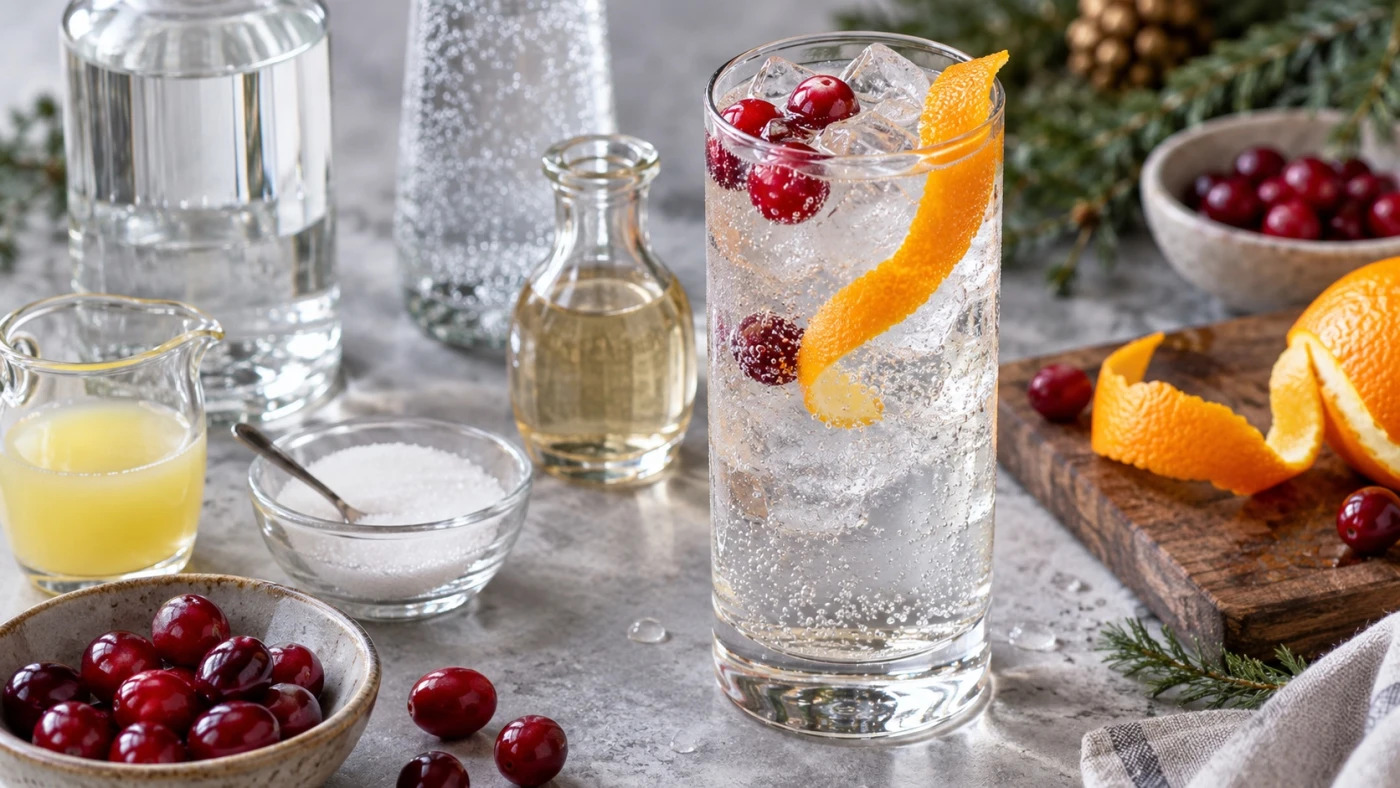
Sparkling cranberry-rosemary vodka highball
Makes 10 servings
Batch ingredients:
- 15 oz / 450 ml vodka
- 10 oz / 300 ml unsweetened cranberry juice
- 5 oz / 150 ml rosemary syrup
- 5 oz / 150 ml fresh lemon juice
- 20 oz / 600 ml chilled soda water, added at service
- Ice
- 10 rosemary tips or thin lemon wheels, optional
Method: Up to 24 hours before serving, combine the vodka, cranberry juice, rosemary syrup and lemon juice in a clean, sealable 1-litre bottle or jug. Refrigerate. Immediately before service, pour the cold base into an ice-filled serving jug and gently stir in the chilled soda water. Alternatively, pour 3½ oz / 105 ml of base into each ice-filled glass and add 2 oz / 60 ml soda water. Garnish only as drinks are served.
To make the rosemary syrup, gently heat equal volumes of sugar and water until the sugar dissolves, remove from the heat and add a few clean rosemary sprigs. Steep for about 15 minutes, strain and cool. Do not boil the rosemary aggressively; an over-extracted syrup can taste woody or medicinal.
Why it fits: All still ingredients can be batched the previous day. Adding soda water at the last moment preserves carbonation, while individual topping lets the host open only as much batch as the party requires.
Make-ahead orange-spice vodka cocktail
Makes 6 servings
Batch ingredients:
- 12 oz / 360 ml vodka
- 3 oz / 90 ml orange liqueur
- 3 oz / 90 ml fresh lemon juice
- 1½ oz / 45 ml cinnamon syrup
- 4½ oz / 135 ml cold water for planned dilution
- 6 wide strips of orange peel, optional
Method: Combine all liquid ingredients in a sealable 750 ml bottle. Refrigerate for at least four hours, or place in the freezer for 60–90 minutes before serving; because domestic freezers vary, check it periodically rather than allowing it to freeze solid. Shake the sealed bottle briefly to recombine, then pour 4 oz / 120 ml per serving into small chilled cocktail glasses or over one large ice cube. Express an orange peel over each glass and discard it or use it as a garnish.
For cinnamon syrup, dissolve equal volumes of sugar and water with a small piece of cinnamon stick, remove from the heat and steep for 10 minutes before straining and cooling. Keep the spice subtle: the orange should remain clear, and the vodka should provide structure rather than disappear beneath cinnamon.
Why it fits: Adding measured water to the batch replaces part of the dilution normally supplied by stirring with ice. That makes each serving consistent and removes the need to mix six cocktails individually. The drink contains fresh citrus, so prepare it no more than a day ahead and keep it refrigerated.
A two-day preparation timeline
Two days before: Confirm the guest count, drinking preferences and refrigerator capacity. Check that your bottles or jugs have secure lids and enough volume. Make the rosemary and cinnamon syrups, cool them promptly, label them and refrigerate.
The day before: Juice the lemons and prepare both cocktail bases. Keep the soda water unopened and cold. Wash and thoroughly dry garnishes. If using orange peels or lemon wheels, leave the fruit whole until the day of the gathering so the garnish remains aromatic and fresh-looking.
Four hours before: Chill the orange-spice batch and the serving glasses. Put extra water and the alcohol-free drink where guests can see them. Fill an ice bucket shortly before arrival rather than storing uncovered ice beside strongly scented freezer foods.
Thirty minutes before: Cut the garnishes, arrange glasses and place a towel beneath the drinks area. Keep both cocktail batches refrigerated. Set out the first round only when guests begin to arrive.
At service: Add soda water to the cranberry-rosemary drink as needed. Pour the orange-spice cocktail cold and in its measured 4 oz / 120 ml portion. Return opened batches to the refrigerator between rounds, and do not pressure guests to match the quantity prepared.
Control temperature, dilution and pace
Warm ingredients melt ice rapidly, leaving the first glass balanced and later glasses watery. Chill the vodka, juices, mixers and vessels before assembly. For the sparkling drink, use plenty of fresh ice and add bubbles last. For the short cocktail, retain the measured batch water even when serving over ice; omitting it produces a stronger, sharper drink than intended.
Label the two batches so another person can serve them correctly, including the portion and whether soda water must be added. Put water and the alcohol-free option on the same drinks table instead of treating them as an afterthought. With the quantities measured, the cold components ready and the service instructions visible, the host can spend the evening hosting rather than rebuilding a cocktail station for every order.
Ask AI about this article
Pick a prompt, copy it, or open ChatGPT with this article preloaded.
Comments 0
Login to Post comments