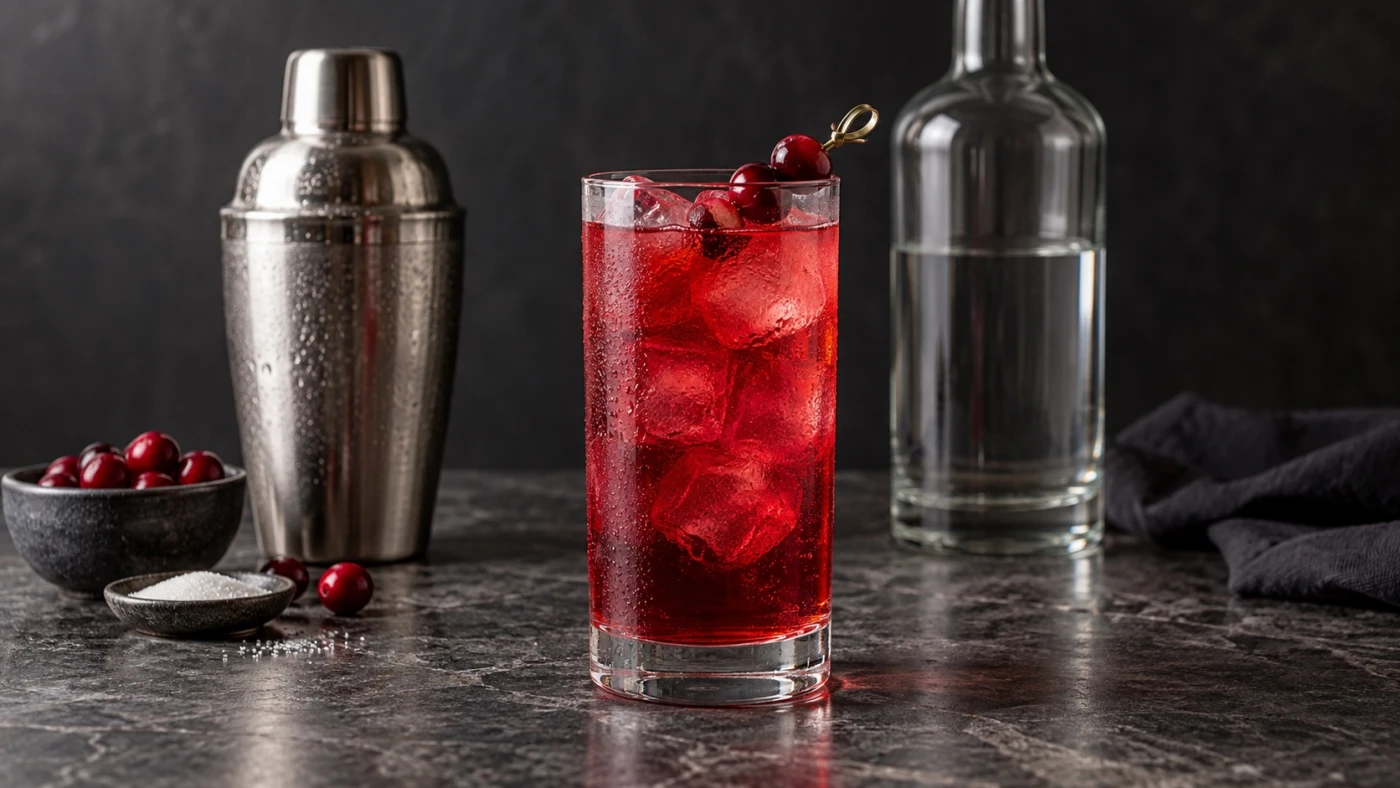

Shaker Vodka Cranberry: What Shaking Changes in the Drink
What does putting a Vodka Cranberry in a shaker actually accomplish? The useful answer is more specific than “it makes the drink cold.” Shaking changes…
- After reading this guide, you will be able to decide whether your version should be shaken or built directly in the glass—and identify which ingredient matters most to that choice.
- “Shaker Vodka Cranberry” is best understood as a technique description: vodka and a cranberry-based mixer are chilled together with ice in a cocktail shaker, then poured or strained for service.
- It is not necessarily a separate standardized cocktail with one universally accepted formula.
- The familiar built version is assembled over ice in its serving glass.
- A built drink usually stays visually layered for a moment, continues diluting in the glass and can be lengthened easily.
What does putting a Vodka Cranberry in a shaker actually accomplish? The useful answer is more specific than “it makes the drink cold.” Shaking changes its temperature, dilution and texture, and it can make tart cranberry products easier to balance consistently. After reading this guide, you will be able to decide whether your version should be shaken or built directly in the glass—and identify which ingredient matters most to that choice.
What is a Shaker Vodka Cranberry?
“Shaker Vodka Cranberry” is best understood as a technique description: vodka and a cranberry-based mixer are chilled together with ice in a cocktail shaker, then poured or strained for service. It is not necessarily a separate standardized cocktail with one universally accepted formula.
The familiar built version is assembled over ice in its serving glass. Both approaches combine the same basic flavors, but they do not create exactly the same drinking experience. A built drink usually stays visually layered for a moment, continues diluting in the glass and can be lengthened easily. A shaken drink begins service already chilled, aerated and partially diluted.
That distinction matters because “cranberry juice” can describe products with very different sweetness, acidity and concentration. Technique cannot correct a fundamentally unsuitable balance, but it can make a considered balance more repeatable.
What the shaker changes
Faster chilling
Shaking repeatedly moves liquid across cold ice surfaces. This transfers heat efficiently, so room-temperature vodka and cranberry mixer can cool quickly. The exact result varies with the starting temperatures, ice quantity, ice condition, shaker and duration; a universal shaking time would imply more precision than a home setup can reliably deliver.
Dilution that becomes part of the drink
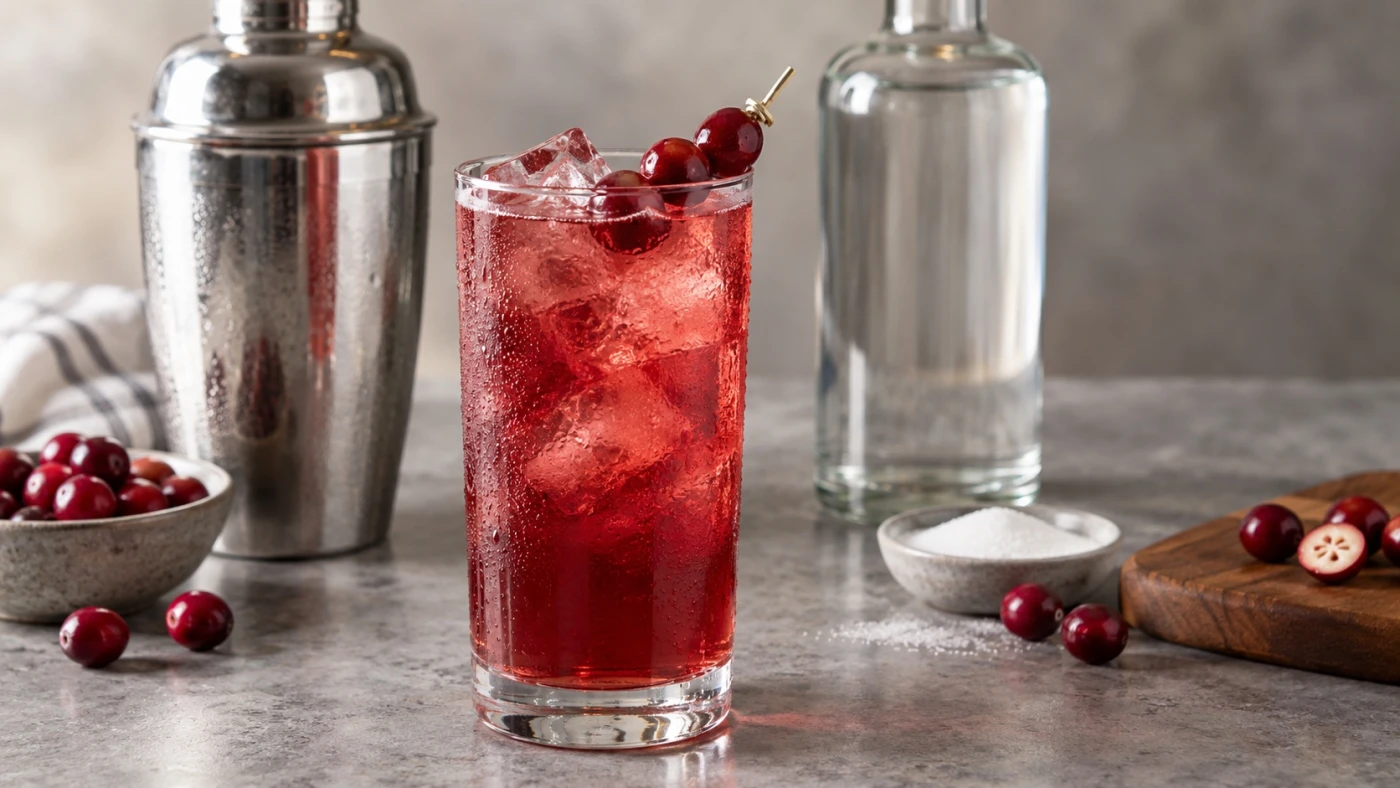
Ice does more than refrigerate the mixture. Some of it melts as it absorbs heat, adding water. That water can soften alcohol heat, reduce the impression of cranberry acidity and spread sweetness across the palate. Shaking does not mysteriously “bruise” vodka; the meaningful changes are cooling, added water and aeration.
Dilution is therefore an ingredient even when it is not poured from a bottle. Too little can leave a concentrated cranberry product severe and the vodka conspicuous. Too much can make a sweet, ready-to-drink cranberry beverage taste thin.
Temporary aeration and texture
A shaker introduces small air bubbles. These can give the first few sips a lighter texture and may create a narrow cap of foam, particularly with a cranberry product containing suspended fruit material. The effect is temporary. Shaking does not carbonate the drink, and a sealed shaker does not force in carbon dioxide.
Why the cranberry label matters more than the shaker
The most useful buying decision is to read the front and ingredient labels instead of treating every red cranberry beverage as equivalent.
- Cranberry juice cocktail or cranberry drink: commonly sweetened and often blended or diluted to make it approachable as a beverage. It usually produces a softer, longer Vodka Cranberry.
- Reduced-sugar versions: may use alternative sweeteners or a different juice balance. They can preserve sweetness while changing body and finish.
- Unsweetened cranberry juice: can be intensely tart and concentrated. Substituting it one-for-one for a sweetened cranberry drink may produce an austere cocktail.
- Blends: cranberry may be combined with apple, grape or another juice. These products can make a pleasant drink, but their sweetness and fruit character come from the whole blend.
Packaging terminology varies by market and producer, so the product's ingredient list and nutrition panel are more informative than color alone. There is no single “best” category: choose according to whether you want an easy highball-style drink or a shorter, tarter cocktail whose sweetness you control separately.
How to decide whether to shake or build
Use the cranberry product as the decision point.
Shake when control matters. A tart or concentrated cranberry component benefits most from deliberate chilling and dilution. Shaking is also useful when you want the drink uniformly mixed before it reaches the glass or prefer a briefly aerated texture.
Build when refreshment and gradual dilution matter. A sweetened cranberry drink designed for direct consumption often works naturally as a longer serve over ice. Building also makes it easier to adjust the mixer after tasting.
Do not shake carbonation. If sparkling water, soda or another carbonated ingredient is part of the intended drink, add it after shaking the non-carbonated components. Agitating a sealed carbonated mixture can create pressure and an uncontrolled release when the shaker opens.
For either method, taste the cranberry component first. If it is already sweet and mild, additional dilution may mute it. If it is bracingly tart, the drink may require more than vigorous shaking: dilution can reduce intensity, but it does not replace sweetness where sweetness is needed for balance.
Choosing vodka for cranberry
Cranberry is assertive enough that subtle differences among clean, unflavoured vodkas may be less obvious here than in a spirit-forward drink. That does not mean the vodka is irrelevant.
Check the alcohol by volume on the bottle rather than assuming all vodkas have the same strength. A higher-strength vodka can remain more evident beneath a sweet mixer and will produce a stronger finished drink if the poured quantities stay unchanged. A lower-strength bottling may integrate more gently. The declared bottle strength, the amount poured and the final dilution—not the red color or fruitiness—determine how much alcohol the drink contains.
For buying, prioritize a vodka whose flavor and price make sense in a mixed drink. Paying more for delicate distinctions that the cranberry component masks is a preference, not a technical requirement. Flavoured vodka is a separate choice because its sugar and flavorings can materially change the balance; check the producer's description rather than assuming it behaves like an unflavoured bottling.
Common misconceptions
Evidence and uncertainty notes
The physical explanation here relies on established principles of heat transfer, melting ice and aeration, but a home bartender should not expect one fixed dilution result from every shaker. Ice size, surface moisture, ingredient temperature and technique all vary.
Alcohol strength should be taken from the individual bottle's label. In the United States, alcohol labeling and distilled-spirit standards fall within the remit of the Alcohol and Tobacco Tax and Trade Bureau. Product categories and labeling conventions can differ in the UK, so compare declared alcohol by volume rather than relying on a category assumption.
The practical conclusion is straightforward: choose the cranberry product first, taste it, and then select the method. Shake a concentrated or tart mixture when you want controlled chilling and initial dilution; build a sweeter, longer version when adjustability and gradual dilution are more useful.
Ask AI about this article
Pick a prompt, copy it, or open ChatGPT with this article preloaded.
Frequently Asked Questions
Why does a shaken Vodka Cranberry sometimes look foamy?
Agitation traps small air bubbles in the liquid. Cranberry products containing more suspended material may hold that foam longer, but it normally settles and should not be mistaken for carbonation.
Should cranberry juice cocktail and unsweetened cranberry juice be mixed the same way?
No. Juice cocktail is normally sweetened and designed to be easier to drink on its own, while unsweetened cranberry juice can be markedly sharper and more concentrated. Taste the product before deciding how much dilution or sweetness the drink needs.
Does shaking make a Vodka Cranberry weaker?
Shaking does not remove alcohol, but melting ice adds water and lowers the drink's alcohol concentration. The total alcohol remains the same unless liquid is spilled or left behind in the shaker.
Comments 0
Login to Post comments