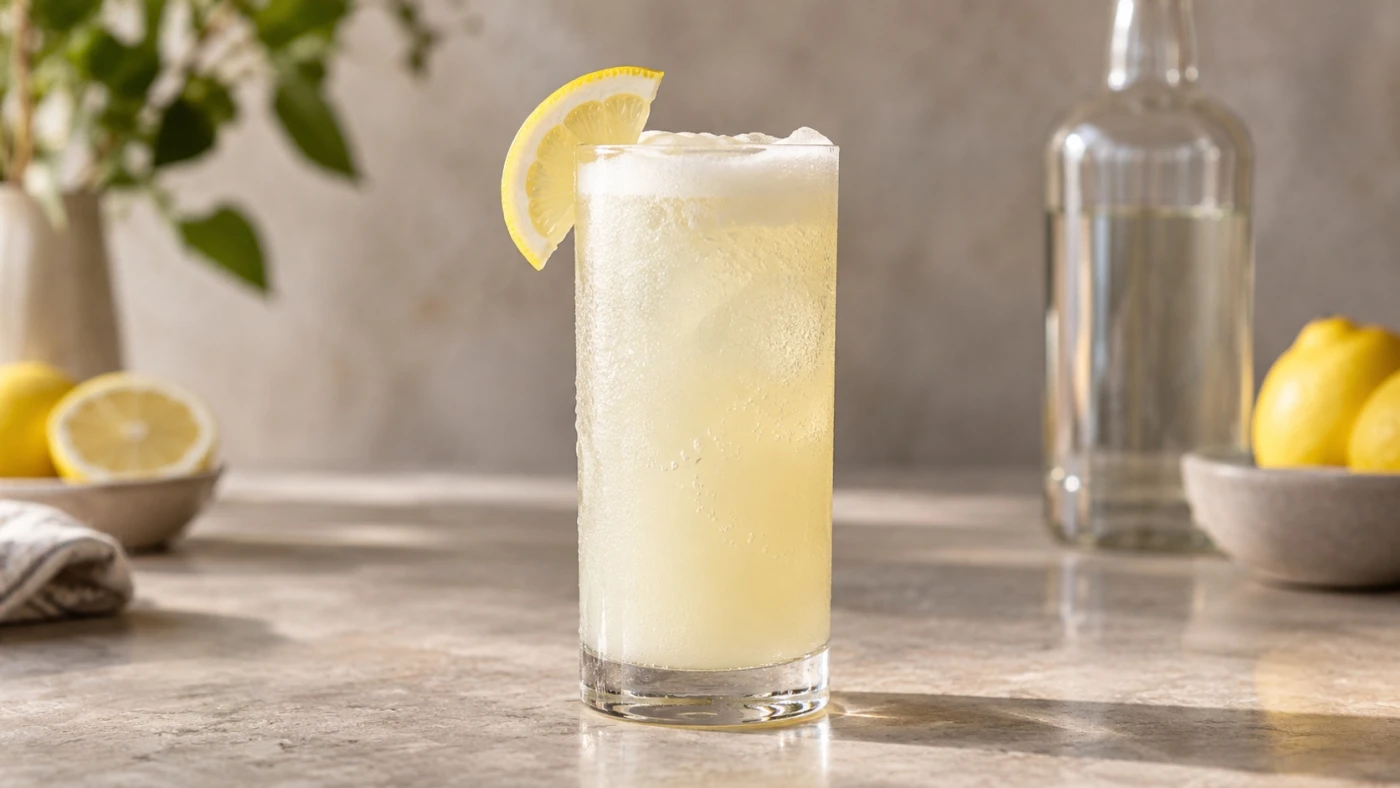

What Is a Vodka Daisy? Understanding the Cocktail Family
The useful question is not simply “What goes into a Vodka Daisy?” but “What makes the drink a Daisy rather than an ordinary vodka sour?” Once you…
- There is no single modern specification that every bar or cocktail book follows.
- A basic sour is built from spirit, citrus and sugar.
- A Daisy changes the role of the sweet component: some or all of the sweetness comes from something with its own flavour, historically often orange liqueur.
- That modifier is not merely decoration.
- It helps define the drink.
The useful question is not simply “What goes into a Vodka Daisy?” but “What makes the drink a Daisy rather than an ordinary vodka sour?” Once you understand that distinction, you can choose an appropriate vodka and sweetener, recognise why a version tastes sharp or heavy, and make a deliberate adjustment.
A Vodka Daisy is best understood as a flexible cocktail structure. It combines vodka with citrus and a sweet ingredient that also contributes flavour—commonly a liqueur or flavoured syrup. Some interpretations receive a small addition of sparkling water. There is no single modern specification that every bar or cocktail book follows.
The Daisy is a family, not one immutable drink
A basic sour is built from spirit, citrus and sugar. A Daisy changes the role of the sweet component: some or all of the sweetness comes from something with its own flavour, historically often orange liqueur. That modifier is not merely decoration. It helps define the drink.
The working structure is therefore:
base spirit + citrus + flavour-bearing sweetener + optional sparkling finish
That definition leaves room for different presentations. A Daisy may be served up, over ice or with a modest soda finish. The category is more informative than the glass shape: if vodka, citrus and a liqueur or flavoured syrup form the drink's central balance, “Vodka Daisy” is a useful description.
What changes when vodka is the base
Vodka usually contributes less overt aroma than gin, whisky, rum or brandy. That does not make it irrelevant. Its alcohol level, texture and degree of neutrality still affect how the finished drink carries flavour.
This matters because the supporting ingredients become unusually exposed. Oxidised citrus, an excessively sweet liqueur or too much dilution cannot hide behind a strongly aromatic spirit. Conversely, a carefully balanced combination can make the fruit and liqueur exceptionally clear.
For a predictable starting point, choose an unflavoured vodka at a standard bottling strength and check the alcohol-by-volume statement on the label. The US Alcohol and Tobacco Tax and Trade Bureau explains how alcohol content appears on distilled-spirit labels in its distilled spirits labelling guidance. Higher-strength vodka changes both alcoholic intensity and the amount of water needed for balance, so it should not be substituted without reassessing dilution.
How sweetness, acidity and dilution interact
The most important practical point is that liqueur is not interchangeable with plain syrup by volume. It contributes sugar, alcohol and flavour, and different products can vary substantially in all three. A richly sweet orange liqueur may require little additional syrup; a drier modifier may need support.
Citrus supplies more than sourness. Its aroma creates much of the drink's freshness, while its acidity restrains sweetness. Lemon generally gives a broad, familiar sour profile; lime can feel sharper and may shift the drink toward associations with other members of the wider Daisy family. Fruit varies, so exact balance cannot be guaranteed by numbers alone.
Shaking chills and dilutes the non-carbonated ingredients while integrating citrus with alcohol and sugar. Sparkling water, if used, belongs after shaking because shaking a carbonated ingredient wastes carbonation and can pressurise the shaker. More soda lengthens and lightens the drink but also reduces the apparent intensity of citrus and liqueur.
A calibration example for understanding the structure
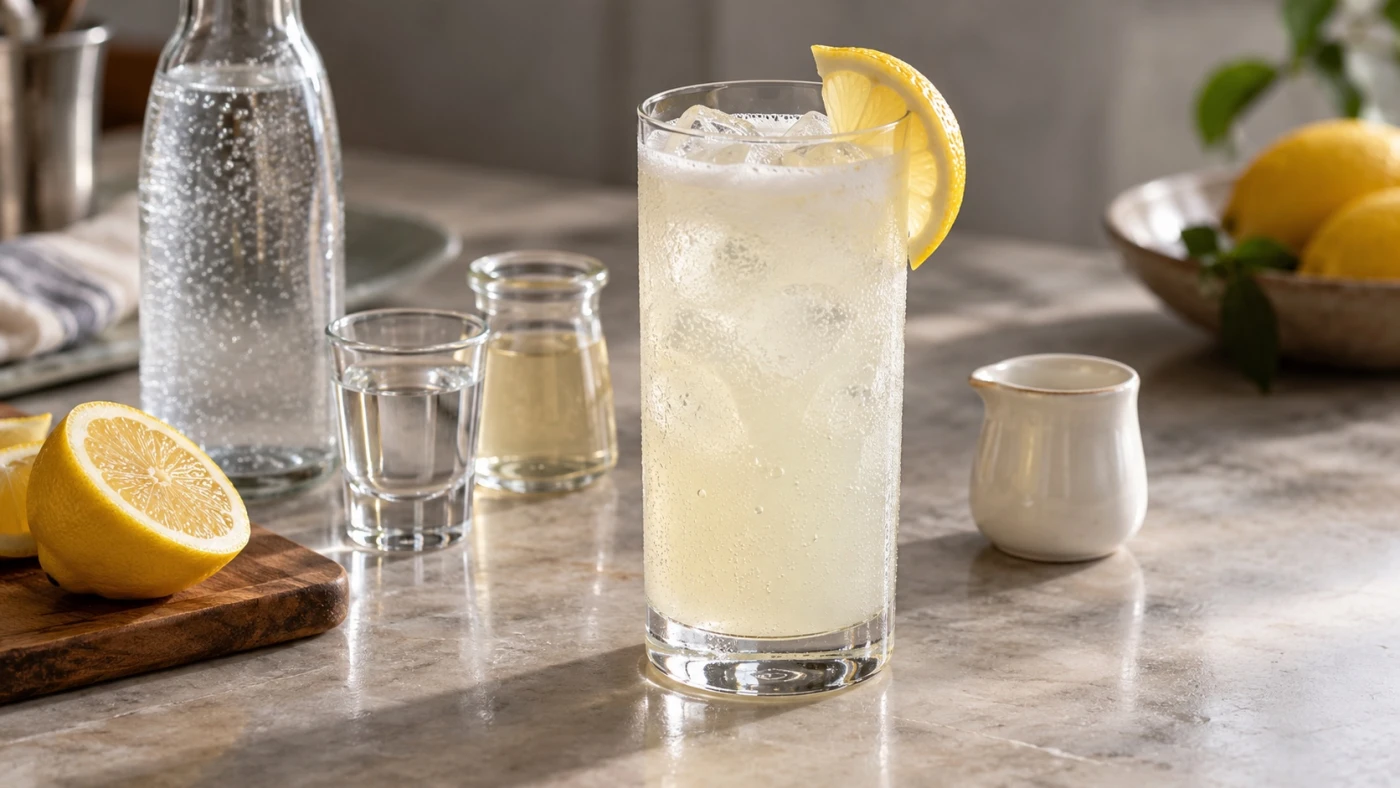
This is a reference point rather than the only valid Vodka Daisy: combine 2 US fl oz (59 ml) vodka, 3/4 US fl oz (22 ml) fresh lemon juice, 1/2 US fl oz (15 ml) orange liqueur and 1/4 US fl oz (7 ml) simple syrup. The non-carbonated mixture totals 3 1/2 US fl oz (103 ml).
Shake those four ingredients with ice in a cocktail shaker that has ample room for both liquid and moving ice. Strain over fresh ice into a sufficiently large rocks or highball glass, then add 1 US fl oz (30 ml) chilled soda water. Before dilution from the melting ice, the listed liquids total 4 1/2 US fl oz (133 ml) and make one drink. Add the soda only after straining and stir briefly.
Taste this as a calibration exercise. If it is too sharp, first determine whether the orange liqueur is relatively dry before adding more syrup. If it is sweet but dull, additional citrus may restore definition. If each flavour is forceful and disconnected, a little more dilution—not more sugar—may be the missing element.
Apply the idea when choosing ingredients
For a citrus-forward drink: use a clean, relatively neutral unflavoured vodka and let fresh lemon or lime lead. This is also the easiest configuration for diagnosing balance.
For more body: choose a vodka whose texture remains noticeable when chilled and diluted. Descriptions such as creamy, silky or weighty are subjective, so a small comparison at home is more reliable than assuming the raw material alone predicts texture.
For a strongly flavoured liqueur: keep the vodka neutral enough that the modifier has space, then reduce or omit supplementary syrup if the liqueur already provides sufficient sweetness.
For flavoured vodka: treat the added flavour as another modifier. It can work, but it makes the balance less modular because sweetness, aroma or flavour may already be present in the bottle. Check the label rather than assuming every citrus-flavoured vodka behaves like an unflavoured one.
A short historical note
The Daisy predates the Vodka Daisy as a named modern variation. According to The Oxford Companion to Spirits & Cocktails, Daisy recipes appeared in the 1876 second edition of Jerry Thomas's Bar-Tender's Guide, with brandy, whisky, gin and rum versions sweetened with orange liqueur. The same reference describes the Daisy as an American drink associated with the 1870s while noting that its precise origin has not been definitively proved.
Vodka's later use in the structure is therefore better understood as a base-spirit adaptation than as the original form of the Daisy. Historical and modern recipes also differ in sweeteners, service and carbonation, which is why overly rigid definitions can be misleading.
Common misconceptions
“A Vodka Daisy is one standardised recipe.” It is more accurately a vodka expression of a flexible cocktail family. Published ratios and presentations can legitimately differ.
“Any drink with vodka and lemon is a Daisy.” Citrus alone is not enough. A liqueur or flavoured syrup should play a structural role in the sweetness and flavour.
“Neutral vodka contributes nothing.” Even a restrained vodka supplies alcohol, weight and dilution requirements. Its relative neutrality also changes perception by exposing the supporting ingredients.
“More liqueur only makes the drink sweeter.” It can also raise alcohol content and intensify orange, herbal, floral or other flavours. Adjusting it changes several parts of the drink at once.
“Soda is compulsory—or incorrect.” Neither absolute is helpful. Sparkling water has historical support within the family, but modern Daisy definitions and recipes are not uniform. Decide whether you want a longer, lighter drink or a shorter, more concentrated one.
The decision to remember
When making or ordering a Vodka Daisy, identify where its flavoured sweetness comes from. That answer tells you more than the name alone: it predicts the drink's dominant aroma, indicates whether extra syrup is likely to be necessary and distinguishes the Daisy structure from a plain vodka sour. Start with the liqueur, citrus and vodka as a connected system, then use dilution or soda to set the desired intensity.
Evidence and uncertainty
The historical description above is grounded in a specialist reference work, while US label guidance comes from the TTB. Sensory descriptions and the calibration ratio are editorial mixing guidance rather than universal scientific rules. Citrus acidity, liqueur sweetness, ice, shaking and individual taste all vary, so final adjustment should be based on the particular bottles and fruit being used.
Ask AI about this article
Pick a prompt, copy it, or open ChatGPT with this article preloaded.
Frequently Asked Questions
Does a Vodka Daisy always contain orange liqueur?
No. Orange liqueur is a historically grounded and especially useful choice, but the broader Daisy family has also used other liqueurs and flavoured syrups. The replacement should supply both sweetness and a distinct flavour rather than acting as plain sugar alone.
Should a Vodka Daisy contain soda water?
It may, but modern interpretations are not completely uniform. A small soda finish connects the drink to older Daisy descriptions and makes it lighter; omitting soda produces a shorter, more concentrated cocktail.
What kind of vodka works best in a Vodka Daisy?
A standard-strength unflavoured vodka is the easiest starting point because it lets you control the citrus and sweet components separately. A fuller-textured vodka can give the drink more weight, while a very neutral bottle keeps attention on the liqueur and fruit.
Comments 0
Login to Post comments