Vodka Sunrise Explained: How the Color, Balance and Build Work
What makes a Vodka Sunrise look layered, and how should that affect the way you mix it? The essential idea is simple: vodka and orange juice form the…
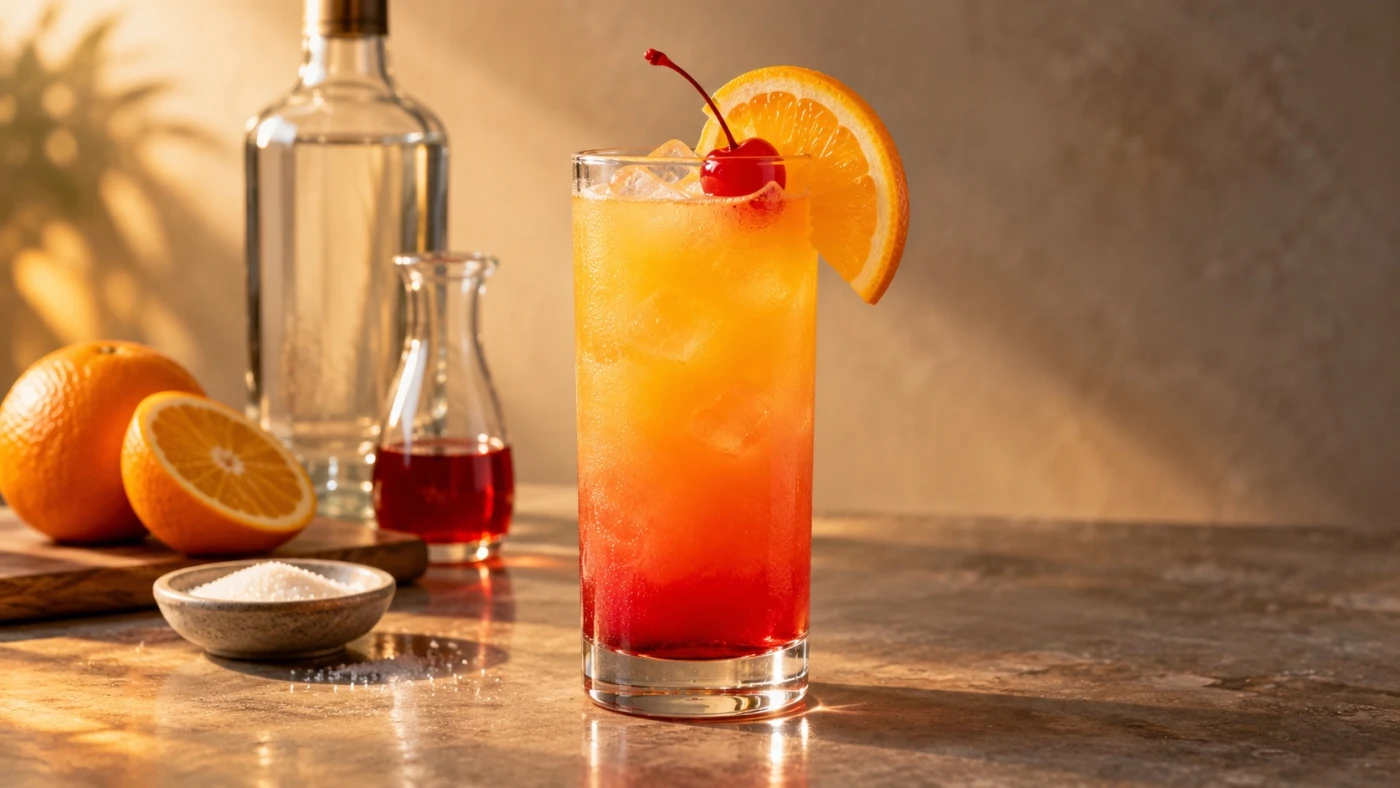
- The essential idea is simple: vodka and orange juice form the main drink, while denser grenadine sinks through that mixture and creates a red-to-orange gradient.
- Once you understand that movement—and the sweetness it introduces—you can control the appearance, balance and strength instead of merely copying a set of quantities.
- A Vodka Sunrise is a tall mixed drink built from vodka, orange juice and grenadine, normally served over ice.
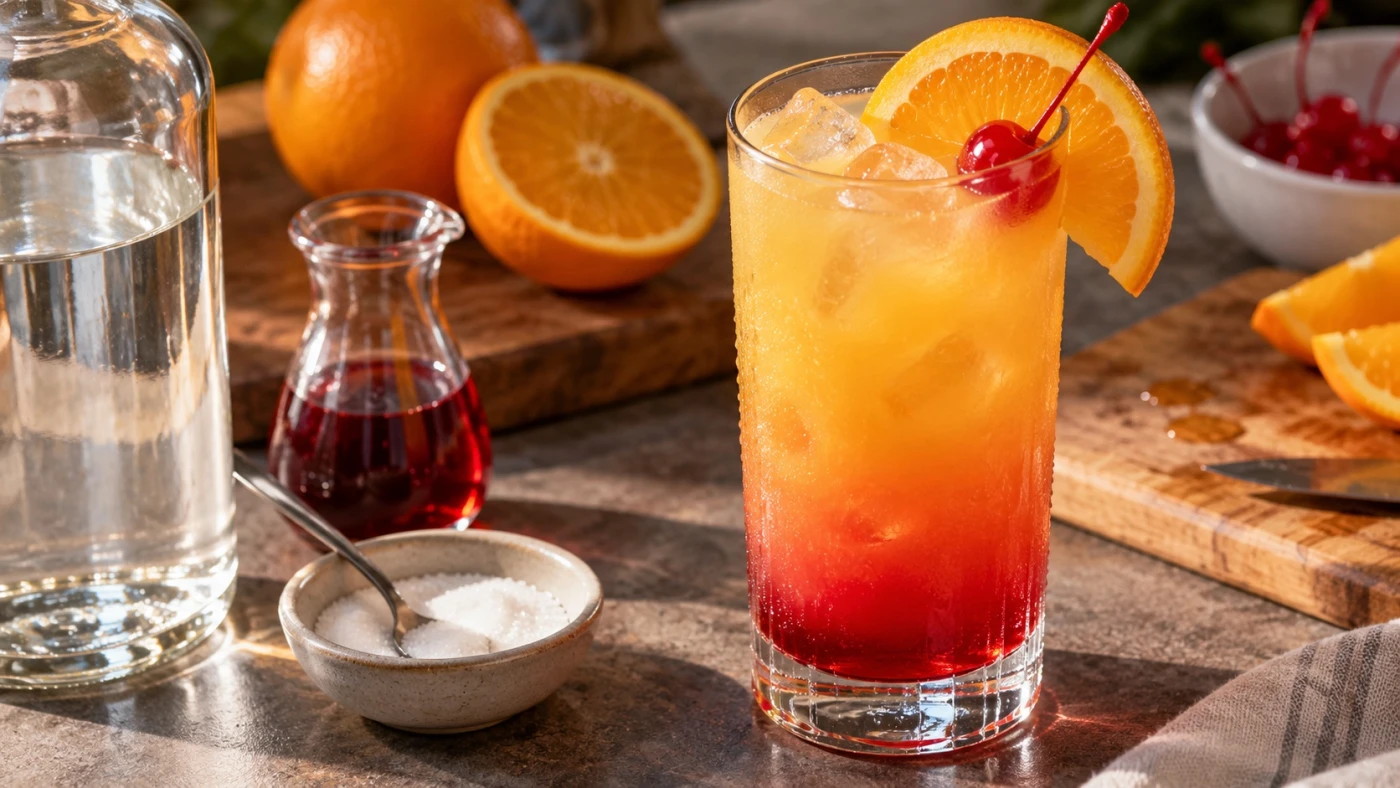
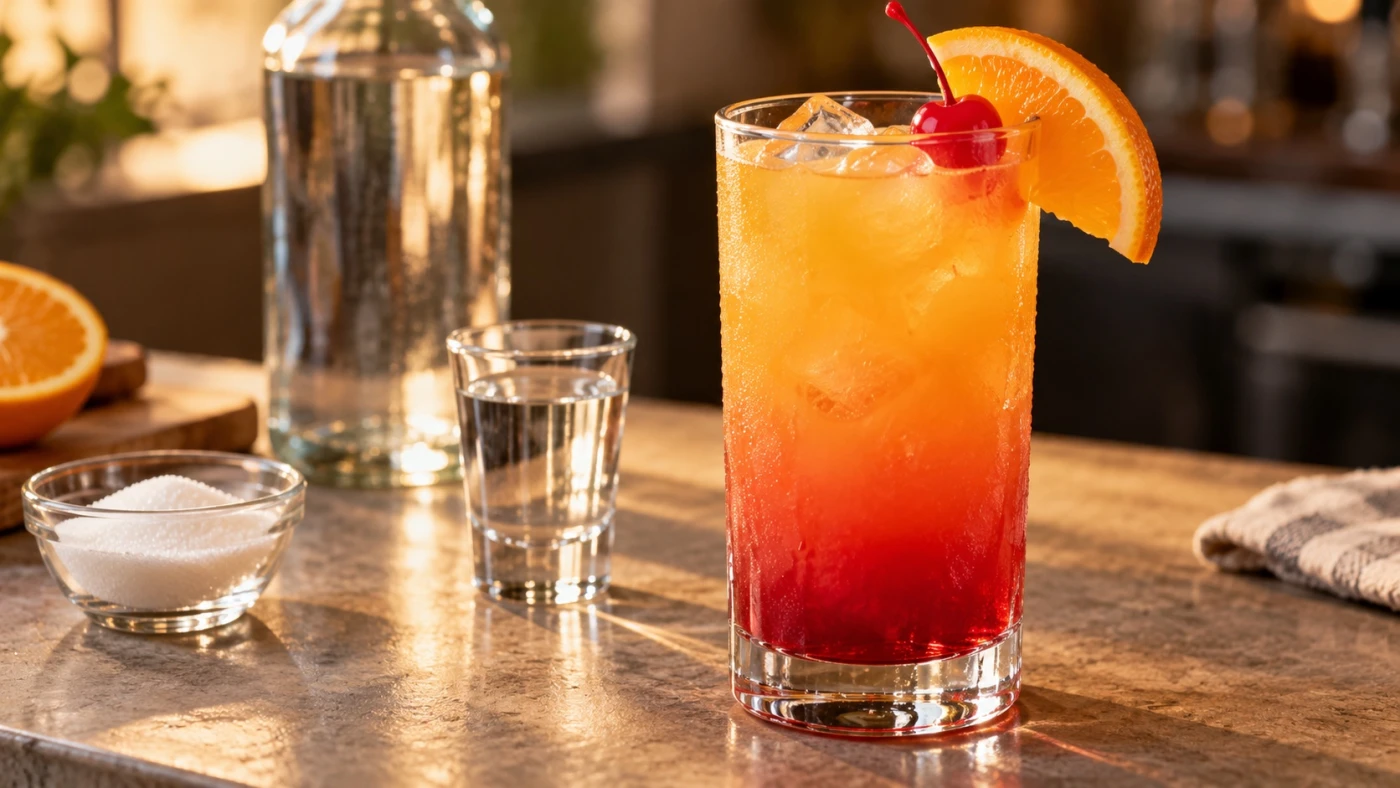
- It applies the familiar “sunrise” presentation to a vodka base: deep red at the bottom, orange through the middle and a lighter orange or yellow near the top.
- Tequila brings recognizable agave character to a Tequila Sunrise; vodka is usually less assertive, so orange juice and grenadine take more of the sensory focus.
What makes a Vodka Sunrise look layered, and how should that affect the way you mix it? The essential idea is simple: vodka and orange juice form the main drink, while denser grenadine sinks through that mixture and creates a red-to-orange gradient. Once you understand that movement—and the sweetness it introduces—you can control the appearance, balance and strength instead of merely copying a set of quantities.
What a Vodka Sunrise actually is
A Vodka Sunrise is a tall mixed drink built from vodka, orange juice and grenadine, normally served over ice. It applies the familiar “sunrise” presentation to a vodka base: deep red at the bottom, orange through the middle and a lighter orange or yellow near the top.
Vodka changes the emphasis of the drink. Tequila brings recognizable agave character to a Tequila Sunrise; vodka is usually less assertive, so orange juice and grenadine take more of the sensory focus. That makes the quality and balance of the mixers especially important. Neutral does not mean irrelevant, but subtle differences between vodkas will be less obvious here than in a Vodka Martini or a neat pour.
Why the sunrise effect works
The visual effect is mainly a density phenomenon. Grenadine contains substantial dissolved sugar and is generally denser than the mixture of vodka and orange juice. When it is introduced gently after the other liquids, gravity pulls it downward. Some syrup remains partially dispersed along the way, producing a gradient instead of a perfectly sharp boundary.
This is a practical explanation rather than a promise of identical layering every time. Syrup formulations, juice pulp, temperature, ice shape and pouring speed can all change how quickly the color spreads. A thick grenadine may settle decisively, while a thinner product can diffuse sooner.
Agitation works against the presentation. Shaking, stirring or pouring grenadine forcefully creates currents that distribute the syrup throughout the glass. That may improve immediate flavor consistency, but it removes the distinct sunrise appearance. The technique therefore involves a trade-off: build an attractive gradient first, then let the drinker stir if even sweetness matters more than the visual effect.
How sweetness, acidity and dilution shape the drink
Orange juice supplies sweetness, acidity and most of the drink's volume. Grenadine adds further sweetness as well as fruit flavor and color. Because both mixers can be sweet, the same measured build can taste balanced with one combination of brands and cloying with another.
Taste the orange juice on its own. If it is sweet and low in acidity, use grenadine primarily as a color and flavor accent. If it is noticeably tart, it can accommodate more syrup. This adjustment is more useful than treating every orange juice as interchangeable.
Ice also changes the result. As it melts, water lowers the apparent sweetness and alcoholic intensity. It does not, however, repair an excessive syrup pour immediately. Measure the grenadine rather than free-pouring it; its position at the bottom can conceal how much entered the glass.
Applying the concept to one measured build
For one drink, a practical reference point is 1.5 US fl oz (45 ml) vodka, 4 US fl oz (120 ml) orange juice and 0.5 US fl oz (15 ml) grenadine. These rounded dual-unit measures total 6 US fl oz (180 ml) before ice and dilution.
Use a highball glass holding at least 12 US fl oz (about 350 ml) so the 180 ml liquid build and ice fit without crowding. Add ice, vodka and orange juice, then briefly combine those two liquids. Pour the grenadine slowly against the inside of the glass or over the back of a spoon. Do not stir again if you want the gradient to remain visible.
This is a reference build, not a universal law. If the juice is already very sweet, reducing the grenadine to 0.25 US fl oz (about 7.5 ml) preserves some color while cutting the added syrup. The total then becomes 5.75 US fl oz (about 172.5 ml) before ice. Changing only the grenadine is a focused adjustment: it alters sweetness, fruit intensity and color without changing the amount of alcohol.
Choosing vodka with a purpose
A clean, neutral vodka is the most direct choice when you want orange and pomegranate-like grenadine flavors to lead. A vodka with more grain character, texture or peppery alcohol presence can make the base more noticeable, although strong juice and syrup will still obscure fine distinctions.
Check the alcohol by volume on the bottle instead of assuming every vodka has the same strength. In the United States, distilled-spirit labels must state alcohol by volume, as explained by the Alcohol and Tobacco Tax and Trade Bureau. A higher-ABV vodka makes a stronger drink when the measured volume stays unchanged.
For this cocktail, buying by suitability is more rational than buying solely by prestige. Look for a vodka you find clean enough in a simple mixed drink, then spend equal attention on juice flavor and grenadine quality. Those ingredients occupy a much larger share of the glass.
How strong is the reference drink?
With 1.5 US fl oz (45 ml) of 40% ABV vodka and 4.5 US fl oz (135 ml) of non-alcoholic mixers, the 6 US fl oz (180 ml) mixture is approximately 10% ABV before ice dilution. The calculation is 1.5 × 0.40 = 0.6 US fl oz of pure alcohol; 0.6 divided by 6 equals 0.10.
That serving contains approximately one US standard drink under the National Institute on Alcohol Abuse and Alcoholism definition, which uses 0.6 US fl oz or 14 grams of pure alcohol. Using the UK calculation—millilitres multiplied by ABV, divided by 1,000—the 45 ml pour at 40% ABV contains about 1.8 UK units. These figures depend on the actual pour and the vodka's labeled strength; juice and ice can make a cocktail taste lighter without removing alcohol.
Common misconceptions
The red layer is not automatically cherry syrup. Grenadine is traditionally associated with pomegranate, although commercial formulations differ. Read the product label if the precise flavor or ingredients matter to you.
The drink is not supposed to stay perfectly separated forever. Diffusion begins as soon as the grenadine enters the glass, and melting ice creates additional movement. The gradient is a temporary presentation, not a stable set of layers.
More grenadine does not guarantee a better sunrise. It may create a darker base, but it also increases sweetness and can overwhelm the orange. Controlled placement matters as much as volume.
A clear spirit does not make the cocktail alcohol-free or inherently weak. Color and sweetness are unreliable guides to alcohol content. Measure the vodka and use its labeled ABV when estimating strength.
Vodka is not completely undetectable. Its character is restrained relative to many aged or botanical spirits, but proof, texture and alcohol heat can still influence the finished drink.
A note on the cocktail's history
The Vodka Sunrise is best understood as a vodka-based adaptation of the broader Sunrise family rather than a drink with one securely documented inventor and date. Published origin stories more commonly concern the Tequila Sunrise, and accounts of that drink's development vary. Without a dependable primary source for a distinct Vodka Sunrise origin, a precise creation claim would overstate the available evidence.
The decision to remember
Treat grenadine as both a flavoring and a structural ingredient. Add it last and gently when presentation is the priority; stir it through when consistent sweetness is the priority. That single decision explains the cocktail's defining effect and gives you direct control over how the Vodka Sunrise drinks.
Ask AI about this article
Pick a prompt, copy it, or open ChatGPT with this article preloaded.
Frequently Asked Questions
Why did my Vodka Sunrise turn uniformly red?
The grenadine was probably dispersed by stirring, vigorous pouring or too much movement. Build the vodka and orange juice over ice first, then add the grenadine slowly near the inside of the glass and leave the drink unstirred for presentation.
Should a Vodka Sunrise be stirred before drinking?
It can be. Leaving it layered preserves the sunrise effect but makes later sips sweeter. A gentle stir after serving sacrifices the gradient and distributes the grenadine more evenly.
Comments 0
Login to Post comments