
How to Make Citrus Stock for Low-Waste Vodka Cocktails
Citrus stock is a sweet-tart mixer made from citrus material that might otherwise be discarded. Here, weighed lemon, lime, or orange shells are steeped…
- Here, weighed lemon, lime, or orange shells are steeped with sugar and food-grade acids, then strained and adjusted to a precise final volume.
- The result should look slightly cloudy and taste bright, gently bitter, and concentrated enough to remain noticeable beside vodka and soda.
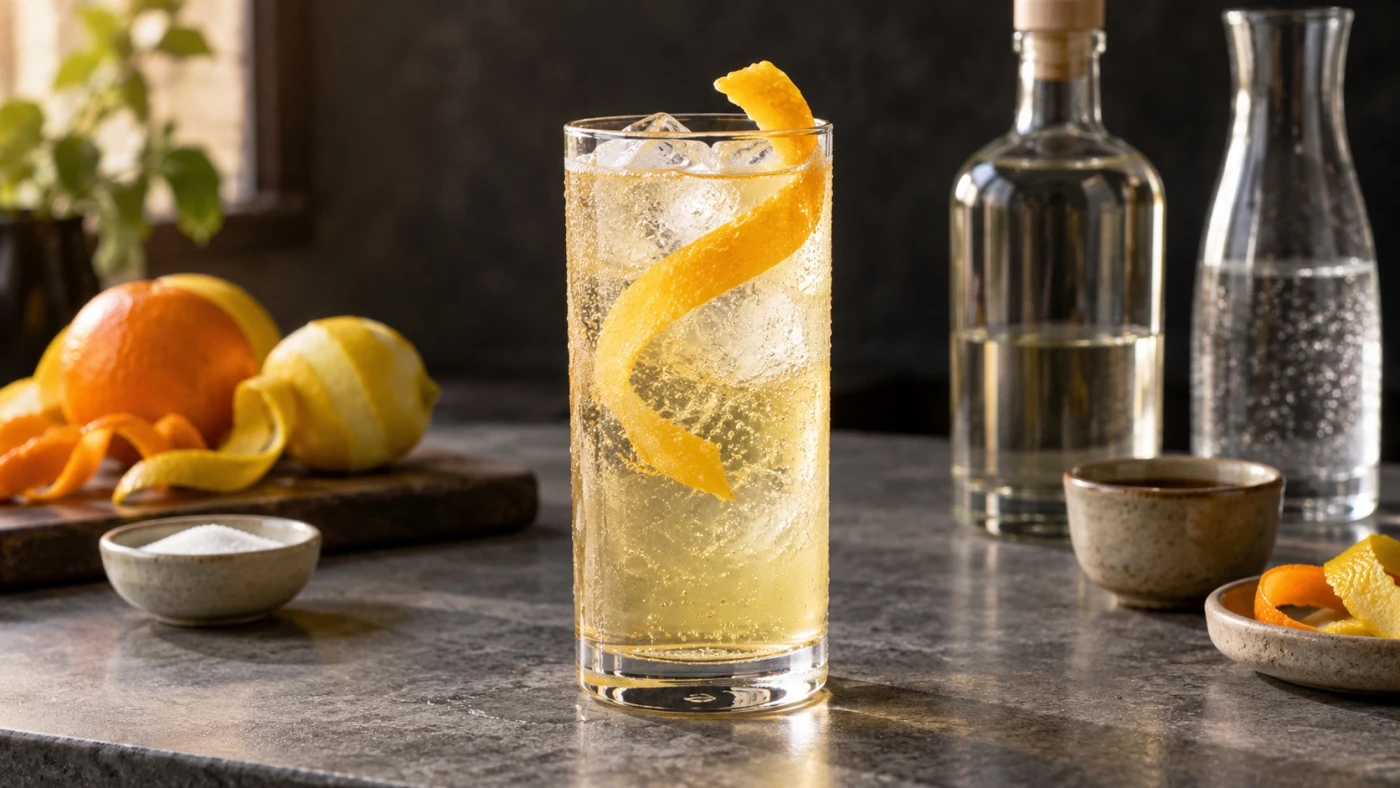
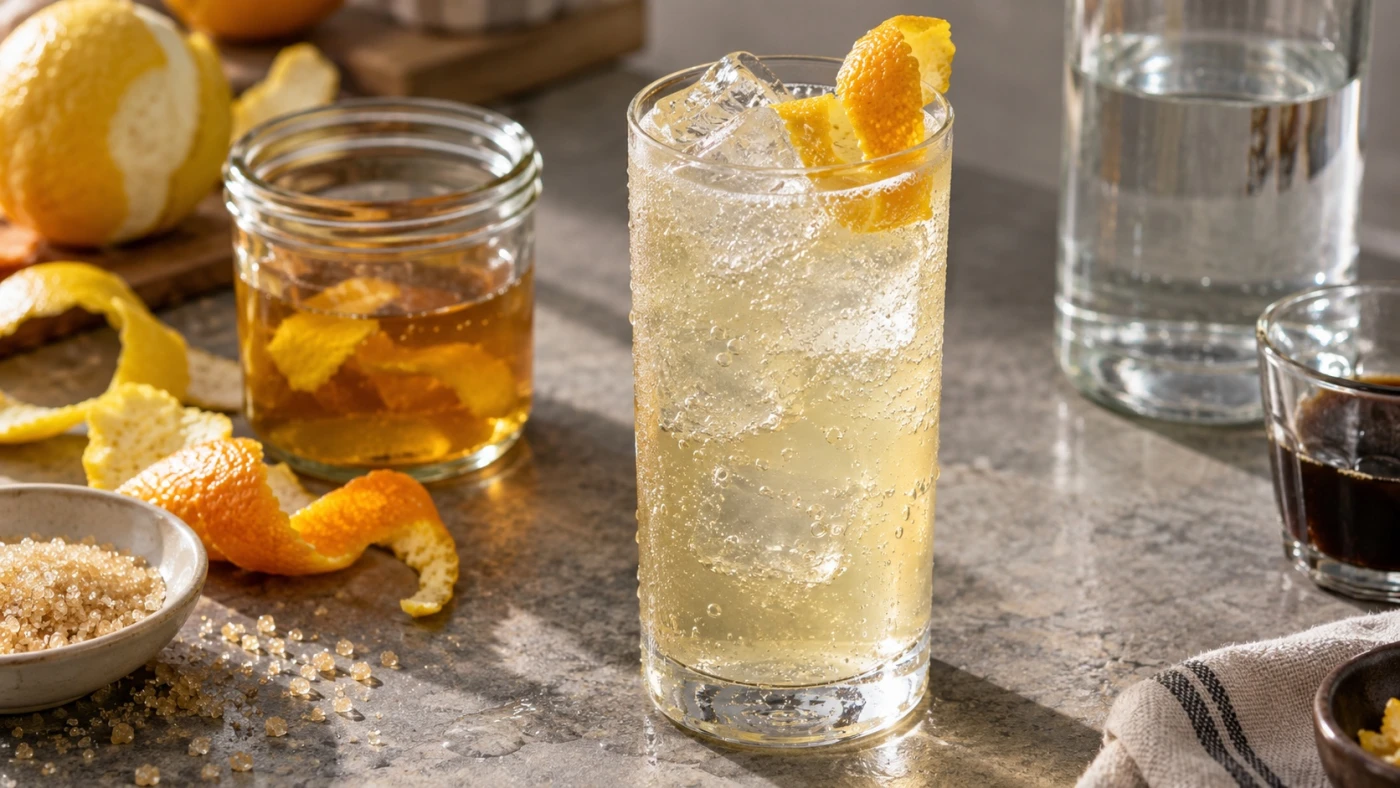
- The finished drink is brisk and sparkling, with clean vodka structure and a fuller citrus flavor than juice and soda alone.
- Lemon, lime, and orange can be used alone or together. Remove produce stickers and rinse the fruit before juicing; discard any shells showing mold or decay. A mixture containing orange will generally taste softer, while an all-lemon or all-lime batch will be sharper.
- Pour in 16.9 US fl oz (500 ml) freshly boiled water. Stir until the sugar and acids have dissolved.
Citrus stock is a sweet-tart mixer made from citrus material that might otherwise be discarded. Here, weighed lemon, lime, or orange shells are steeped with sugar and food-grade acids, then strained and adjusted to a precise final volume. The result should look slightly cloudy and taste bright, gently bitter, and concentrated enough to remain noticeable beside vodka and soda.
The stock recipe comes first, followed by an equal-parts Citrus Stock Vodka Highball. The finished drink is brisk and sparkling, with clean vodka structure and a fuller citrus flavor than juice and soda alone.
Citrus Stock Recipe
Yield: 20.3 US fl oz (600 ml), enough for 10 highballs using 2 US fl oz (60 ml) each
Vessel: 1-quart/1-litre heatproof jug or saucepan
Ingredients
- 7 oz (200 g) squeezed citrus shells and peels, cut into roughly 1-inch/2.5-cm pieces
- 5.3 oz (150 g) granulated sugar
- 0.35 oz (10 g) food-grade citric acid
- 0.18 oz (5 g) food-grade malic acid
- 16.9 US fl oz (500 ml) freshly boiled water
- Additional cool water, as needed to adjust the strained stock to 20.3 US fl oz (600 ml)
Lemon, lime, and orange can be used alone or together. Remove produce stickers and rinse the fruit before juicing; discard any shells showing mold or decay. A mixture containing orange will generally taste softer, while an all-lemon or all-lime batch will be sharper.
Method
- Put the chopped citrus shells in the heatproof jug or saucepan. Add the sugar, citric acid, and malic acid.
- Pour in 16.9 US fl oz (500 ml) freshly boiled water. Stir until the sugar and acids have dissolved.
- Leave the mixture to steep for 30 minutes, stirring and pressing the softened shells once halfway through. Avoid blending them: pulverized pith makes the stock harder to strain and can exaggerate bitterness.
- Strain through a fine-mesh sieve, pressing gently to recover the liquid without forcing excessive pulp through. For a cleaner stock, strain it a second time through a damp coffee filter or fine cloth.
- Pour the strained liquid into a measuring jug. Add enough cool water to reach exactly 20.3 US fl oz (600 ml). This final adjustment compensates for liquid retained by the citrus.
- Cool completely, transfer to a clean bottle, and refrigerate. Discard the stock if it develops mold, fermentation, an unusual odor, or an unexpectedly fizzy texture.
Citrus Stock Vodka Highball
Makes: 1 drink
Measured liquid volume: 6 US fl oz (180 ml), before ice displacement
Glass: 12-US-fl-oz/355-ml highball glass
Ingredients
- 2 US fl oz (60 ml) vodka
- 2 US fl oz (60 ml) chilled citrus stock
- 2 US fl oz (60 ml) chilled soda water
- Ice cubes
- 1 thin strip of citrus peel, optional
- Fill the highball glass about halfway with ice. Add the vodka and citrus stock, then stir for 5 seconds to chill them.
- Add more ice, leaving room for the soda water. Pour in 2 US fl oz (60 ml) chilled soda and stir once or twice from the bottom. Minimal stirring preserves carbonation.
- Express the optional peel over the surface and place it in the glass. Taste before adding anything else: if the drink is more intense than you prefer, add a small measured splash of soda and note that adjustment for the next serving.
The glass has ample capacity for the 6-US-fl-oz (180-ml) liquid recipe plus ice. Using cold stock and soda reduces the amount of dilution needed to bring the drink to serving temperature.
Enjoy responsibly and keep alcoholic drinks away from children.
Citrus Stock Questions
Can I use only one kind of citrus?
Yes. Keep the squeezed shells at 7 oz (200 g) whether you use lemon, lime, orange, or a combination. Lemon is clean and sharp, lime is especially aromatic, and orange gives a rounder result.
Why does the recipe specify a final volume?
Peels absorb and retain an inconsistent amount of water. Adjusting the strained stock to 20.3 US fl oz (600 ml) makes its concentration more repeatable and confirms the stated yield of ten 2-US-fl-oz (60-ml) cocktail portions.
Can I bottle the stock while it is hot?
Let it cool completely first. A wide heatproof container helps it cool efficiently; the finished stock can then be transferred to a clean bottle and refrigerated.
Ask AI about this article
Pick a prompt, copy it, or open ChatGPT with this article preloaded.
Frequently Asked Questions
Why is the finished stock adjusted to 20.3 US fl oz (600 ml)?
Citrus shells retain different amounts of liquid, so the volume left after straining is not completely predictable. Topping up to a fixed final volume gives the stock—and every cocktail made with it—a more consistent balance.
Why should the citrus stock cool before it is bottled?
Cooling it in a wide, heatproof container is quicker and avoids sealing hot liquid inside a storage bottle. Once cool, transfer the stock to a clean bottle and refrigerate it.
Comments 0
Login to Post comments