
How to Choose Garnishes for Vodka Cocktails
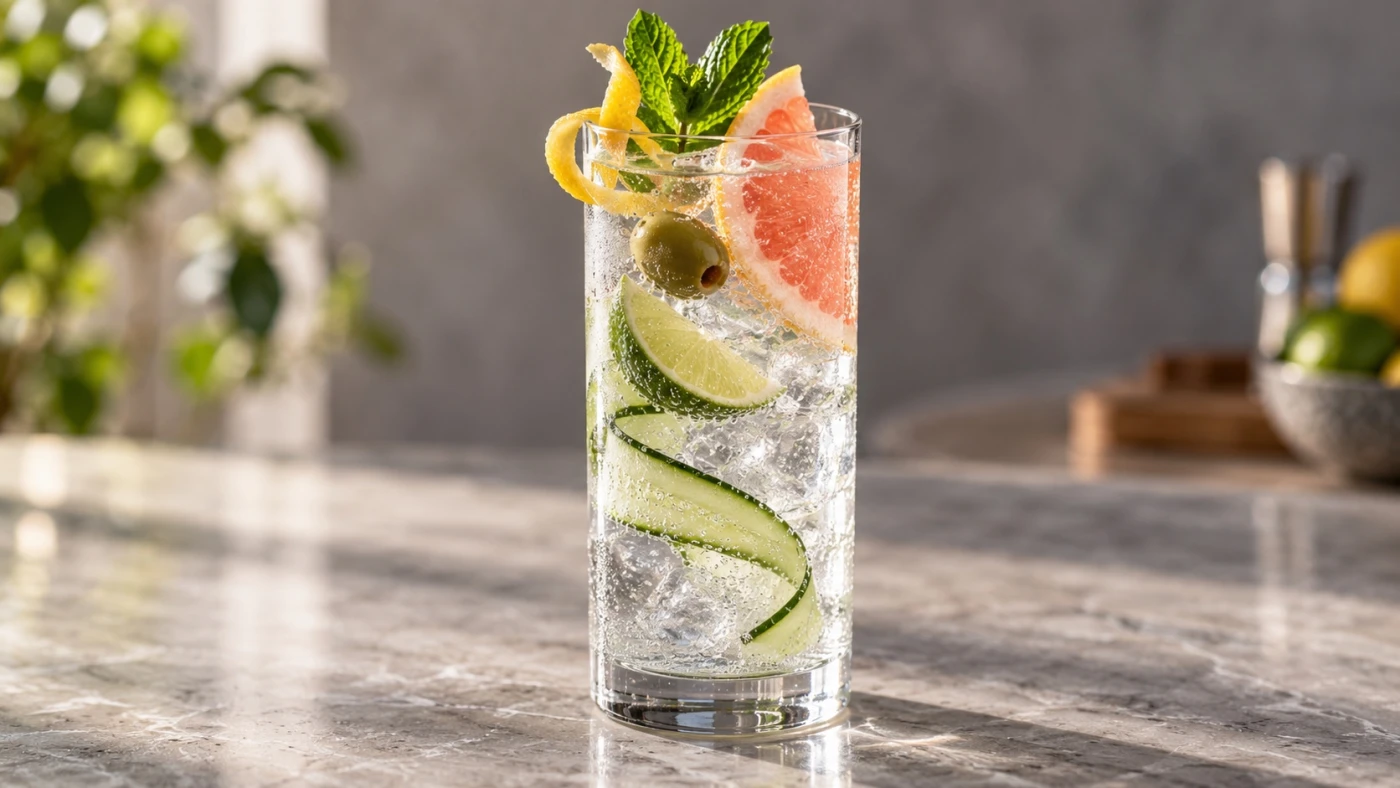
A well-chosen garnish completes a vodka cocktail through aroma, flavor or both. To see the difference clearly, make the vodka soda below: it should look…
- Vodka is often a relatively neutral base, so an aromatic garnish can be especially noticeable.
- The goal is not to cover the spirit with decoration.
- It is to give the drink a clear direction—citrusy, cooling, herbal or savory.
- Choose one garnish: 1 strip of lemon or grapefruit peel; 1 lime wedge; 1 thin cucumber ribbon; 1 small mint sprig; or 2 cocktail olives on a pick
- The measured liquids total 6 oz (180 ml). Use a glass that holds the drink and ice comfortably; do not pack ice into a glass so small that adding the soda causes it to overflow.
A well-chosen garnish completes a vodka cocktail through aroma, flavor or both. To see the difference clearly, make the vodka soda below: it should look bright and uncluttered, taste crisp and bubbly, and carry the aroma of your chosen garnish before the first sip.
Vodka is often a relatively neutral base, so an aromatic garnish can be especially noticeable. The goal is not to cover the spirit with decoration. It is to give the drink a clear direction—citrusy, cooling, herbal or savory.
Vodka Soda Garnish Test
Yield: 1 cocktail
Glass: Highball or Collins glass with enough room for 6 oz (180 ml) of liquid plus ice
Liquid volume before ice: 6 oz (180 ml)
Ingredients
- 2 oz (60 ml) vodka
- 4 oz (120 ml) chilled soda water
- Ice cubes, enough to fill the glass
- Choose one garnish: 1 strip of lemon or grapefruit peel; 1 lime wedge; 1 thin cucumber ribbon; 1 small mint sprig; or 2 cocktail olives on a pick
The measured liquids total 6 oz (180 ml). Use a glass that holds the drink and ice comfortably; do not pack ice into a glass so small that adding the soda causes it to overflow.
Method
- Fill the glass with ice, leaving enough space for the measured liquids.
- Pour in 2 oz (60 ml) vodka.
- Add 4 oz (120 ml) chilled soda water.
- Stir gently three or four times, lifting the vodka through the soda without knocking out excessive carbonation.
- Prepare and add one garnish using the guidance below. Position an aromatic garnish near the rim so its scent reaches the nose while drinking.
Match the Garnish to the Drink
Begin with the cocktail's existing flavors, then decide whether the garnish should reinforce them or provide a deliberate contrast.
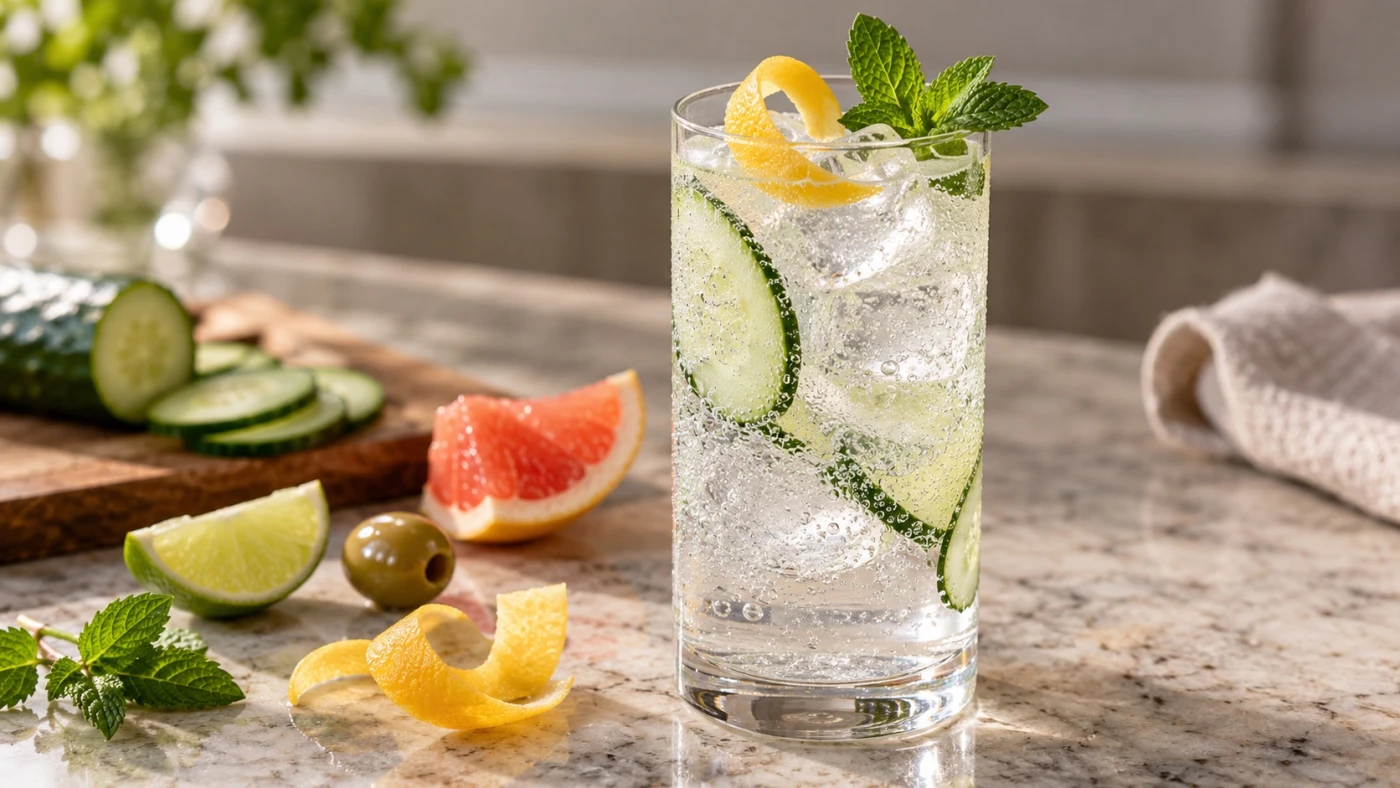
- Lemon or grapefruit peel: Best when you want citrus fragrance without adding much juice. Twist the peel over the finished drink to release its surface oils, then place it at the rim. This suits a vodka soda, Vodka Martini or other spirit-forward drink.
- Lime wedge: Useful when both aroma and adjustable acidity are welcome. Place it on the rim so the drinker can squeeze it into a vodka soda or a tall cocktail containing lime.
- Cucumber ribbon: Adds a fresh vegetal aroma without the sharper effect of citrus juice. It works particularly well when cucumber is already present or when the cocktail is light and dry.
- Mint or another tender herb: Adds a lifted herbal scent. Lightly clap mint once between your palms rather than crushing it, then keep the leaves above the liquid and close to the rim.
- Olives: Point the drink in a savory direction and are most appropriate when briny flavors already belong in the recipe. They are a poor match for a bright, fruit-led cocktail unless that contrast is intentional.
A Simple Selection Rule
For bright or sparkling vodka drinks, start with citrus peel, a wedge or cucumber. For herb-led drinks, use a small amount of the herb already present. For dry, savory cocktails, consider olives or another recipe-specific savory garnish.
Smell the garnish before using it. A fresh garnish should have an immediate, clean aroma. Discard dried citrus, wilted herbs or damaged produce; a garnish positioned at the rim becomes part of every sip.
Keep the final presentation restrained. One fresh, purposeful garnish usually communicates the drink more clearly than several competing elements. If combining garnishes, make them support a single direction—for example, cucumber with mint for freshness or lemon peel with rosemary for a citrus-herbal aroma.
Ask AI about this article
Pick a prompt, copy it, or open ChatGPT with this article preloaded.
Frequently Asked Questions
Should I use a citrus peel or a citrus wedge?
Use a peel when you want citrus aroma without noticeably changing the drink's acidity. Choose a wedge when a squeeze of juice suits the cocktail, as it does in many vodka sodas and other tall mixed drinks.
Why can an herb garnish make a cocktail smell bitter or grassy?
Hard muddling or excessive handling can release harsher plant flavors. For an aromatic garnish, lightly clap mint once or gently roll a rosemary sprig between your palms before placing it near the rim.
Comments 0
Login to Post comments