Is Vodka Gluten-Free? Potato, Corn, and Distilled Grain Explained
Is vodka gluten-free when it is made from potatoes, corn, wheat, rye, or barley? In most cases, plain, properly distilled vodka is considered…
- In most cases, plain, properly distilled vodka is considered gluten-free—including vodka distilled from gluten-containing grain.
- The reason is the distillation process, not simply the crop named on the bottle.
- After reading this guide, you will be able to explain why grain-based vodka can be gluten-free, identify the products that need closer inspection, and make a practical choice for a neat pour or mixed drink.
- Gluten is a group of proteins found in wheat, rye, barley, and related grains.
- Its ruling also places responsibility on the producer to ensure that the claim is truthful and supportable.
Is vodka gluten-free when it is made from potatoes, corn, wheat, rye, or barley? In most cases, plain, properly distilled vodka is considered gluten-free—including vodka distilled from gluten-containing grain. The reason is the distillation process, not simply the crop named on the bottle.
After reading this guide, you will be able to explain why grain-based vodka can be gluten-free, identify the products that need closer inspection, and make a practical choice for a neat pour or mixed drink.
The short answer
Gluten is a group of proteins found in wheat, rye, barley, and related grains. Potato and corn do not naturally contain gluten. However, the distinction between these raw materials becomes less important after proper distillation because gluten proteins do not travel with the alcohol-rich vapor into the finished distillate.
The US Alcohol and Tobacco Tax and Trade Bureau permits gluten-free claims on distilled spirits made from gluten-containing grains when good manufacturing practices prevent gluten from being introduced into the final product. Its ruling also places responsibility on the producer to ensure that the claim is truthful and supportable. In the UK, Coeliac UK states that distilled spirits are suitable for people with coeliac disease, including spirits produced from cereals containing gluten.
How distillation changes the answer
Vodka production begins by fermenting a source of fermentable carbohydrate. Depending on the producer, that source might be potato, corn, wheat, rye, barley, or another agricultural material. Fermentation creates alcohol, but it does not itself make a grain-based liquid gluten-free.
Distillation is the decisive step. The fermented liquid is heated so that volatile compounds—including ethanol and water—can be collected separately from nonvolatile material. Gluten is a protein, and proteins do not vaporize and distill with ethanol under proper production conditions. The US Food and Drug Administration explains the same principle for distilled foods: proper distillation separates volatile alcohol and flavor compounds from nonvolatile proteins and sugars.
This is why “made from wheat” and “contains gluten” are not equivalent statements for a distilled spirit. The first describes the agricultural starting material; the second concerns what remains in the finished product.
That conclusion assumes adequate distillation and production controls. Gluten-containing material introduced after distillation, or cross-contact during handling and storage, changes the assessment.
Potato, corn, and grain vodka compared
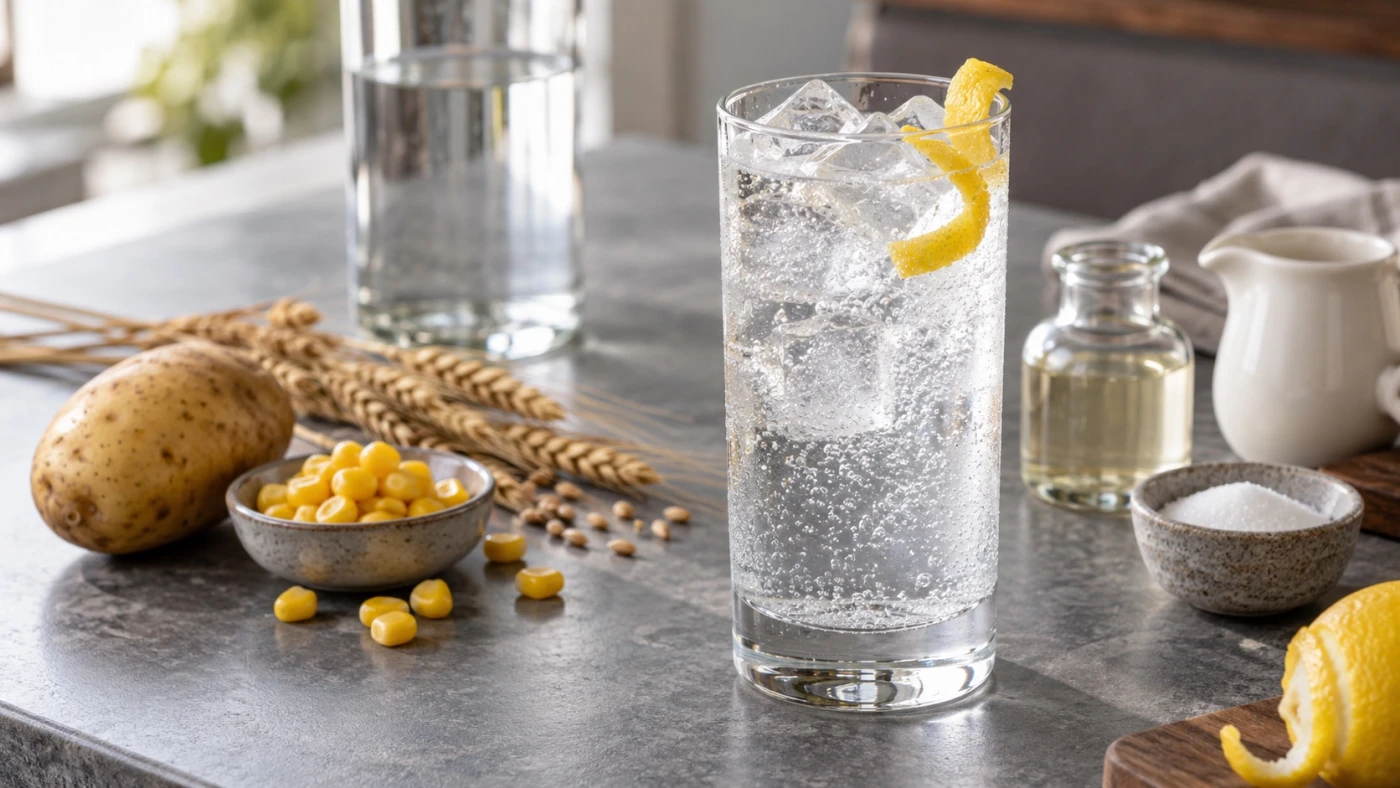
| Vodka base | Does the raw material contain gluten? | What matters in the finished vodka? | Practical buying implication |
|---|---|---|---|
| Potato | No | Cross-contact and anything added after distillation | A straightforward option for someone who also prefers to avoid grain-derived spirits |
| Corn | No | Cross-contact and post-distillation ingredients | Another naturally gluten-free starting material; verify flavored versions separately |
| Wheat, rye, or barley | Yes | Proper distillation removes protein; later additions and production controls still matter | Plain vodka can be gluten-free, but a labeled claim offers clearer assurance |
The base material can influence how a producer describes the vodka and may contribute to perceived texture or flavor through the wider production process. It is not, by itself, a reliable measure of gluten in properly distilled plain vodka.
When vodka needs a closer look
The clean conclusion for plain distillate does not automatically extend to every bottle or cocktail carrying the word “vodka.” Check more carefully in these situations:
- Flavored vodka: Sweeteners, flavor preparations, colors, or other ingredients may be added after distillation. Do not assume that the safety of the base distillate proves the status of every addition.
- Vodka-based liqueurs: These are compound products rather than plain vodka. Their flavorings and other ingredients require separate consideration.
- Premixed and canned drinks: Assess the complete product, not only the named spirit. Malt-derived ingredients or flavor preparations may alter the answer.
- Bar cocktails: Syrups, bitters, sauces, cream liqueurs, garnishes, and shared equipment can introduce uncertainty. A drink is only as suitable as all of its components and handling.
- Products without clear information: A missing gluten-free statement does not prove that plain vodka contains gluten, because such claims are voluntary. For someone who needs high confidence, however, a substantiated label claim or direct confirmation from the producer is more useful than inference.
A practical decision for buying and mixing
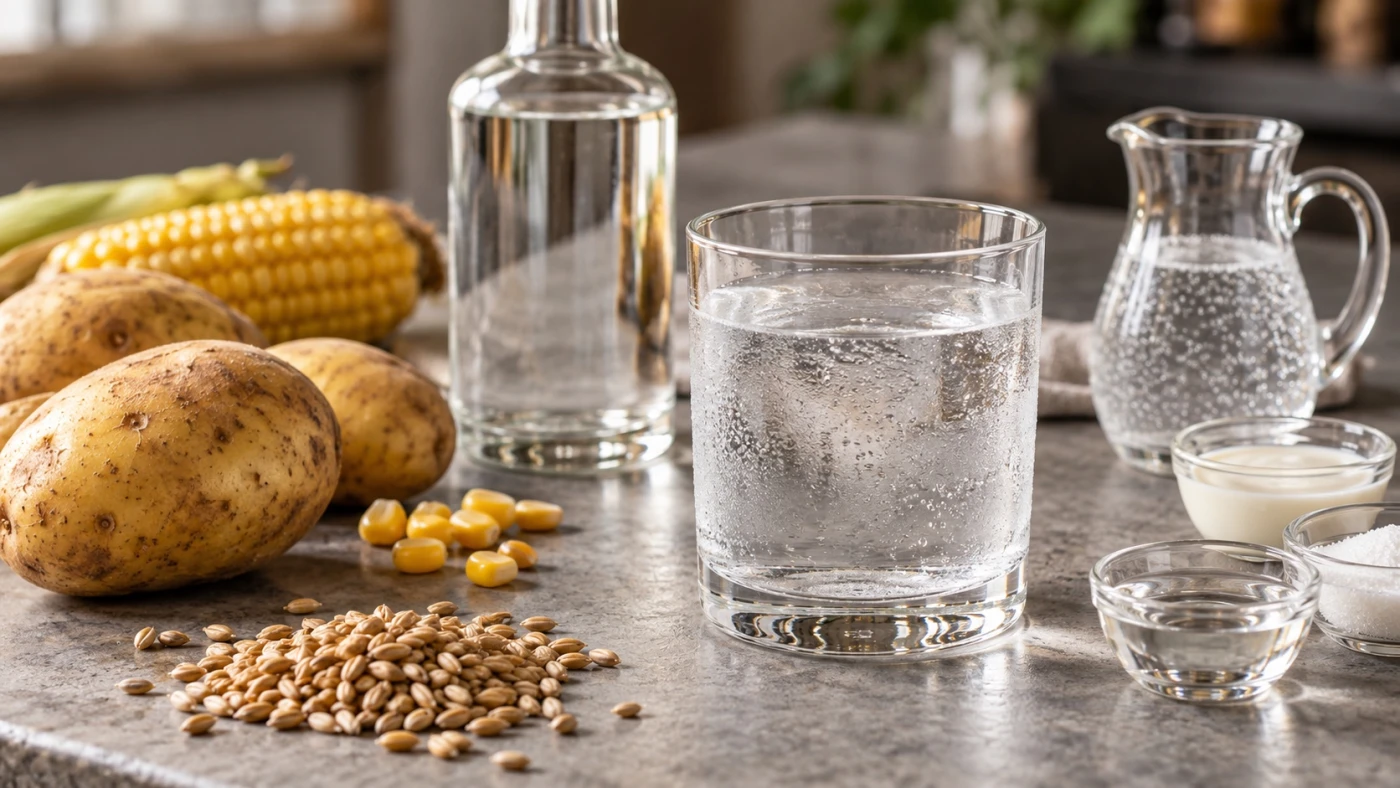
If your goal is to minimize uncertainty, choose a plain vodka that carries a credible gluten-free claim. Potato- or corn-based vodka can provide an additional layer of simplicity because its starting crop does not contain gluten, although that does not replace attention to production controls.
For a basic mixed drink, combine the selected plain vodka only with ingredients you have also verified. Soda water and fresh citrus are easier to assess than a premade cocktail mix with multiple flavor components. Keep garnishes and tools away from beer, malt products, and other known gluten sources when cross-contact is a concern.
If a bottle is flavored or the label is unclear, consult the producer’s current product information. Recipes and formulations can change, so an old third-party list should not override the present label or a current producer statement.
Common misconceptions
“Only potato vodka is gluten-free.” False. Potato contains no gluten, but properly distilled grain vodka can also be gluten-free because gluten protein remains behind during distillation.
“Distilled from wheat means gluten must remain.” The source disclosure and the composition of the distillate answer different questions. Under proper conditions, the wheat protein does not enter the distilled spirit.
“Every flavored vodka is unsafe.” Also false. A flavored vodka may be gluten-free, but that conclusion depends on its added ingredients and production controls. It cannot be established from the base vodka alone.
“If vodka is gluten-free, every vodka cocktail is gluten-free.” A cocktail introduces mixers, modifiers, garnishes, and handling. Each must be evaluated separately.
“Gluten-free and wheat-free mean the same thing.” They do not. A properly distilled wheat vodka may be free of gluten protein while still being a wheat-derived product. Anyone managing a wheat allergy or another condition distinct from coeliac disease should seek individualized medical guidance rather than treating the two labels as interchangeable.
Evidence and an important limit
The central scientific point is well established: proteins are nonvolatile and are separated from the alcohol-rich fraction during proper distillation. The TTB’s 2020 ruling on gluten statements applies that principle specifically to US alcoholic-beverage labeling. The FDA’s gluten-free labeling questions and answers explains the underlying distillation and protein-verification framework, while noting that TTB regulates most distilled-spirit labels. For UK readers, Coeliac UK’s alcohol guidance identifies distilled spirits as suitable for a gluten-free diet.
Uncertainty callout: A category-level explanation cannot certify every flavored bottle, premixed drink, or bar serve. Manufacturing practices and formulations differ. People with coeliac disease, wheat allergy, or unexplained reactions should use current product-specific information and obtain medical advice appropriate to their condition.
Ask AI about this article
Pick a prompt, copy it, or open ChatGPT with this article preloaded.
Frequently Asked Questions
Why might someone react to vodka if distilled vodka does not contain gluten?
The cause may be an added flavor, another cocktail ingredient, cross-contact, or something unrelated to gluten. A reaction alone cannot identify the trigger. Keep the bottle and mixer labels and discuss recurring or serious symptoms with an appropriate healthcare professional.
Does a vodka need to be made from potatoes to be suitable for someone with coeliac disease?
No. Coeliac UK considers distilled spirits suitable even when a gluten-containing cereal was used, and US regulators permit substantiated gluten-free claims on grain-distilled spirits made under appropriate controls. Potato vodka may still be preferable when a shopper wants to avoid a grain-derived starting material al.
Comments 0
Login to Post comments