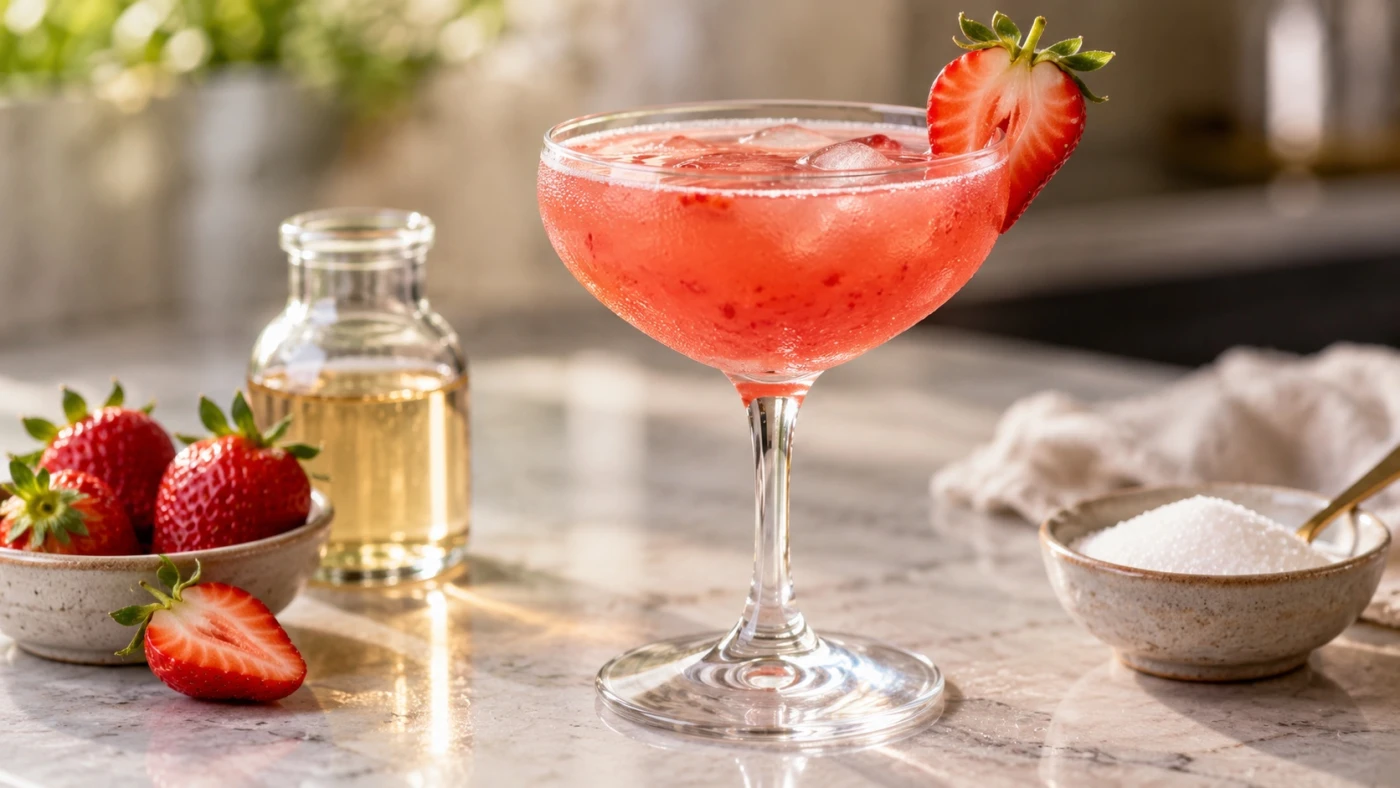

Strawberry Vodka Cocktails: How Fruit, Sweetness, Acidity and Dilution Work
The useful question is not simply how to combine strawberries and vodka. It is how to keep strawberry aroma recognizable while balancing fruit,…
- It is how to keep strawberry aroma recognizable while balancing fruit, sweetness, acidity, alcohol and dilution.
- Once you understand those relationships, you can choose the right form of strawberry, evaluate a bottle of vodka and correct a drink that tastes sugary, thin, flat or harsh.
- A strawberry vodka cocktail is a mixed drink in which vodka supplies most or all of the alcoholic base and strawberry provides a defining fruit character.
- It is a category rather than a single standardized recipe.
- That distinction matters because these forms are not interchangeable.
The useful question is not simply how to combine strawberries and vodka. It is how to keep strawberry aroma recognizable while balancing fruit, sweetness, acidity, alcohol and dilution. Once you understand those relationships, you can choose the right form of strawberry, evaluate a bottle of vodka and correct a drink that tastes sugary, thin, flat or harsh.
What is a strawberry vodka cocktail?
A strawberry vodka cocktail is a mixed drink in which vodka supplies most or all of the alcoholic base and strawberry provides a defining fruit character. It is a category rather than a single standardized recipe. The strawberry may come from fresh or frozen fruit, purée, syrup, a bottled flavoring or strawberry-flavored vodka.
That distinction matters because these forms are not interchangeable. Each changes more than flavor: it may also introduce sugar, water, pulp, seeds, color or additional alcohol. Replacing purée with syrup, for example, changes both texture and sweetness. Replacing plain vodka with a flavored product may change the drink's aroma and strength before any fruit is added.
The balance problem: strawberry is not a fixed ingredient
Strawberries vary with cultivar, ripeness, season and handling. A ripe berry can be highly aromatic and sweet; another can provide color and water but little flavor. The University of Minnesota Extension notes that strawberry flavor and sugar levels are optimal when the berries are harvested fully ripe. That does not guarantee that every ripe berry tastes identical, but it explains why a rigid formula can behave differently from one punnet or carton to the next.
Source: University of Minnesota Extension on harvesting strawberries
Before mixing, taste the fruit or strawberry component on its own. Ask three separate questions: Is its aroma obvious? How sweet is it? Does it have enough natural tartness to remain lively in a cold, diluted drink? That brief assessment is more informative than color alone.
What each component contributes
| Component | Main contribution | What can go wrong |
|---|---|---|
| Vodka | Alcohol, structure and a relatively neutral base for fruit aroma | Too much can make delicate fruit seem faint or expose an alcoholic edge |
| Strawberry | Aroma, fruit flavor, color and sometimes sweetness or texture | Watery or subdued fruit can add volume without enough recognizable flavor |
| Sweetener | Rounds acidity and can make fruit seem fuller | Excess sweetness can blur freshness and turn the drink jam-like |
| Acidic ingredient | Contrast and a brighter finish | Too much can make the fruit seem sharp or underripe |
| Water from ice or mixers | Softens alcohol and opens the drink | Uncontrolled dilution can thin both aroma and texture |
These effects are practical sensory guidance rather than universal laboratory thresholds. Perception changes with temperature, glass size, carbonation, individual sensitivity and the ingredients themselves. The important principle is that balance comes from the interaction of components, not from sweetness alone.
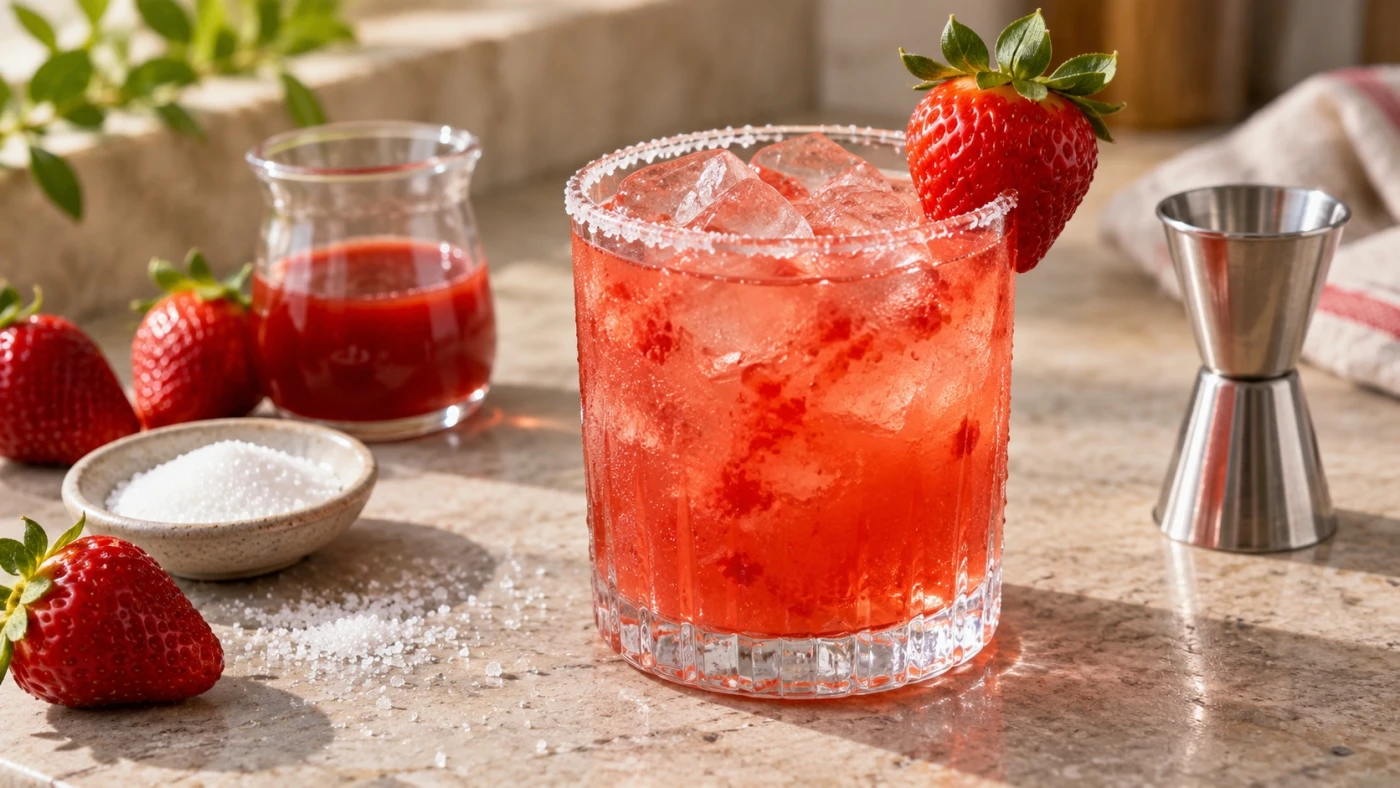
Choosing the form of strawberry
Fresh muddled fruit offers a direct fruit character and some texture, but results depend heavily on ripeness. Pressing firmly enough to release juice is useful; pulverizing the fruit can create excess pulp and seed fragments.
Purée distributes fruit throughout the drink and produces a fuller texture. It can also make fine straining slower and may leave a cocktail feeling heavy if combined with a large amount of syrup.
Strawberry syrup gives consistent sweetness and convenient flavor distribution. Because it performs two jobs at once, it should usually be treated as the sweetener rather than added on top of an unchanged sweetening plan.
Thawed frozen fruit releases juice readily and is often practical for drinks in which the fruit will be shaken, strained or blended. It will not provide the firm appearance of fresh fruit for garnishing.
Strawberry-flavored vodka moves some of the flavor decision into the bottle. Products can differ in aroma, sweetness and alcohol by volume, so the label and a small taste are more useful than assuming all flavored vodkas behave alike.
How to choose the vodka
For the most control, choose an unflavored vodka whose alcohol level and finish suit the drink you intend to make. A relatively restrained vodka lets fresh strawberry provide the identity; a vodka with a more noticeable grain or mineral character may remain perceptible beneath the fruit. Neither choice is automatically better.
Read the bottle rather than relying on the front-label artwork. In the United States, distilled spirits labels must carry a class, type or other designation, while flavored products are identified under separate labeling standards. The alcohol content also belongs on the label. Those details help distinguish plain vodka from flavored vodka or another spirits product and show whether two bottles will contribute the same amount of alcohol.
Source: US Alcohol and Tobacco Tax and Trade Bureau distilled-spirits label guidance
A practical way to build and adjust the drink
Start by deciding which ingredient owns each job. Vodka supplies the alcoholic base; one strawberry preparation should provide the main fruit character; an acidic ingredient supplies contrast; and a sweetener is used only as needed. If the strawberry preparation is already sweetened, count that sweetness before adding anything else.
Then adjust one dimension at a time:
- Flat or jam-like: add acidity gradually and reassess before adding more fruit.
- Sharp or underripe: introduce a small amount of sweetness rather than masking the problem with extra vodka.
- Hot or disjointed: additional chilling and controlled dilution may integrate the drink, provided the strawberry flavor is concentrated enough.
- Thin: check whether the fruit, mixer and melting ice have introduced too much water. More syrup may increase sweetness without restoring aroma.
- Weakly strawberry-flavored: improve the aroma source—riper fruit, a more concentrated purée or an appropriately flavored base—rather than adding volume indiscriminately.
Taste again after chilling because a warm mixture is not an exact preview of the finished cocktail. If using sparkling water, wine or another carbonated component, make the still portion balanced first and add the bubbles gently at the end.
Alcohol strength is separate from fruit intensity
A drink can taste soft and fruity while still containing a substantial amount of alcohol. Sweetness, fruit aroma and dilution can reduce the perception of alcoholic heat without removing ethanol. Conversely, a tart drink may taste forceful even when its total alcohol is lower.
Use the vodka's stated alcohol by volume and the actual measured quantity when assessing strength. Include non-alcoholic ingredients and melted ice when estimating the finished drink's concentration. The US National Institute on Alcohol Abuse and Alcoholism provides a mixed-drink calculator and cautions that cocktails can contain one or multiple US standard drinks depending on the formulation.
Common misconceptions
“Redder strawberries always have more flavor.” Color is not a complete measure of aroma, sweetness or acidity. Taste the fruit.
“More strawberry always creates a stronger strawberry drink.” More fruit can also mean more water and pulp. A concentrated, aromatic component may be more effective than a larger amount of bland fruit.
“Vodka disappears in fruit cocktails.” Its botanical flavor may be less assertive than gin or aged spirits, but its alcohol level, texture and finish still affect balance.
“Strawberry syrup and strawberry purée are equivalent.” Syrup primarily contributes dissolved sugar and flavor; purée contributes fruit solids, water and texture. A direct substitution changes the drink.
“If a cocktail tastes smooth, it must be weak.” Perceived smoothness is not a reliable measure of alcohol content. Calculate from the labeled alcohol by volume and the measured pour.
The decision to remember
Treat strawberry as a variable flavor system, not a standardized dose. First choose whether you need fresh aroma, concentrated flavor, sweetness, texture or convenience; then select the strawberry format that performs that job. Use plain vodka when control is the priority, or a flavored vodka when its specific label information and flavor profile fit the drink. Finally, correct acidity, sweetness and dilution independently. That sequence makes a balanced strawberry vodka cocktail far more repeatable than simply adding more fruit or sugar.
Ask AI about this article
Pick a prompt, copy it, or open ChatGPT with this article preloaded.
Frequently Asked Questions
Why does my strawberry vodka cocktail taste like sweetened vodka rather than fresh fruit?
The drink may have sweetness without enough strawberry aroma or acidity. Taste the strawberry component before mixing, use a more aromatic fruit preparation if necessary, and adjust acidity gradually instead of automatically adding more syrup.
Should I use plain vodka or strawberry-flavored vodka?
Use plain vodka when you want direct control over the fruit and sweetness. A strawberry-flavored vodka can simplify preparation, but its flavor profile and alcohol content become part of the formula, so check the label and taste it before deciding what else the drink needs.
Comments 0
Login to Post comments