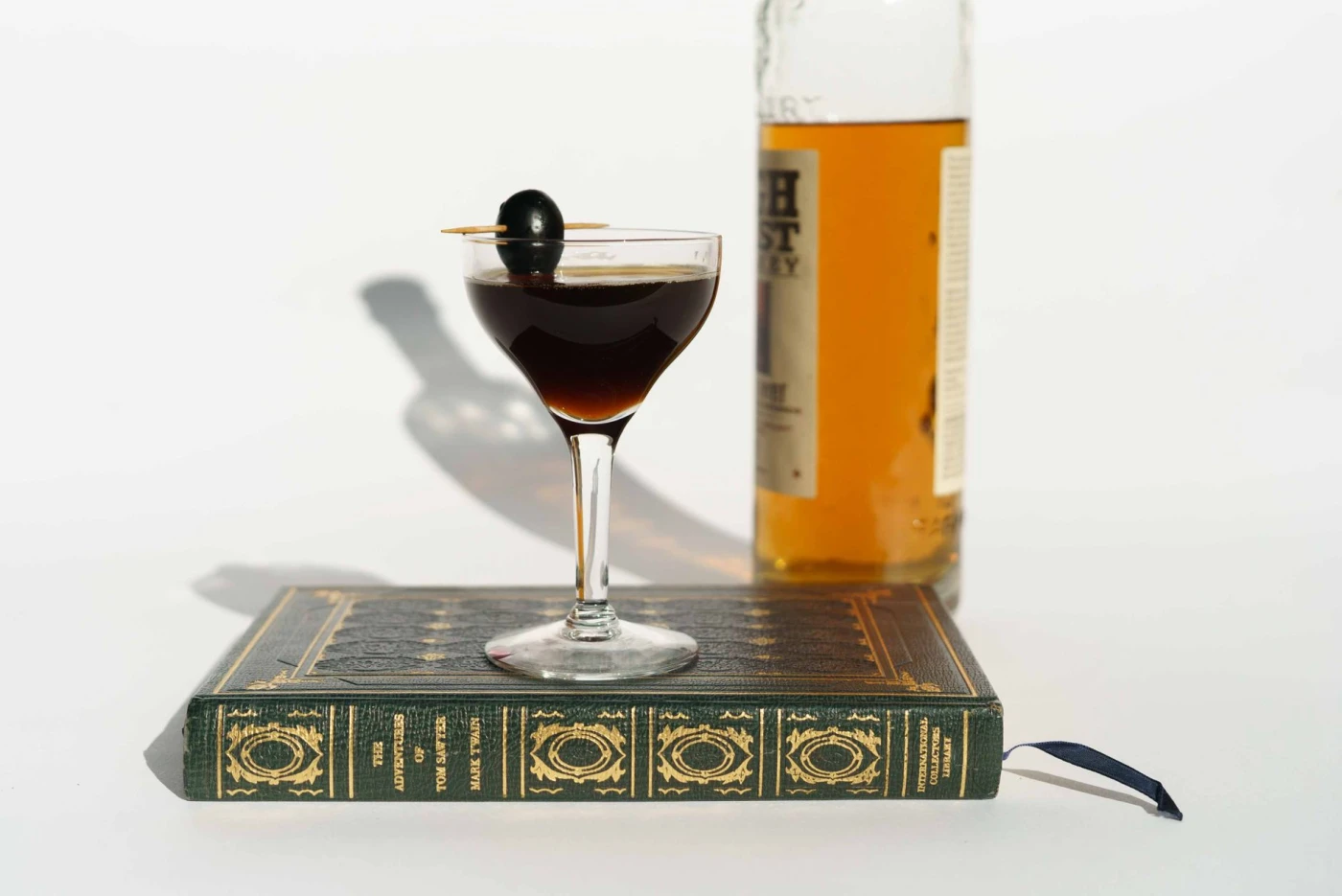

Resa Mueller’s Improved Manhattan: The Secret Twist
This Improved Manhattan adds maraschino and absinthe to the whiskey classic. Learn the balanced recipe, technique, variations, and serving tips. Resa Mueller’s Improved Manha.
Resa Mueller’s Improved Manhattan takes the familiar whiskey-and-vermouth classic somewhere darker, more aromatic, and considerably more intriguing. Maraschino liqueur contributes a dry cherry-almond edge, while an absinthe rinse appears first on the nose and then quietly disappears behind spicy rye.
Here’s the thing: the publicly searchable record does not provide a definitive, attributable specification under this exact drink name. Rather than pretend otherwise, this guide presents a carefully tested home-bar interpretation grounded in the historical idea of an improved cocktail. If you know the standard drink already—or are working through the classic cocktails every home bartender should know—the tiny additions reveal just how dramatically a Manhattan can change without losing its identity.
What Is This Improved Manhattan?
A classic Manhattan combines American whiskey, sweet vermouth, and aromatic bitters. This interpretation keeps that recognisable structure but introduces two concentrated accents: maraschino liqueur and absinthe. The result is not a cherry-flavoured dessert drink. It remains dry-leaning, boozy, and firmly whiskey-led.
The word improved has historical meaning behind the bar. During the nineteenth century, bartenders expanded the basic spirit-sugar-bitters cocktail with fashionable modifiers such as maraschino, curaçao, or absinthe. Applying that approach to a Manhattan is therefore less a modern gimmick than a conversation with early cocktail practice.
The Manhattan itself emerged in the late nineteenth century, although colourful stories about one precise inventor remain disputed. Early published versions varied in whiskey-to-vermouth ratio and sometimes included additional sweeteners or liqueurs. That fluid history matters: there has never been just one immutable Manhattan.
Resa Mueller is a Philadelphia bartender and beverage professional associated with ambitious contemporary cocktail programmes. However, I could not verify an authoritative public source documenting the exact proportions of a drink formally published under this name. The recipe below is consequently labelled as a tested interpretation, not presented as a quotation from Mueller.
In flavour terms, expect rye spice first, dark herbs and wine through the middle, then maraschino’s subtle stone-fruit note. Absinthe supplies a fleeting fennel-and-anise aroma. Compared with the drinks in our beginner-friendly whiskey cocktail guide, this version is more intense but still straightforward to mix. It is an excellent template for learning how tiny measurements control a spirit-forward cocktail.
Ingredients for the Cocktail

This tested interpretation makes one drink. Measure carefully; a teaspoon looks insignificant, but maraschino and absinthe both carry enormous flavour.
- 2 oz (60 ml) rye whiskey, ideally 45–50% ABV
- 3/4 oz (22.5 ml) sweet vermouth, refrigerated after opening
- 1 teaspoon (5 ml) maraschino liqueur
- 2 dashes aromatic bitters, approximately 1/16 oz (2 ml) total
- 1 teaspoon (5 ml) absinthe for rinsing the glass; discard the excess
- 1 lemon peel, about 3 in (7.5 cm) long, or one quality cocktail cherry
- Plenty of hard ice for stirring; none is served in the finished drink
For rye, Rittenhouse Bottled in Bond at 50% ABV is my first choice because it stays spicy after dilution. Wild Turkey 101 Rye, also 50.5% ABV, is another robust option. US prices commonly sit around $25–$40 for mixing-friendly rye; comparable UK bottles often cost roughly £30–£45, although local taxes and availability vary.
Dolin Rouge, at 16% ABV, makes a lighter, gently herbal drink. Cocchi Storico Vermouth di Torino, also around 16% ABV, is richer and more cocoa-like. A 750 ml bottle commonly costs about $15–$25 or £15–£25. Refrigerate it and aim to finish it within four to six weeks.
Luxardo Maraschino, 32% ABV, is the dependable benchmark. Pernod Absinthe at 68% ABV makes a powerful rinse, so tip out every visible pool. Angostura aromatic bitters is 44.7% ABV, though only dashes are used. US label terminology and alcohol oversight sit with the Alcohol and Tobacco Tax and Trade Bureau. If precise measuring appeals to you, the same discipline improves even fast five-minute vodka cocktails.
How to Make an Improved Manhattan
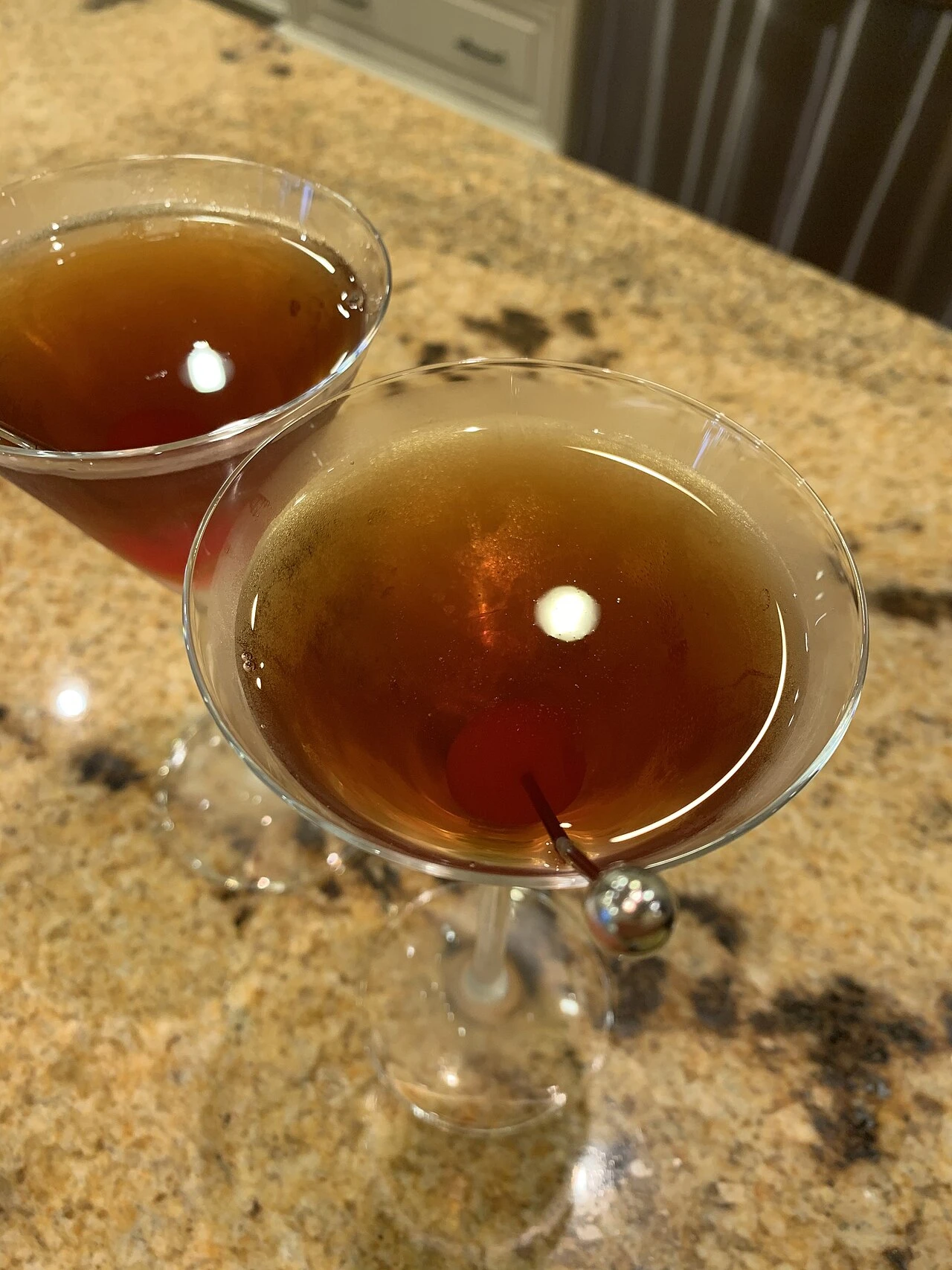
Allow about five minutes. You need a mixing glass, bar spoon, jigger, julep or Hawthorne strainer, and a chilled 5–6 oz (150–180 ml) Nick & Nora or coupe.
- Chill the glass. Put it in the freezer for at least 10 minutes, or fill it with ice and cold water while you mix.
- Add the absinthe rinse. Pour 1 teaspoon (5 ml) absinthe into the cold, empty serving glass. Rotate until the inside is coated, then discard the excess. You want perfume, not a puddle.
- Measure the drink. Add 2 oz (60 ml) rye, 3/4 oz (22.5 ml) sweet vermouth, 1 teaspoon (5 ml) maraschino, and two dashes of bitters to the mixing glass.
- Add ice. Fill the vessel roughly three-quarters full with large, hard cubes. More cold ice usually gives you greater control than a few melting pieces.
- Stir. Move the spoon smoothly around the wall for 20–25 seconds. Aim for approximately 20–25% dilution and a finished liquid temperature near 20–24°F (-7 to -4°C).
- Strain. Empty any chilling ice, if used, and strain the cocktail into the absinthe-rinsed glass.
- Garnish. Express a lemon peel over the surface, rub it once around the rim, and drop it in or discard it. A single Luxardo-style cherry gives a richer finish.
After testing different stir times, I found 22 seconds worked with dense freezer ice; smaller wet cubes reached the same balance closer to 16 seconds. Taste from the spoon before straining. Too fiery? Stir three seconds more. Watery already? Stop.
The drink should look clear and feel silky, never foamy. Once you understand that distinction, other simple builds—such as the Madras cocktail—become much easier to diagnose and adjust.
How Dilution Changes the Flavour
Dilution is not merely a side effect of chilling. Water lowers the sensation of alcohol, opens the vermouth’s herbal aromas, and allows the small measures of maraschino and bitters to spread across the palate. Before stirring, the mixture can taste pointed and disconnected. At the right dilution, rye, wine, spice, and anise read as one continuous flavour.
Ice quality influences how quickly that transformation happens. Large freezer cubes usually melt more slowly than hollow refrigerator ice, while wet cubes taken from a room-temperature bucket can release water surprisingly fast. The familiar instruction to stir for 20–25 seconds is therefore a starting point rather than an absolute rule. Temperature, cube size, mixing-glass thickness, and the initial temperature of the bottles all affect the result.
A useful home test is to weigh the liquid before and after stirring. The undiluted recipe contains roughly 90 ml of ingredients, excluding the discarded rinse. A finished volume near 110–115 ml indicates approximately 20–25 ml of added water. You do not need to repeat this experiment every time, but doing it once teaches you what correctly diluted texture and flavour feel like with your usual ice.
If the first sip burns sharply and the flavours seem stacked rather than integrated, return the drink to the mixing glass and stir briefly with fresh ice. If it tastes thin, extra stirring cannot reverse the problem. Serve it very cold, note the result, and shorten the next stir. Reliable cocktails come from observing cause and effect rather than obeying a fixed number of spoon rotations.
Pro Tips for a Better Improved Manhattan

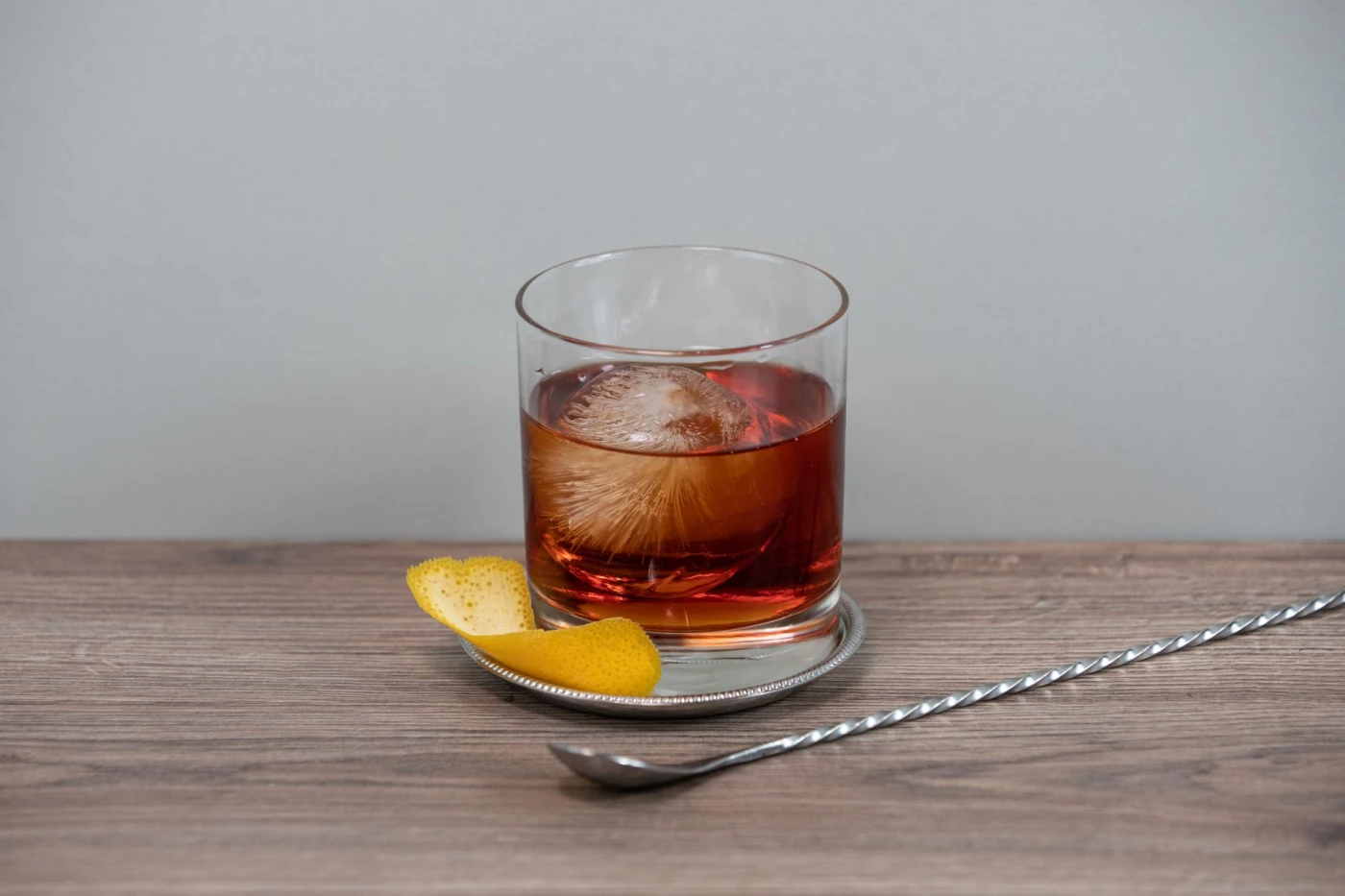
Control the absinthe. In my experience, the rinse causes more failed versions than any other element. After coating the glass, invert it briefly over the sink. If you can see liquid collecting at the bottom, there is too much. A small atomiser delivering two sprays is even more repeatable.
Keep vermouth cold. Sweet vermouth is aromatised wine, not an immortal back-bar spirit. Write the opening date on the bottle, refrigerate it at 39°F (4°C), and replace it when its fruit tastes dull or oxidised. Half bottles are sensible for occasional home bartenders.
Match proof to sweetness. A 100-proof rye such as Rittenhouse gives the cocktail a dry, peppery frame. With an 80-proof whiskey, reduce the vermouth to 2/3 oz (20 ml) or the maraschino to 1/2 teaspoon (2.5 ml). Otherwise, the modifiers can blur the base.
Use dilution as an ingredient. After testing batches with weighed ice, I preferred about 3/4 oz (22 ml) of added water in the finished drink. Do not obsess over the number during service; taste for a cool, rounded first sip without a watery finish.
Choose one garnish story. Lemon emphasises rye and absinthe. A quality cherry amplifies the maraschino and vermouth. Using both looks generous but can make the drink smell muddled. I’d skip neon-red cherries, whose syrup easily dominates this restrained recipe.
Finally, chill the glass properly. A room-temperature coupe can raise the drink several degrees before your first sip. The cocktail is most expressive as it slowly moves from roughly 22°F (-6°C) toward 32°F (0°C), so serve it immediately and let the guest discover that evolution naturally.
Choosing the Right Glass and Garnish
A 5–6 oz (150–180 ml) Nick & Nora is especially well suited to this recipe. Its narrow opening concentrates the absinthe and lemon aromas, while its smaller bowl keeps the serving visually generous without requiring an oversized pour. A coupe also works, although its broad surface allows the drink to warm and lose aroma more quickly. A small traditional cocktail glass offers a sharper presentation but can be awkward to carry when filled close to the rim.
Whatever shape you choose, chill it thoroughly. Ten minutes in a freezer is ideal. If freezer space is limited, fill the glass with ice and cold water before mixing, then empty and dry it immediately before adding the rinse. Drying matters because leftover water can dilute the absinthe coating unevenly.
Cut the lemon peel with as little white pith as practical. Hold the coloured side over the drink and squeeze gently so the oils mist across the surface. Excessive rubbing around the rim can make every sip bitter, so one light pass is enough. If using a cherry, drain it well and place it carefully rather than adding a spoonful of syrup.
Presentation should support the flavour instead of competing with it. Avoid smoke-filled cloches, multiple skewered garnishes, and large pieces of peel that cover the glass. The drink already has a complex aromatic sequence: lemon or cherry first, absinthe underneath, then whiskey and vermouth. A restrained garnish allows that progression to remain clear.
Improved Manhattan Variations
Once the core recipe tastes balanced, change one variable at a time. These riffs preserve the stirred, spirit-forward character while giving the cocktail a different centre of gravity.
Bourbon Improved Manhattan
- 2 oz (60 ml) 100-proof bourbon
- 3/4 oz (22.5 ml) sweet vermouth
- 1/2 teaspoon (2.5 ml) maraschino
- 2 dashes bitters plus an absinthe rinse
Old Forester 100 Proof brings cocoa and orange notes. The reduced liqueur stops bourbon’s sweetness becoming cloying.
Black Improved Manhattan
- 2 oz (60 ml) rye
- 3/4 oz (22.5 ml) Averna amaro
- 1 teaspoon (5 ml) maraschino
- 2 dashes orange bitters plus an absinthe rinse
Averna, 29% ABV, replaces vermouth with cola, citrus, and bitter-herbal depth. Garnish with orange peel.
Perfect-Style Improved Manhattan
- 2 oz (60 ml) rye
- 3/8 oz (11 ml) sweet vermouth
- 3/8 oz (11 ml) dry vermouth
- 1 teaspoon (5 ml) maraschino, 2 dashes bitters, and an absinthe rinse
This split-vermouth version is lighter and more angular. No, perfect does not mean flawless; it describes equal parts sweet and dry vermouth.
Lower-Proof Improved Manhattan
- 1 oz (30 ml) rye
- 1 1/2 oz (45 ml) sweet vermouth
- 1 teaspoon (5 ml) maraschino
- 2 dashes bitters and one absinthe spray
This reverse ratio remains alcoholic but puts wine and herbs forward. It belongs beside other lower-alcohol cocktail ideas, not among alcohol-free drinks.
My favourite is the Perfect-style build with Dolin Rouge and Noilly Prat Original Dry. It feels especially right in spring; the black variation suits a November dinner. Whatever you choose, change the garnish to support the new flavour rather than treating it as decoration.
Common Improved Manhattan Mistakes
Pouring the maraschino freely is the fastest way to lose the whiskey. Maraschino is not cherry syrup; it is a potent, dry-edged liqueur with almond-like character. Measure 1 teaspoon (5 ml). Even 1/4 oz (7.5 ml) noticeably changes the drink.
Leaving absinthe in the glass creates a liquorice-heavy result. Roll the rinse across every surface, then discard it. If your absinthe is 68% ABV, the difference between a thin coating and a full teaspoon is both sensory and alcoholic.
Using tired vermouth produces flat, vaguely sour flavours that better whiskey cannot rescue. Keep it refrigerated and taste a teaspoon before mixing. Fresh vermouth should smell vivid, vinous, and herbal—not dusty or vinegary.
Shaking instead of stirring changes both appearance and texture. There is no juice, dairy, egg, or other ingredient that needs forceful aeration here. Shaking makes the cocktail cloudy and introduces ice shards. Stir quietly.
Counting turns without tasting is another trap. Ten rotations with tiny wet ice are not equivalent to ten with dense one-inch cubes. After testing home-freezer and bagged ice, I found their dilution rates dramatically different. Sample with a straw or spoon near the 15-second mark.
Serving too warm makes alcohol feel aggressive; serving from the freezer without enough water makes it equally sharp. Chill and dilute together. The cocktail should arrive near 20–24°F (-7 to -4°C), then open gradually in the glass.
Finally, do not bury the drink under cherry syrup. Drain the garnish before adding it. Let’s be honest: a cocktail this precise deserves better than an unmeasured red splash at the final second.
Troubleshooting the Balance
If the cocktail tastes too sweet, first check the whiskey proof and vermouth style. A soft 80-proof bourbon paired with a rich vermouth can make the maraschino appear more prominent than its teaspoon measure suggests. Switch to a spicier rye, reduce the liqueur to 1/2 teaspoon (2.5 ml), or choose a lighter vermouth. Do not automatically add more bitters; extra spice can disguise sweetness without correcting the underlying ratio.
If anise dominates, the rinse is the likely cause. Pouring absinthe into the mixing glass is not equivalent to coating and draining the serving glass. Rinse a fresh chilled glass, discard every visible drop, and transfer the cocktail. An atomiser is helpful when consistency matters because one or two sprays create aroma without leaving a pool of high-proof spirit.
A flat or sour finish often points to oxidised vermouth. Taste the wine on its own before blaming the whiskey. If it smells stale, muted, or vinegary, open a fresh bottle and refrigerate it promptly. Buying 375 ml bottles can reduce waste when you make stirred cocktails only occasionally.
When the drink feels hot despite being very cold, it probably needs more dilution. Stir it for another three to five seconds with fresh ice and taste again. When it feels watery, increase the whiskey proof or shorten the next stir rather than adding more spirit to the finished glass. Small, deliberate changes produce clearer results than trying to repair several variables simultaneously.
Food Pairings and Best Occasions
This whiskey cocktail works best before dinner or alongside food with enough salt and fat to meet its intensity. Rye’s spice cuts through richness; vermouth, maraschino, and bitters connect naturally with roasted, cured, or caramelised flavours.
For a US steakhouse-style evening, serve it with blue-cheese-stuffed mushrooms, a medium-rare strip steak, or crisp duck-fat potatoes. At a UK supper, try mature Cheddar, pork pies, or rare roast beef crostini with horseradish. Smoked almonds are the simplest answer. Dark chocolate around 70% cacao also works, particularly when the vermouth has cocoa and vanilla notes.
Avoid very hot chilli, delicately steamed fish, and sugary desserts. High-proof whiskey can exaggerate capsaicin, while fragile dishes disappear beneath the cocktail. A small plate beats a giant one if this is the aperitif.
Occasion matters. This is a polished autumn dinner-party drink, a strong choice for Thanksgiving, Christmas gatherings, Burns Night experimentation, or a quiet New Year’s Eve toast. It is less practical for a sunny picnic because it must remain cold and be served in small glassware; choose one of these portable picnic drinks instead.
For hosting, pre-batch the ingredients and water, refrigerate at least four hours, and pour approximately 3 1/2 oz (105 ml) per guest into chilled glasses. One serving is enough for many people. The recipe contains roughly twice the pure alcohol of a typical US standard drink, depending on whiskey proof and dilution.
Offer water and substantial food, and never pressure a refill. For responsible drinking guidance, consult the US National Institute on Alcohol Abuse and Alcoholism or Drinkaware in the UK.
Improved Manhattan Cheat Sheet
Need the whole method at a glance? This table summarises the tested interpretation. UK bar measures do not always map perfectly to US teaspoons and dashes, so the metric column prioritises repeatable home measurement.
| Element | US measure | UK metric measure | Purpose |
|---|---|---|---|
| Rye whiskey | 2 oz | 60 ml | Spicy base and structure |
| Sweet vermouth | 3/4 oz | 22.5 ml | Herbal wine richness |
| Maraschino liqueur | 1 teaspoon | 5 ml | Dry cherry-almond accent |
| Aromatic bitters | 2 dashes | About 2 ml | Spice and aromatic depth |
| Absinthe rinse | 1 teaspoon, discarded | 5 ml, discarded | Anise aroma |
| Stirring time | 20–25 seconds | 20–25 seconds | Chilling and dilution |
| Serving temperature | 20–24°F | -7 to -4°C | Cold, silky texture |
Using 50% ABV rye, 16% vermouth, 32% maraschino, and a trace of retained absinthe, the finished drink should land near 30–33% ABV after normal dilution. That equals roughly two US standard drinks or about 3.5 UK units. It is an estimate, not a laboratory measurement; warmer ice and longer stirring add more water.
Keep the recipe simple on your first attempt. Use Rittenhouse Rye, Dolin Rouge, Luxardo Maraschino, Angostura bitters, and a restrained Pernod Absinthe rinse. Expect a combined bottle outlay of roughly $100–$140 in the US or £100–£150 in the UK, but each bottle makes many drinks.
This recipe may nod to old cocktail practice, yet its real lesson is modern: tiny choices matter. If you enjoyed watching a classic evolve, our look at how 1990s drinks changed explores another side of cocktail history.
Ready to organise the bottles, tools, ice, and glassware behind this recipe? Download the free home bar starter checklist, then mix the drink with confidence.
Ask AI about this article
Pick a prompt, copy it, or open ChatGPT with this article preloaded.
Frequently Asked Questions
What is Resa Mueller’s Improved Manhattan?
Resa Mueller’s Improved Manhattan is a spirit-forward variation on the classic rye, sweet-vermouth, and bitters formula. This tested home-bar interpretation adds maraschino liqueur and a light absinthe rinse, recalling the nineteenth-century practice of improving cocktails with extra aromatic ingredients. It tastes spi.
How do you make this Improved Manhattan?
Rinse a chilled cocktail glass with absinthe. Stir 2 oz (60 ml) rye, 3/4 oz (22.5 ml) sweet vermouth, 1 teaspoon (5 ml) maraschino liqueur, and two dashes of aromatic bitters with ice for roughly 20–25 seconds. Strain into the prepared glass, express a lemon peel over the surface, and garnish with the peel or one quali.
What is the best rye for an Improved Manhattan?
A spicy rye whiskey at 45–50% ABV works best. Rittenhouse Rye Bottled in Bond gives the cocktail firm structure, while Wild Turkey 101 Rye is lively and peppery. Sazerac Rye at 45% ABV produces a softer drink. Prices vary, but these bottles commonly occupy the practical mid-shelf range.
Do I need absinthe for an Improved Manhattan?
Absinthe supplies the distinctive anise aroma associated with many improved-style cocktails, but you need only a rinse. If you dislike liquorice flavours, use one restrained dash or omit it. Pernod Absinthe, typically 68% ABV, is assertive; a 5 ml rinse is excessive unless most is discarded. Pastis can substitute, thou.
Why should this Manhattan be stirred rather than shaken?
Stirring chills and dilutes the whiskey mixture while preserving a clear appearance and dense, silky texture. Shaking introduces air bubbles and small ice fragments, producing a cloudier, lighter-feeling drink. Use large, cold cubes and stir smoothly for 20–25 seconds. The real target is temperature and dilution, so sl.
How strong is the finished cocktail?
With 100-proof rye and the stated recipe, the finished drink generally lands near 30–33% ABV after normal stirring dilution. That is an estimate because ice temperature and stirring time change the final water content. One serving contains roughly two US standard drinks and about 3.5 UK units, so it should be approache.
Comments 0
Login to Post comments