Absinthe Without Leave: Master the Layered Shot
Absinthe Without Leave layers banana liqueur, Irish cream and potent absinthe into a striking after-dinner shot. Learn the exact measures and technique.
Absinthe Without Leave is a tiny drink with an outsized personality: green banana, silky Irish cream and fiercely aromatic absinthe arranged in three distinct layers. It looks theatrical, yet you need only a chilled glass, a jigger and a steady bar spoon.
Here’s the thing. This is a layered shot, not a conventional shaken cocktail, so density and pouring speed matter more than muscle. Once you understand those two variables, the recipe takes about three minutes.
The combination belongs beside the visually driven drinks in our guide to memorable 1990s drinks, although this particular serve emerged later. Below, you’ll learn its disputed history, exact US and UK measures, realistic strength and the technique that keeps the cream from turning into a cloudy green swirl.
What Is Absinthe Without Leave? History and Character
Absinthe Without Leave is a layered shooter rather than a long drink. The commonly recorded version combines green banana liqueur, Irish cream and absinthe, producing sweet tropical fruit, dairy richness and a dry rush of anise, fennel and wormwood. It is usually presented in a chilled 2- to 2.5-ounce glass.
The name is a pun on being absent without leave, the military expression often shortened to AWOL. Published cocktail records associate the drink with Hush in London around 2003, but the available history is brief. Treat that attribution as the best-known account, not an unassailable nineteenth-century pedigree.
That distinction matters. Absinthe itself has deep European history, but Absinthe Without Leave is a modern novelty shot. It does not belong to the Belle Époque, and there is no sound basis for attaching it to famous artists or claiming that wormwood creates hallucinations. In the United States, the TTB explains its policy on absinthe labelling, including how the name may be used on compliant spirits.
Recipes also vary. Some reverse the order or replace banana liqueur with black sambuca. I regard the green banana version as the most coherent: its fruit softens the herbal top note, while the colour makes the layers immediately legible.
If you are building your repertoire, compare its modern construction with the drinks in 15 classic cocktails every home bartender should know. The technique is useful elsewhere, even if this cheeky London-era shot will never be mistaken for a pre-Prohibition standard.
Absinthe Without Leave Ingredients You Need
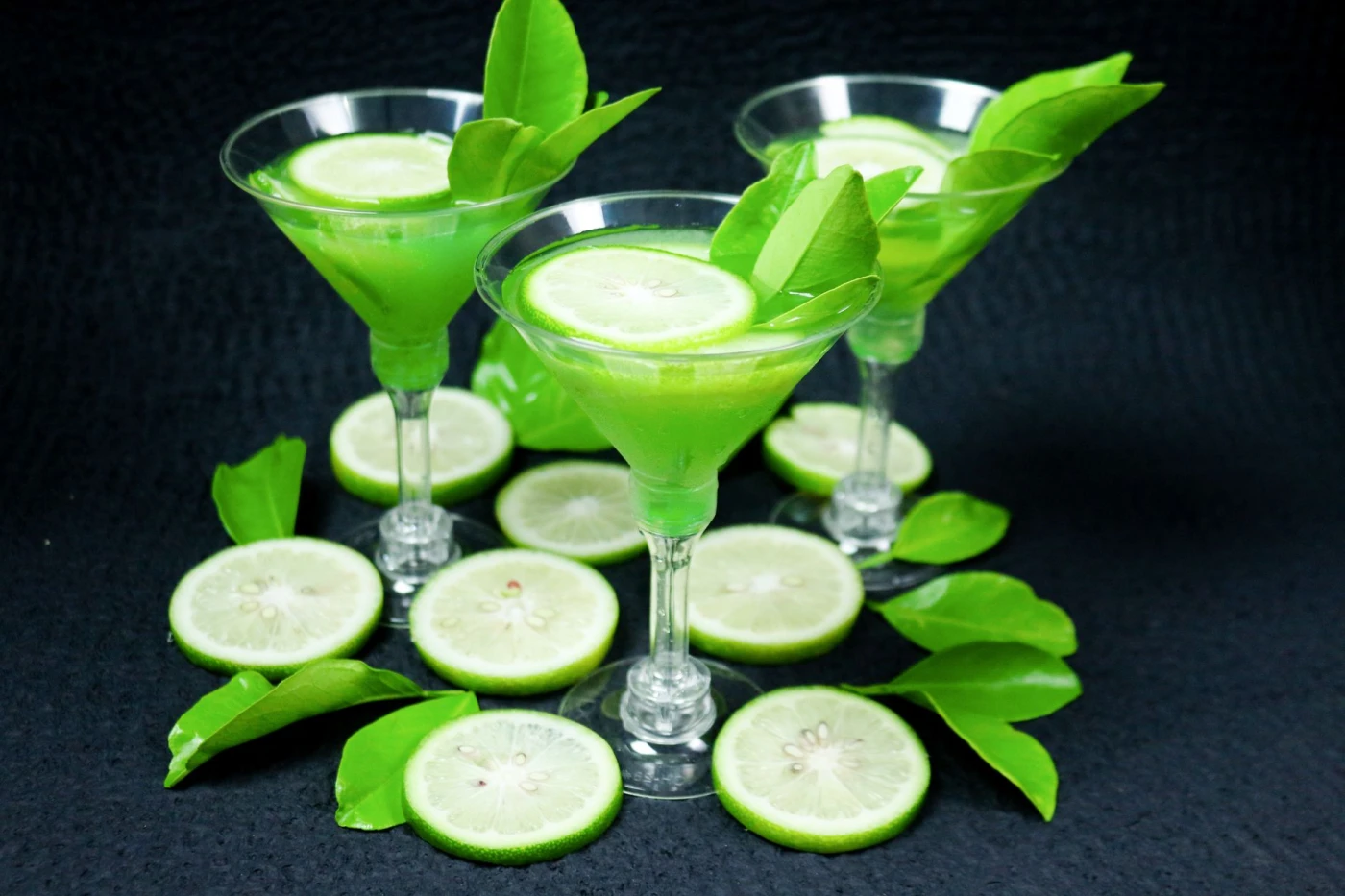
The standard Absinthe Without Leave recipe makes one generous 2-ounce (60 ml) shot. Measure accurately; equal-looking free-pours can differ enough to spoil both the balance and the stripes.
- 0.75 oz (22.5 ml) green banana liqueur, preferably Pisang Ambon at about 20% ABV
- 0.75 oz (22.5 ml) Irish cream liqueur, such as Baileys Original at 17% ABV
- 0.5 oz (15 ml) verte absinthe, such as La Fée Parisienne at 68% ABV
- Optional garnish: one paper-thin lime wheel, no more than 1 inch (25 mm) wide
You will also need a jigger, a bar spoon and a chilled 2- to 2.5-ounce cordial or shot glass. Avoid a narrow 1-ounce UK pub measure; the complete recipe will not fit.
What is the best absinthe? In my experience, a recognisably herbal verte between 55% and 68% ABV works better than an aggressively sweet, artificially neon bottle. La Fée is a practical benchmark, although availability differs by state and country. A current UK listing may be around £55 for 700 ml; for the full three-bottle setup, budget roughly £70–£95 or $75–$110, with local taxes and availability causing substantial variation.
Baileys is reliable because its texture is consistent and its bottle confirms the 17% ABV. Other Irish creams can work, but a thinner product may sink or feather at the edges. Pisang Ambon contributes the signature green banana note; clear crème de banane tastes plausible but changes the visual result.
Keep dairy allergies in mind. Irish cream contains milk, and there is no garnish clever enough to make that safe for an allergic guest. For faster, less specialised options, browse these five-minute vodka cocktails.
How to Make Absinthe Without Leave Step by Step
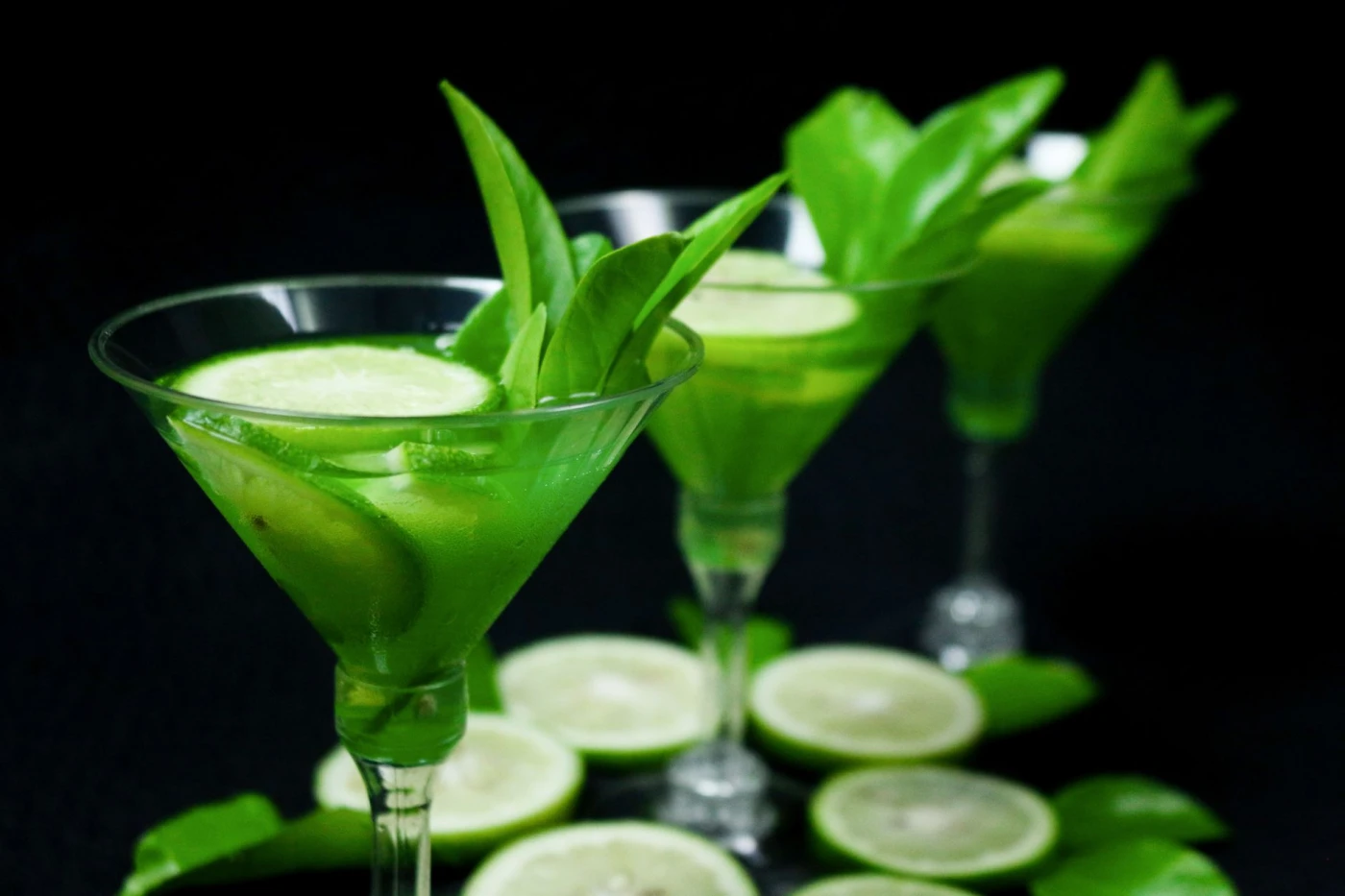
Layering looks mysterious until you slow it down. Your aim is to spread each new liquid across the surface below it without driving a concentrated stream through that layer.
- Chill the components. Refrigerate all three bottles for at least two hours, aiming for 38–42°F (3–6°C). Place the glass in the freezer for 10 minutes.
- Add the banana base. Measure 0.75 oz (22.5 ml) green banana liqueur into the centre of the dry glass. Wipe any splash from the inside wall.
- Float the Irish cream. Turn a bar spoon so its convex back faces upward. Hold it just above the banana layer, touching neither liquid nor glass, and slowly pour 0.75 oz (22.5 ml) cream over it.
- Add the absinthe. Clean the spoon. Using the same low, gentle position, float 0.5 oz (15 ml) absinthe over the cream in a thread-thin stream.
- Inspect and serve. Wait about 10 seconds for the bands to settle. Add the optional lime wheel only if it can rest on the rim without sinking.
After testing layered pours at several heights, I get the cleanest boundary when the spoon is less than 0.25 inch (6 mm) above the surface. A high pour creates momentum. That, not bad luck, punches holes through the cream.
Do not shake, stir or add ice. Absinthe Without Leave receives essentially no dilution, so the bottle strengths directly determine the final power. If your first teaspoon-sized density test shows a substitute brand sinking, reverse the affected layers rather than forcing the published order.
This is easily one of the best small recipes for practising spoon floats because the colours expose every error. Prefer a stirred, sippable introduction to spirits? Start with our whiskey cocktails for beginners.
How Absinthe Without Leave Tastes
The flavour changes as the three layers reach your palate. Absinthe arrives first when the shot is served in its intended order, so the opening impression is dry, aromatic and dominated by anise. Fennel, wormwood and other botanicals may contribute peppery, floral or gently bitter details depending on the bottle. The Irish cream follows with vanilla, cocoa and dairy richness, then the banana liqueur supplies a sweet tropical finish.
That progression is the reason to preserve the layers rather than mixing everything together. A stirred version still contains the same ingredients, but it tastes flatter and more uniformly sweet. In a cleanly constructed shot, the forceful herbal opening gradually softens into cream and ripe banana. The contrast is more interesting than any ingredient considered alone.
Serve it cold but not frozen solid. Very low temperatures suppress aroma, making a carefully selected absinthe seem less expressive. Conversely, a warm shot feels syrupy and allows the alcohol to become sharp. The recommended 38–42°F (3–6°C) range keeps the texture controlled while leaving enough botanical aroma to explain the drink’s character.
You can drink Absinthe Without Leave in one measured sip, but there is no need to throw it back abruptly. Bring the glass to your nose briefly, keeping in mind that high-proof alcohol can feel intense when inhaled too closely. Take a smooth sip that captures all three bands, then notice how the finish moves from liquorice-like herbs toward cream and banana.
If you dislike anise, this recipe is unlikely to change your mind because absinthe is not a background accent. Use the smaller tasting format before committing to a full serving. Guests who enjoy sambuca, pastis or other anise-led spirits are more likely to appreciate the combination, while drinkers who prefer dry, citrus-forward cocktails may find it unusually rich.
Pro Tips for Cleaner Absinthe Without Leave Layers
Cold ingredients are the first advantage. Chilling increases viscosity, giving you a more forgiving pour and sharper separation. Do not freeze Irish cream solid or leave a glass in an unpredictable domestic freezer for hours; 10–15 minutes is enough.
In my experience, the bar spoon’s position matters more than whether it has a twisted stem. Place the spoon close to the liquid and pour onto its broad back. Keep the bottle or jigger only an inch or two above the spoon, then pause if the surface starts bowing downward.
Test unfamiliar brands before guests arrive. Add one teaspoon (5 ml) of each ingredient to a narrow glass in the proposed order. Density can shift with sugar, cream content and proof, so the brand name is not merely decorative. If the Irish cream dives through your banana liqueur, try an even slower pour; if it still sinks, choose a denser banana product or revise the order.
La Fée Parisienne’s 68% ABV, equivalent to 136 proof, brings a pronounced anise finish. A 55% absinthe is softer and yields a drink closer to 28% ABV instead of roughly 31%. I’d skip an 80% or higher novelty spirit here. Greater proof does not automatically produce better botanical flavour, and it makes the shot harder to balance.
Use clean glassware. Detergent residue, condensation and greasy fingerprints can disrupt the edges or make the presentation look careless. Dry the inside before pouring, then handle the glass by its base.
Finally, serve Absinthe Without Leave within two minutes. The cream can feather where it meets high-proof alcohol, especially as the drink warms. Think of it as a short-lived edible construction. Want technique with more margin for error? The built-in fruit dilution of a Madras cocktail is considerably more forgiving.
Absinthe Without Leave Variations Worth Trying
Variations should change one clear idea while preserving the drink’s sweet-creamy-herbal structure. Before making a full shot, test the new liquids in 0.17-ounce (5 ml) samples; substitutions can alter density as well as flavour.
Black Forest Version
- 0.75 oz (22.5 ml) black sambuca
- 0.75 oz (22.5 ml) Irish cream
- 0.5 oz (15 ml) absinthe
This darker interpretation trades banana for liquorice and creates a more severe, anise-led profile. Build in the same cautious manner, but verify the order because sambuca brands differ in sugar.
Tropical Lime Version
- 0.75 oz (22.5 ml) green banana liqueur
- 0.75 oz (22.5 ml) Irish cream
- 0.5 oz (15 ml) absinthe
- One expressed lime peel, oils only
Express the peel above the finished shot and discard it. Do not add lime juice: acid may curdle the cream and destroy the layers.
Coffee After-Dinner Version
- 0.75 oz (22.5 ml) coffee liqueur
- 0.75 oz (22.5 ml) Irish cream
- 0.5 oz (15 ml) absinthe
The result recalls a herbal B-52. After testing this version, I prefer a restrained coffee liqueur around 20% ABV; intensely sweet products smother the absinthe.
Smaller Tasting Pour
- 0.5 oz (15 ml) green banana liqueur
- 0.5 oz (15 ml) Irish cream
- 0.25 oz (7.5 ml) absinthe
This 1.25-ounce (37.5 ml) format keeps the character while reducing the serving. It will fit many standard US shot glasses.
There is no convincing alcohol-free substitute for absinthe’s proof, flavour and floating behaviour all at once. If lower strength is the goal, choose a deliberately balanced recipe from our low-alcohol cocktail collection instead.
Common Absinthe Without Leave Mistakes
The biggest mistake is treating Absinthe Without Leave like a shaken shooter. Agitation combines the colours, aerates the cream and removes the feature that makes the recipe interesting. Measure straight into the serving glass instead.
Pouring too fast is a close second. If the Irish cream forms a crater, stop and let the surface settle before continuing. Pouring more quickly to “finish the layer” only drives it deeper.
Using warm bottles makes every boundary less stable. Chill all three ingredients, not merely the glass. Equally, avoid a frosted glass covered with melting ice crystals; water introduces uncontrolled dilution and slippery streaks.
Assuming every brand has the same density causes baffling failures. Sugar and alcohol levels differ. A 68% absinthe may behave differently from a sweet 45% absinthe-style product, while value Irish creams can be thinner than Baileys. Run the teaspoon test when changing bottles.
Adding citrus juice is a flavour and texture error. Lime sounds sensible beside banana, but its acidity can split the dairy. Use peel oil or a dry rim garnish instead.
Setting the drink alight is unnecessary. Absinthe can burn, and fire introduces risks involving spilled high-proof alcohol, hot glass and loose clothing. The proper spectacle is a precise float.
Holding completed shots for an hour also disappoints. The alcohol-cream boundary slowly feathers, while the glass warms and collects condensation. Prepare the station in advance, then build to order.
Let’s be honest: a muddy first attempt is still drinkable if the dairy remains fresh, but it is no longer a successful layered shot. Practise with small quantities. If you need a batch-friendly alternative for an outdoor gathering, use one of these make-ahead picnic drinks.
Pairings, Seasons and the Best Time to Serve It
Absinthe Without Leave works best as a single after-dinner flourish, not as an aperitif or an all-evening drink. Banana sweetness and Irish cream naturally suit desserts, while absinthe cuts through richness with anise and bitter herbs.
Pair it with dark chocolate truffles, espresso brownies or a modest slice of banana bread. Salted caramel is effective too, although I would keep the portion small; the shot already contains two sweet liqueurs. Avoid acidic lemon tarts and sharp berry sauces immediately alongside it because they clash with the dairy texture.
Seasonally, this is fun at Halloween, a winter speakeasy party or a New Year’s Eve gathering where presentation matters. Its green colour can work for St Patrick’s Day, but do not pretend the absinthe makes it Irish—the Irish cream is the only direct Irish cue. In summer, the rich texture can feel heavy unless served very cold after a late barbecue.
Bring each guest the complete glass rather than passing a tray that has been sitting in a warm room. Serve water alongside it. A small espresso can follow, but caffeine does not reduce blood alcohol concentration or make someone sober.
Strength deserves attention. With Pisang Ambon at 20%, Baileys at 17% and La Fée at 68%, the undiluted drink is approximately 31% ABV, or 62 proof. That is about 18 ml of pure alcohol, equal to roughly 1.8 UK units and a little over one US standard drink. The NIAAA standard-drink guide explains the US measure, while Drinkaware explains UK units.
For responsible drinking, serve one measured shot, never pressure guests, provide alcohol-free options and make sure everyone has safe transport home.
Absinthe Without Leave Quick Reference Cheat Sheet
Use this table when you want the complete Absinthe Without Leave method without rereading every technique note. The metric quantities are direct conversions rather than rounded pub measures, so a marked jigger or small measuring cylinder helps.
| Component | US measure | UK/metric measure | Purpose |
|---|---|---|---|
| Green banana liqueur | 0.75 oz | 22.5 ml | Sweet, dense base |
| Irish cream | 0.75 oz | 22.5 ml | Creamy middle layer |
| Verte absinthe | 0.5 oz | 15 ml | Herbal top layer |
| Total volume | 2 oz | 60 ml | One generous serving |
| Glass capacity | 2–2.5 oz | 60–75 ml | Leaves safe headroom |
| Serving temperature | 38–42°F | 3–6°C | Supports clean layers |
Method: chill, measure the banana liqueur, float the Irish cream over the back of a low-held bar spoon, then float the absinthe. Wait 10 seconds and serve immediately. Total active time is approximately three minutes.
At 68% absinthe strength, expect roughly 31% ABV before any incidental dilution. At 55%, expect approximately 28% ABV. These are calculated estimates; your exact result depends on the proof and volume printed on every bottle.
Remember the practical warning signs. A crater means the pour is too fast. Feathered cream usually means warmth, turbulence or prolonged holding. A substitute that sinks despite careful pouring probably has a different density.
Absinthe Without Leave is sweet, creamy, herbal and unapologetically unusual. It is not the drink for every gathering. Yet when you want a compact piece of bar theatre, a properly layered version earns attention before anyone even tastes it.
Ready to make Absinthe Without Leave at home? Chill the bottles, measure carefully and let the spoon do the delicate work. For glassware, measuring tools and the essentials that make recipes like this easier, download our free home bar starter checklist.
Ask AI about this article
Pick a prompt, copy it, or open ChatGPT with this article preloaded.
Frequently Asked Questions
What is an Absinthe Without Leave?
Absinthe Without Leave is a sweet, herbal layered shot made with green banana liqueur, Irish cream and absinthe. Its visual appeal comes from the contrasting green and cream-coloured bands. The recipe appears in modern cocktail records from the early 2000s, although its exact origin is not documented as thoroughly as o.
How do you make an Absinthe Without Leave?
Chill the ingredients and a 2- to 2.5-ounce shot glass. Add 0.75 oz (22.5 ml) green banana liqueur, then slowly float 0.75 oz (22.5 ml) Irish cream over a bar spoon. Finish with 0.5 oz (15 ml) absinthe, poured just as gently. Serve the completed shot immediately without shaking, stirring or adding ice.
What is the best absinthe for Absinthe Without Leave?
A traditional verte absinthe between 55% and 68% ABV gives the clearest herbal contrast. La Fée Parisienne at 68% ABV is a dependable benchmark, while a 55% bottle creates a slightly softer shot. Choose an absinthe with recognisable anise, fennel and wormwood character. Avoid buying solely on colour or exaggerated thuj.
Why are the layers mixing together?
The usual causes are warm ingredients, pouring too quickly or dropping liquid from too high above the glass. Chill everything to roughly 38–42°F (3–6°C), place the bar spoon close to the existing layer and pour in a thin stream. Density varies between brands, so a substitute liqueur may also require a different order o.
How strong is Absinthe Without Leave?
Using 20% banana liqueur, 17% Irish cream and 68% absinthe, the undiluted recipe is approximately 31% ABV, or 62 proof. It contains about 18 ml of pure alcohol: roughly 1.8 UK units and just over one US standard drink. Actual strength changes with the brands selected, so check all three bottle labels before calculating.
Does Absinthe Without Leave need to be set on fire?
No. Fire is not part of the recipe and adds unnecessary risk without improving its flavour. High-proof absinthe can ignite, while a heated glass may crack or cause burns. The drink gets its drama from careful layering, vivid colour and aromatic contrast. Keep flames away, serve the shot cold and let precise presentatio.
Comments 0
Login to Post comments