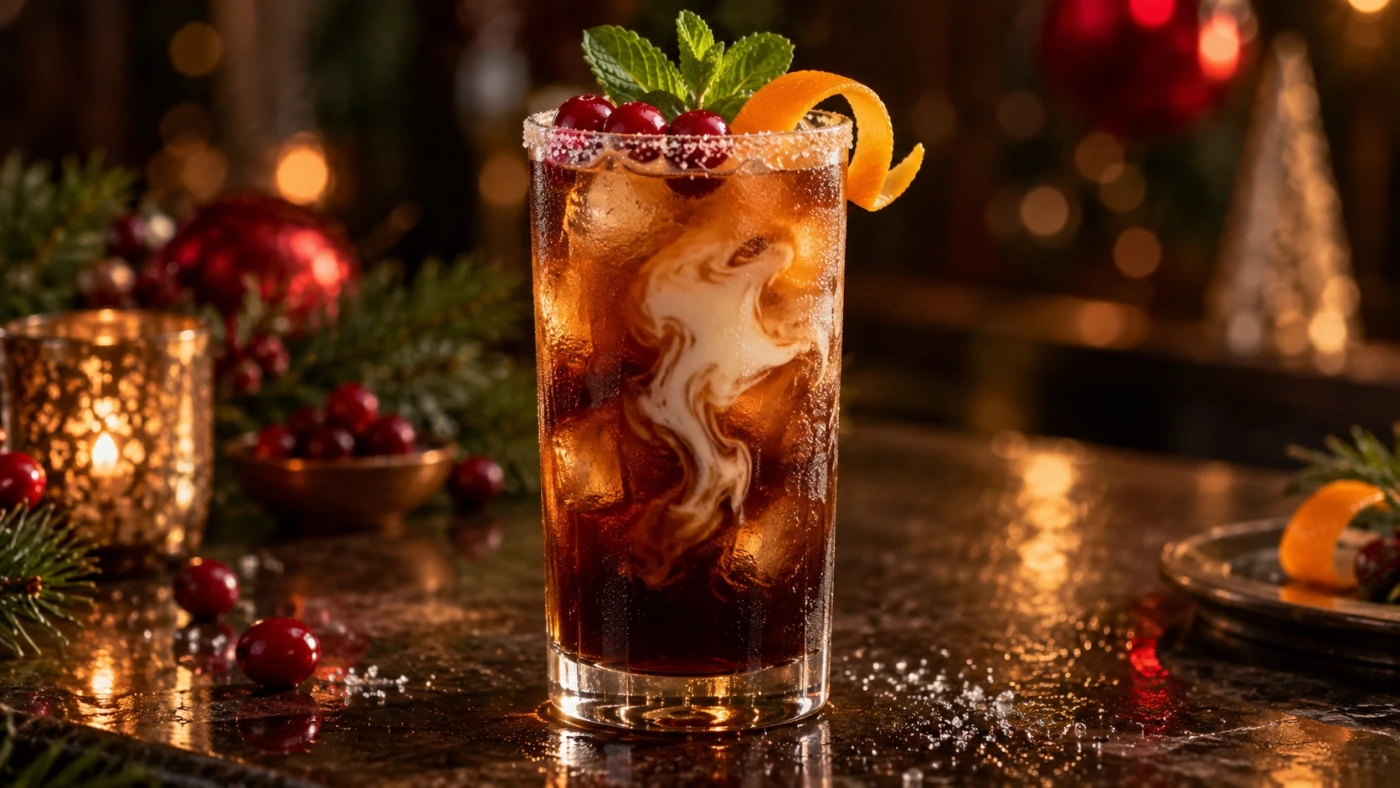

Christmas Vodka Cocktails: How to Build Festive Flavour Without Losing Balance
The central question is not simply which festive ingredients go with vodka. It is how sweetness, acidity, dilution, temperature and aroma interact to…
- It is how sweetness, acidity, dilution, temperature and aroma interact to make a Christmas cocktail feel seasonal without becoming cloying or confused.
- Once you understand that structure, you can choose a suitable vodka, diagnose an unbalanced drink and decide whether it needs contrast, dilution or a clearer aromatic direction. “Christmas vodka cocktail” is a useful category rather than the name of one established drink.
- It can describe a sparkling cranberry highball, a warm spiced serve, a creamy after-dinner drink or a citrus-led cocktail scented with winter herbs.
- The common feature is deliberate seasonal flavour built around vodka.
- Vodka is often described as neutral, but neutral does not mean irrelevant.
The central question is not simply which festive ingredients go with vodka. It is how sweetness, acidity, dilution, temperature and aroma interact to make a Christmas cocktail feel seasonal without becoming cloying or confused. Once you understand that structure, you can choose a suitable vodka, diagnose an unbalanced drink and decide whether it needs contrast, dilution or a clearer aromatic direction.
“Christmas vodka cocktail” is a useful category rather than the name of one established drink. It can describe a sparkling cranberry highball, a warm spiced serve, a creamy after-dinner drink or a citrus-led cocktail scented with winter herbs. The common feature is deliberate seasonal flavour built around vodka.
Why vodka changes the flavour-building problem
Vodka is often described as neutral, but neutral does not mean irrelevant. It contributes alcohol, body and texture, and individual bottles may also show subtle grain, fruit, pepper, citrus or creamy notes. Those differences can matter in a spare drink, although mixers, sugar, spice and strong fruit can quickly cover them.
This relative restraint makes vodka adaptable. Cranberry can remain recognisably cranberry; ginger can retain its heat; citrus peel can remain the leading aroma. The same quality also removes a possible source of complexity. A festive vodka cocktail therefore needs structure from its modifiers rather than relying on the base spirit alone to create depth.
In the United States, vodka is a regulated distilled-spirit category rather than merely a marketing description. Readers comparing labels can consult the Alcohol and Tobacco Tax and Trade Bureau's distilled-spirits information. Legal classification, however, does not tell you which bottle will taste best in a particular cocktail.
The five-part structure of a balanced festive drink
Think of a Christmas vodka cocktail as a connected system. Changing one element can alter how the others are perceived.
| Element | Its job | Common festive sources | Warning sign |
|---|---|---|---|
| Sweetness | Softens alcohol and carries rich flavours | Liqueurs, syrups, sweet vermouth, fruit preparations | The finish feels sticky or tiring |
| Acidity or bitterness | Creates contrast and length | Citrus, tart cranberry, dry wine, tonic or bitters | The drink tastes broad, dull or syrupy |
| Dilution | Reduces intensity and integrates flavours | Ice melt, soda, sparkling wine or other non-alcoholic mixers | Alcohol heat or spice dominates |
| Temperature | Changes perceived sweetness, aroma and refreshment | Cold shaking, stirring, ice or deliberate warming | The first and last sips seem like different drinks |
| Aroma | Establishes the seasonal identity before the sip | Citrus peel, rosemary, mint or restrained spice | Several garnishes compete without a clear lead |
These elements are not interchangeable. More citrus may correct excessive sweetness, but it may also make a cranberry drink aggressively tart. Extra soda lowers intensity and adds dilution, but it can also thin texture. A strongly aromatic garnish can make a simple drink seem more complex without increasing its sugar.
What creates a recognisably Christmas flavour?
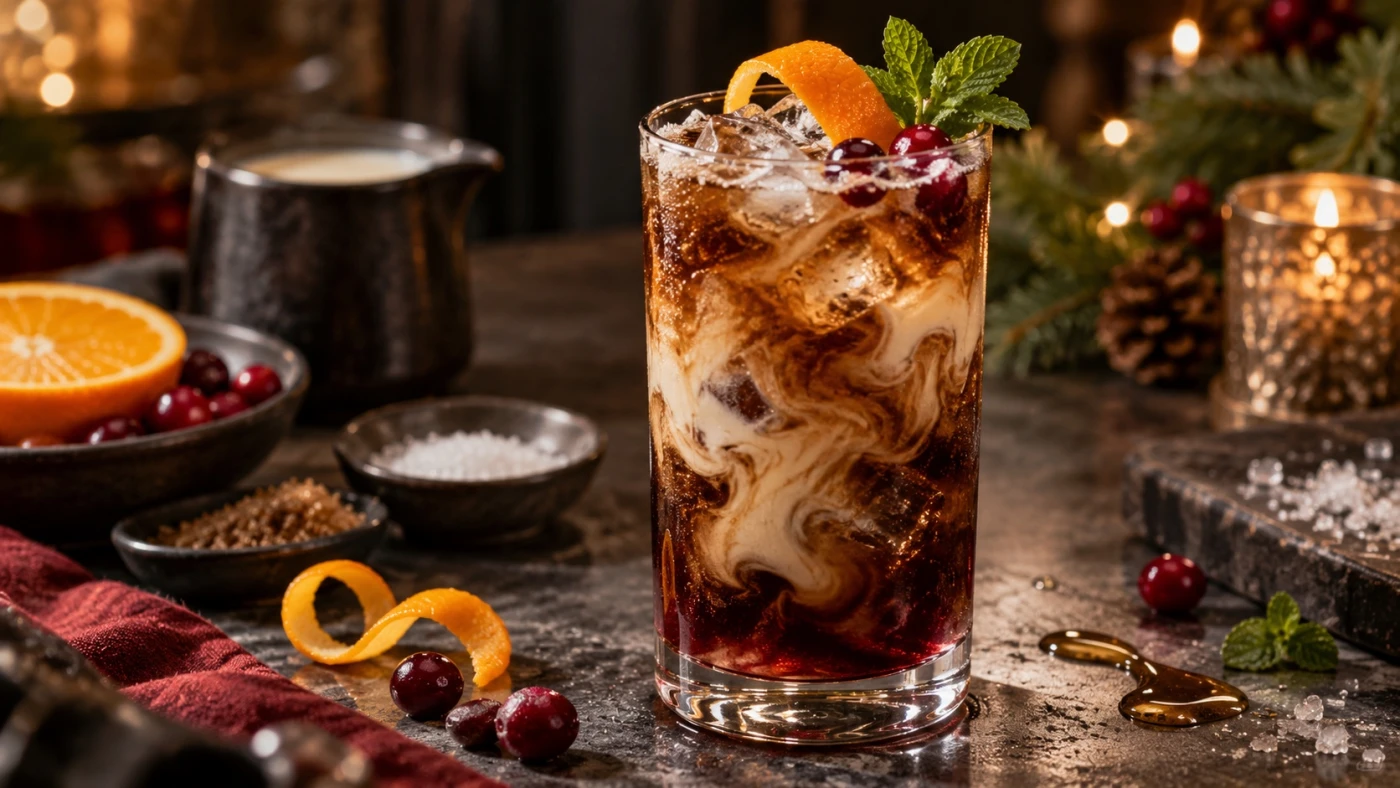
Seasonal identity usually comes from a small number of coordinated signals. Red fruit suggests familiar festive colours; orange peel and baking spices recall mulled drinks; coffee, chocolate and cream point towards dessert; evergreen herbs can evoke winter foliage. None of these associations is universal, and Christmas traditions vary between households and countries.
The practical lesson is to choose one leading idea and one supporting accent. Cranberry with orange peel is easier to read than cranberry, vanilla, cinnamon, rosemary, ginger and coffee in the same glass. Complexity comes from contrast and progression—not simply from the number of flavours present.
Spice is especially easy to overuse. Cinnamon, clove and star anise contain potent aromatic compounds, so their impact is not proportional to their physical size. Treat them as accents. If a drink smells like only one spice, adding more fruit or vodka may increase volume without restoring clarity.
Apply the concept: make one decision at a time
Start by deciding what kind of experience the drink should deliver. A bright aperitif needs a different structure from a creamy dessert drink.
| Desired result | Prioritise | Vodka decision | Adjustment to consider |
|---|---|---|---|
| Bright and sparkling | Acidity, bubbles and fresh aroma | A clean, unobtrusive vodka usually leaves room for fruit | Reduce sweetener before increasing sourness |
| Rich and dessert-like | Texture, controlled sweetness and roast or spice notes | A fuller-textured vodka may remain more noticeable | Add contrast through coffee bitterness, salt used judiciously or aroma |
| Warm and spiced | Aromatic clarity and gentle alcohol presence | A delicate premium nuance may disappear under heat and spice | Keep the dominant spice restrained and taste the sweetened mixture before serving |
| Fruit-led and tart | Clear fruit identity with enough sweetness to round the edges | A neutral vodka avoids competing with the fruit | Dilute before assuming the drink needs more sugar |
When buying vodka for a strongly flavoured punch or spiced mixed drink, dependable flavour and an appropriate price may matter more than delicate tasting notes. For a short, spirit-forward serve with few modifiers, texture and subtle character become easier to notice. Expensive is not automatically better; suitability depends on how much of the vodka the finished drink allows you to perceive.
A diagnostic method for an unbalanced cocktail
Change only one variable between tastes. Otherwise, you will not know which adjustment helped.
- Too sweet: first consider whether the drink needs dilution, acidity or bitterness. Adding more vodka may raise the alcohol intensity without correcting the underlying structure.
- Too sharp: check temperature and dilution before adding sugar. A very concentrated, cold sample can change noticeably as ice melts.
- Too alcoholic: more sweetener can hide some heat while making the finish heavier. Dilution or a longer serving format is often the more direct adjustment.
- Too weak or watery: reduce unnecessary liquid or use colder ingredients and sound technique to limit uncontrolled ice melt. Do not assume that simply adding spirit will restore lost aroma or acidity.
- Muddled: remove a competing garnish, spice or liqueur. Subtraction is often more effective than another corrective ingredient.
This is sensory guidance rather than a universal chemical formula. Ingredient acidity, sugar concentration, carbonation and serving temperature vary, so taste in small increments and record changes when developing a larger batch.
Strength and dilution are related, but not identical
A cocktail's approximate alcohol by volume can be estimated by dividing the volume of pure alcohol contributed by the spirits and alcoholic modifiers by the drink's total liquid volume. The result is only an estimate if ice melt, carbonation loss or imprecise pours are unknown.
Perceived strength is different. Sugar, low temperature and strong flavourings can make alcohol seem less obvious without removing it. A sweet festive drink may therefore taste gentle while still containing a substantial amount of alcohol. Conversely, a dry drink can taste forceful even at a lower calculated strength.
For shared serves, calculate the alcohol contribution from every alcoholic ingredient rather than considering vodka alone. Provide genuinely alcohol-free choices as well as water, and avoid using taste as a measure of how much alcohol a drink contains.
Common misconceptions
The decision to remember
Before adding another festive ingredient, identify the drink's leading flavour and ask what structural job the new ingredient will perform. If it does not improve sweetness, contrast, dilution, texture or aroma, it probably adds clutter.
That single decision turns “Christmas vodka cocktail” from a decorating theme into a useful mixing framework: choose a clear seasonal direction, select vodka according to how exposed it will be, and correct imbalance one variable at a time.
Ask AI about this article
Pick a prompt, copy it, or open ChatGPT with this article preloaded.
Frequently Asked Questions
Why does a Christmas vodka cocktail taste sweeter after it warms up?
Very cold serving temperatures can make sweetness and aroma seem less prominent. As the drink warms, those qualities may become easier to perceive, so a cocktail that begins balanced can finish cloying if it was heavily sweetened.
Should every festive vodka cocktail contain cranberry?
No. Cranberry is useful because it can contribute colour, fruit and acidity, but apple, pear, citrus, coffee, tea, ginger and selected herbs or spices can create equally seasonal profiles.
Comments 0
Login to Post comments