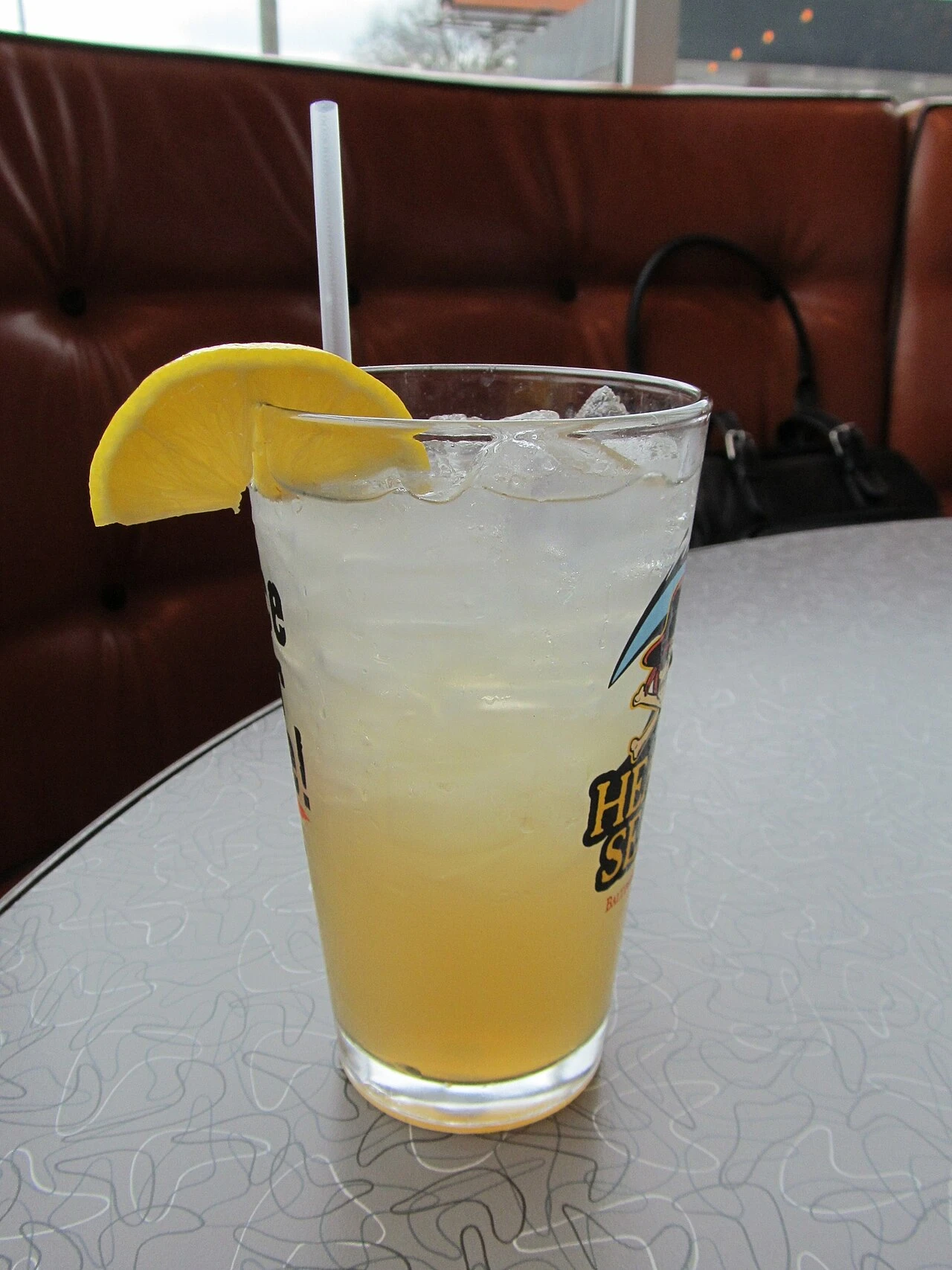
Lynchburg Lemonade: The Bright Whiskey Highball
Make a balanced Lynchburg Lemonade with Tennessee whiskey, fresh lemon, orange liqueur and lively lemon-lime soda.
Lynchburg Lemonade turns Tennessee whiskey into a bright, sparkling long drink with fresh lemon, orange liqueur and a cold rush of citrus soda. It is easy to build, but there is a real difference between a balanced glass and a sugary whiskey-and-pop shortcut.
Here, you will learn the reliable version: measured acidity, controlled sweetness, solid ice and soda added at the right moment. You do not need rare whiskey or specialist equipment. If you are just beginning with brown spirits, our guide to whiskey cocktails for beginners supplies useful context.
Expect a lively first sip, soft caramel underneath and a clean lemon finish. Ready to make one that deserves its famous name?
What Is a Lynchburg Lemonade?
A Lynchburg Lemonade is a carbonated Tennessee whiskey cocktail built around five elements: whiskey, orange liqueur, lemon, sugar and lemon-lime soda. Think of it as a taller, fizzier relative of a whiskey sour. It is citrus-led and refreshing, yet the spirit's vanilla, caramel and oak remain noticeable.
The history is unusually well documented, although some retellings blur important details. Alabama restaurateur Tony Mason testified that he created and named the drink in 1980. His early mixture used Jack Daniel's whiskey, triple sec, sweet-and-sour mix and 7UP, and he served it as a house speciality in mason jars.
A Jack Daniel Distillery representative encountered the cocktail in 1982, according to the record. The company subsequently developed a national promotion, and a dispute over the recipe reached the Alabama Court of Civil Appeals in 1987. That documented legal history is why measured wording—rather than barroom mythology—is appropriate.
The “Lynchburg” in the name points to Lynchburg, Tennessee, home of Jack Daniel's. It does not refer to Lynchburg, Virginia, and the drink was created in Huntsville, Alabama. Geography gets tangled quickly, doesn't it?
Modern recipes vary. Some preserve bottled sour mix, while others use fresh lemon and syrup. I prefer the latter because you can tune sweetness independently and taste the whiskey more clearly. The essential identity, however, remains unchanged: Tennessee whiskey plus orange and sparkling lemon.
This is easily one of the best approachable whiskey highballs for a summer cookout. It also belongs beside the drinks in our collection of classic cocktails every home bartender should know, even though its 1980 origin makes it comparatively young.
Lynchburg Lemonade Ingredients You Need
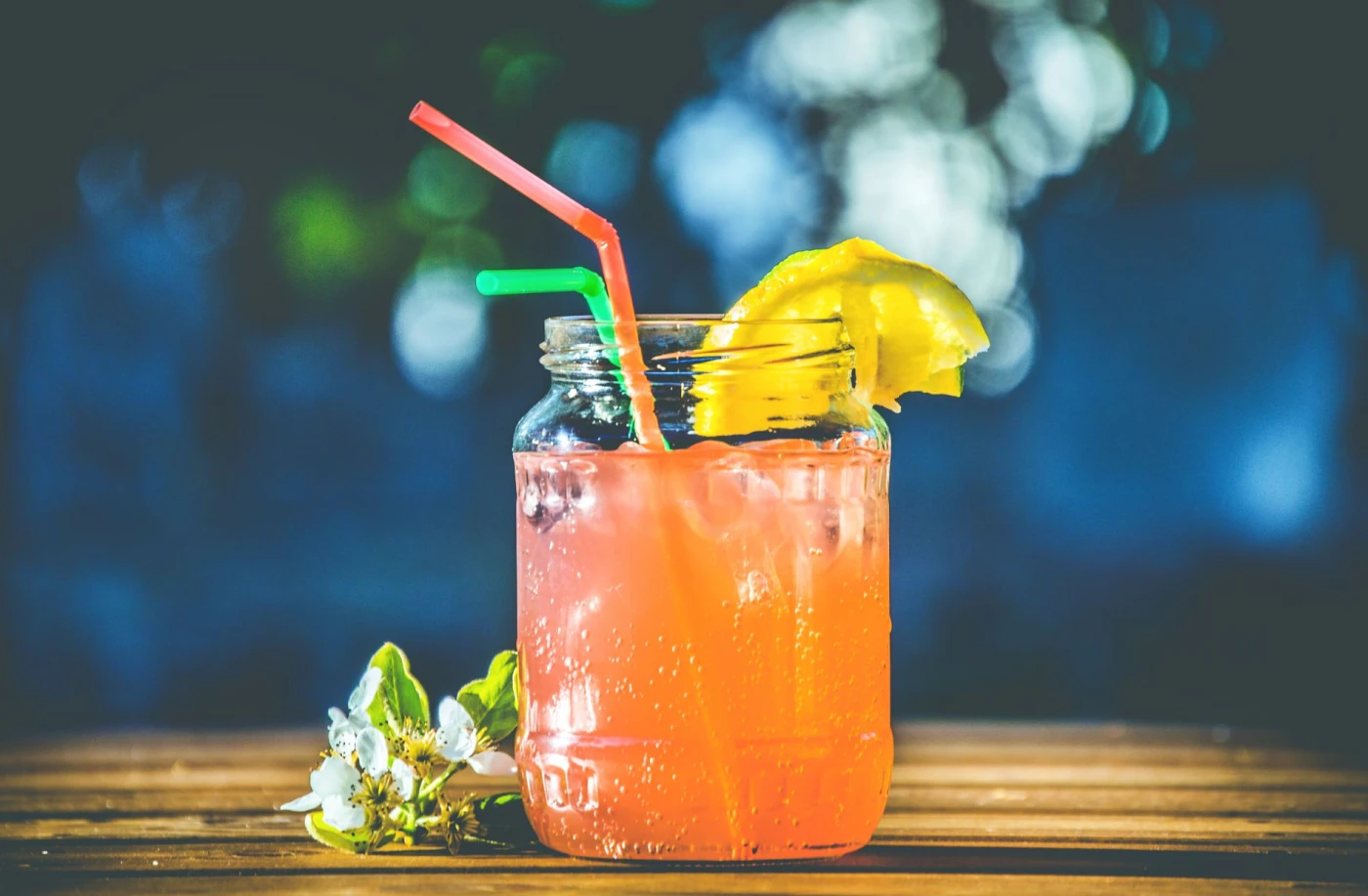
Good ingredients matter because this Lynchburg Lemonade has nowhere for stale citrus or flat soda to hide. The quantities below make one generous highball:
- 1.5 oz (45 ml) Tennessee whiskey: Jack Daniel's Old No. 7, bottled at 40% ABV or 80 proof, is the familiar benchmark.
- 0.5 oz (15 ml) triple sec: use a quality 30–40% ABV orange liqueur.
- 0.75 oz (22 ml) fresh lemon juice: strain out seeds and coarse pulp.
- 0.5 oz (15 ml) simple syrup: equal parts white sugar and water by volume.
- 2 oz (60 ml) lemon-lime soda: begin with this amount, then adjust by taste.
- One thin lemon wheel: plus plenty of hard, fresh ice.
What is the best whiskey? In my experience, Old No. 7 provides the most recognisable balance. A 750 ml bottle commonly sits around US$25–35, while a 700 ml UK bottle is often roughly £22–30; retailers and taxes vary, so treat those as shopping ranges rather than fixed prices.
George Dickel No. 8 makes a drier Tennessee option. Wild Turkey 101, at 50.5% ABV, creates a punchier bourbon variation, but reduce it to 1.25 oz (37.5 ml) if you want comparable strength. I'd skip expensive single-barrel whiskey here. The soda and citrus bury nuances you paid to enjoy.
For orange liqueur, DeKuyper or Bols triple sec keeps the build economical. Cointreau, at 40% ABV and commonly about US$35–45 or £25–32, gives a drier, more concentrated orange note. If you enjoy fast, practical builds, compare this shopping list with our five-minute vodka cocktails.
How to Make Lynchburg Lemonade Step by Step
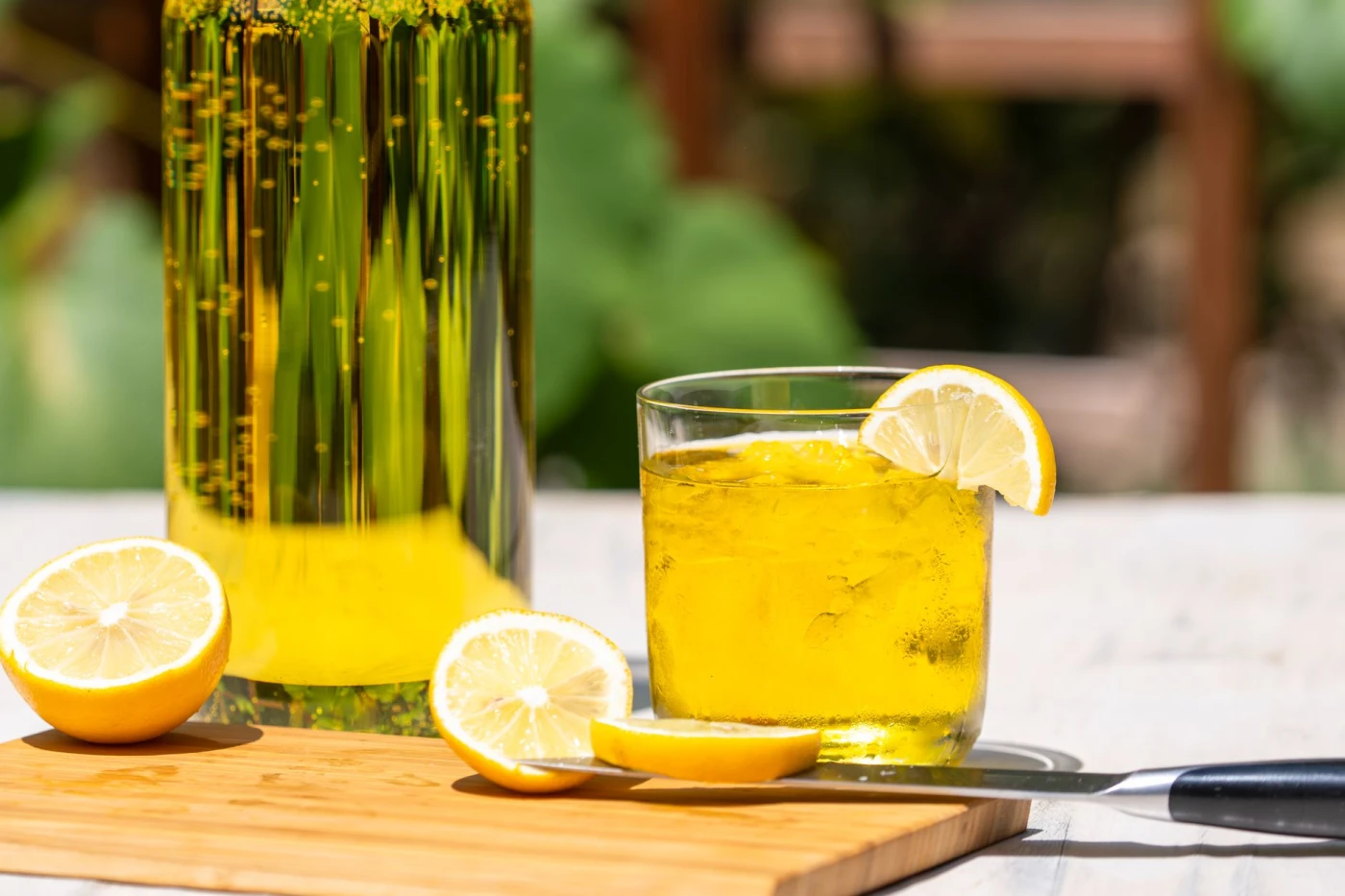
The goal is a cold, integrated base with lively carbonation on top. Chill your soda to 34–40°F (1–4°C) before starting; colder liquid retains carbon dioxide better and melts less ice.
- Prepare the glass. Fill a 10–12 oz (300–355 ml) highball or Collins glass with firm ice cubes. Set it aside while you mix.
- Measure the base. Add 1.5 oz (45 ml) Tennessee whiskey, 0.5 oz (15 ml) triple sec, 0.75 oz (22 ml) fresh lemon juice and 0.5 oz (15 ml) simple syrup to a shaker.
- Shake cold. Add ice, seal the shaker and shake firmly for 10–12 seconds. You want chilling and controlled dilution, not an endurance contest.
- Refresh the serving ice. If the glass ice has begun melting significantly, discard only that ice and refill the glass with fresh cubes.
- Strain and lengthen. Strain the mixture into the prepared glass. Pour in 2 oz (60 ml) chilled lemon-lime soda down the inside wall.
- Stir once. Lift the contents gently with a bar spoon. One slow turn distributes the soda without knocking out every bubble.
- Garnish and serve. Add a thin lemon wheel and serve immediately with a reusable straw if desired.
Here's the thing: soda never belongs in the shaker. Pressure can force the tin apart, and vigorous shaking wastes carbonation. After testing different orders, I get the best texture by shaking the still ingredients first and adding soda last.
Taste through a straw before handing it over. Too sharp? Add 0.25 oz (7.5 ml) syrup. Too sweet? Add the same amount of lemon. For another uncomplicated fruit-and-citrus build, see our Madras cocktail recipe.
Pro Tips for a Better Lynchburg Lemonade
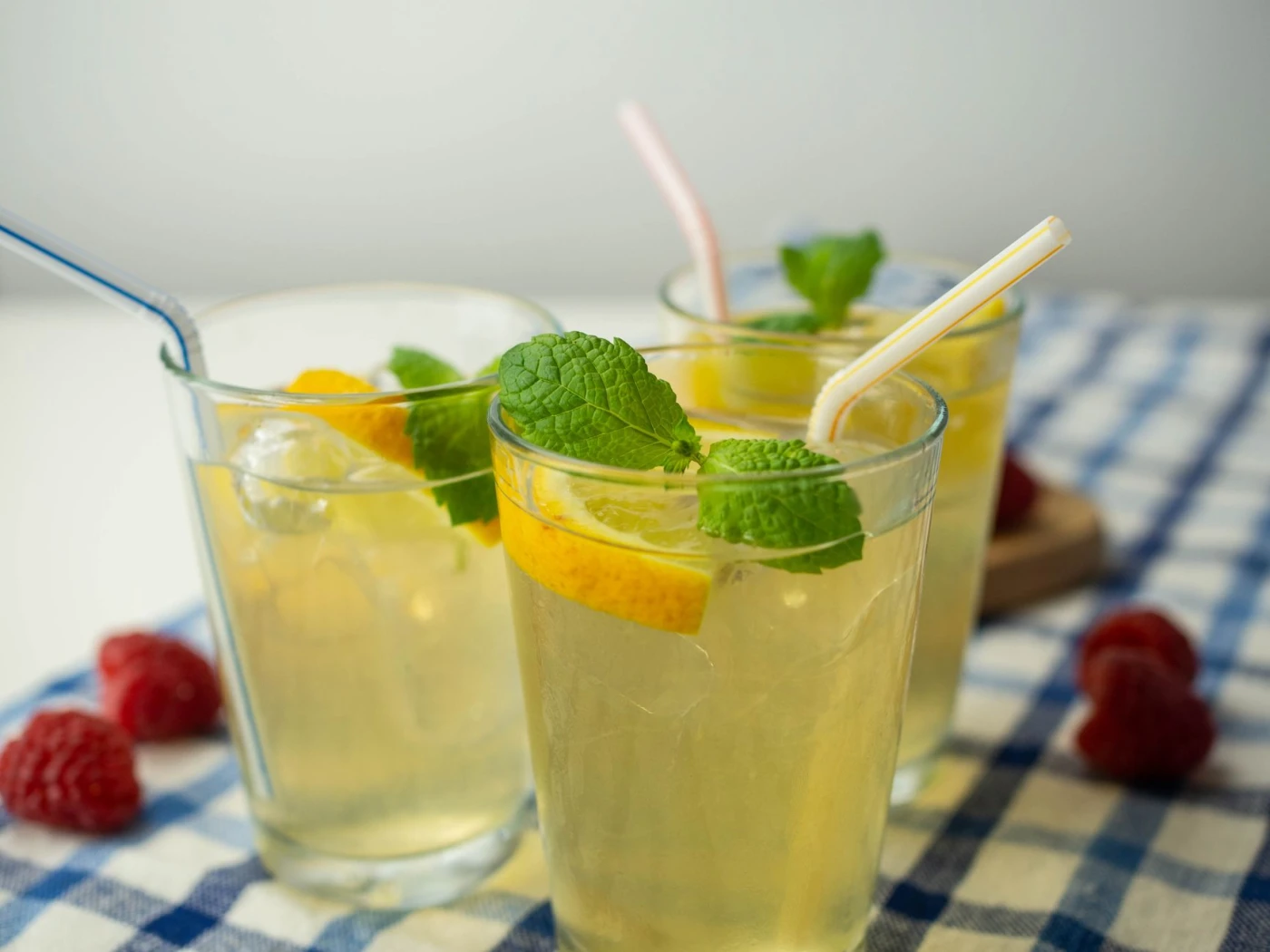
Balance comes before spectacle. In my experience, the most useful move is tasting the lemon before mixing. Citrus changes with season, storage and variety; a winter supermarket lemon can be noticeably sharper or duller than ripe summer fruit.
Measure every sweet component. Triple sec, syrup and soda all contribute sugar. Free-pouring just one of them can turn Lynchburg Lemonade into liquid confectionery. A metal jigger with 0.25 oz and 0.5 oz markings—or 7.5 ml and 15 ml lines—pays for itself quickly.
Use larger, dry ice cubes. Wet, half-melted ice begins diluting the cocktail before you finish building it. Dense 1–1.25 inch (25–32 mm) cubes keep the serving colder and slower-melting. Fill the glass completely; surprisingly, too little ice often creates more dilution.
Keep the bubbles cold. Store soda in the fridge, open it at the last moment and buy smaller cans if you mix only occasionally. A fresh 7.5 oz (222 ml) can beats a two-day-old family bottle every time.
Express, then garnish. Cut a thin lemon peel, twist it over the glass and rub only the outer rim before adding your wheel. The aromatic oil reaches your nose before the drink reaches your tongue. Small detail. Big return.
After testing highballs with sour mix and fresh juice side by side, I consistently prefer fresh lemon. Bottled sour mix can be convenient for a large party, but its generic sweetness removes the crisp contrast that makes this drink exciting.
Finally, pre-chill the glass for ten minutes if your room is above 75°F (24°C). That is especially useful at Fourth of July barbecues and British garden parties. For portable occasions, borrow batching ideas from these make-ahead picnic drinks.
Five Lynchburg Lemonade Variations
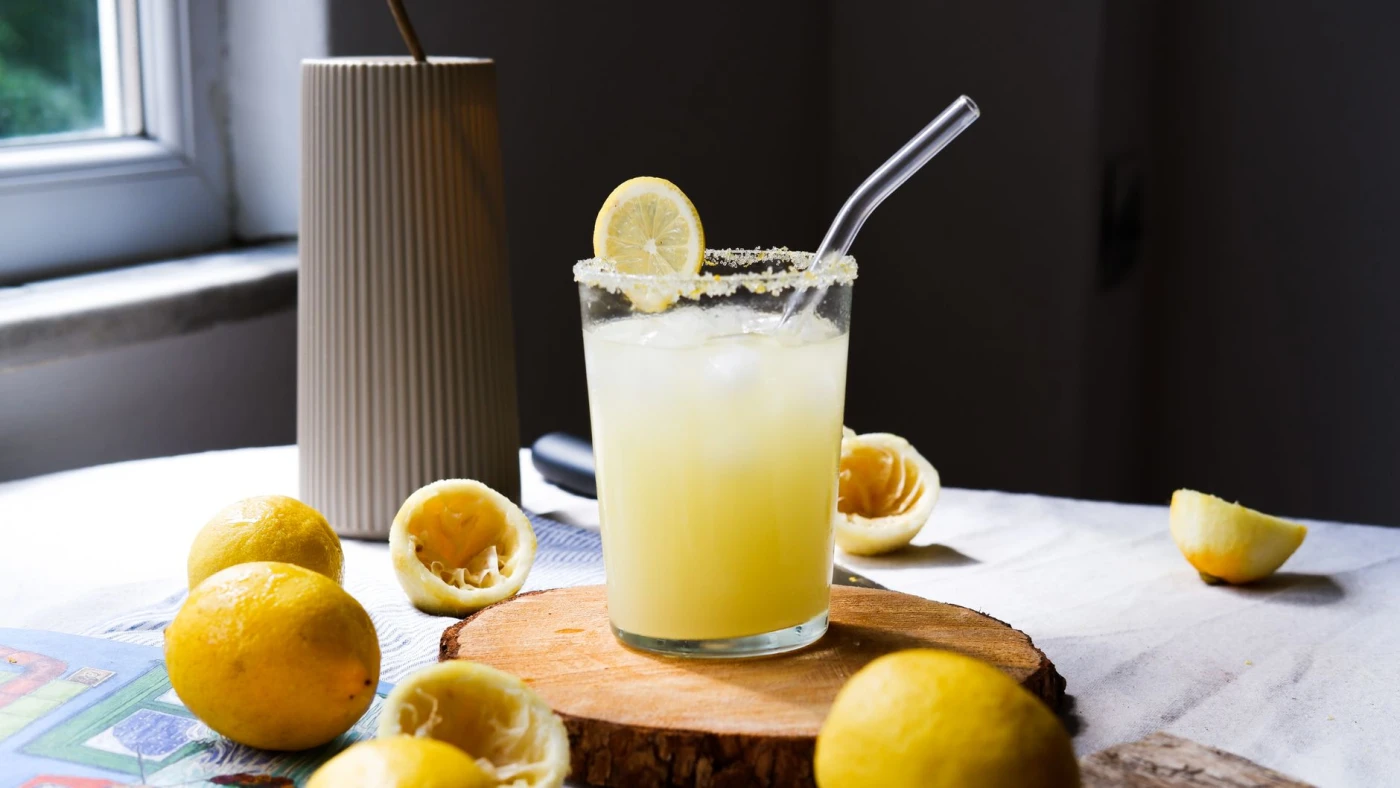
Once you understand the original structure, variations become simple. Preserve the relationship between spirit, orange, acid, sugar and fizz; change one or two elements rather than everything at once.
Honey-Ginger Lynchburg
- 1.5 oz (45 ml) Tennessee whiskey
- 0.5 oz (15 ml) triple sec
- 0.75 oz (22 ml) lemon juice
- 0.5 oz (15 ml) 1:1 honey syrup
- 2 oz (60 ml) ginger ale
This warmer, gently spicy version is excellent for early autumn and tailgate evenings.
Blackberry Lynchburg
- 1.5 oz (45 ml) whiskey
- 0.5 oz (15 ml) orange liqueur
- 0.75 oz (22 ml) lemon juice
- 0.5 oz (15 ml) blackberry syrup
- 2 oz (60 ml) lemon-lime soda
Use strained syrup rather than mashed berries if you want a clean-looking, easy-drinking highball.
Lower-Alcohol Lynchburg
- 0.75 oz (22 ml) whiskey
- 0.25 oz (7.5 ml) triple sec
- 0.75 oz (22 ml) lemon juice
- 0.5 oz (15 ml) syrup
- 3.5 oz (105 ml) soda
The flavour remains recognisable with roughly half the original spirit. Explore more options in our low-alcohol cocktail recipes.
Bourbon Peach Lemonade
- 1.5 oz (45 ml) bourbon
- 0.5 oz (15 ml) triple sec
- 0.75 oz (22 ml) lemon juice
- 0.5 oz (15 ml) peach syrup
- 2 oz (60 ml) soda
Peach makes a crowd-friendly August variation. Keep the garnish to one fresh slice.
Zero-Proof Lynchburg-Style Cooler
- 1.5 oz (45 ml) alcohol-free whiskey alternative
- 0.5 oz (15 ml) orange cordial
- 0.75 oz (22 ml) lemon juice
- 0.25 oz (7.5 ml) syrup
- 2 oz (60 ml) soda
Choose a dry alternative and check its label: “alcohol-free” definitions and residual ABV can vary by market.
Common Lynchburg Lemonade Mistakes
Mistake one: treating the name literally. Pouring whiskey into a large glass of commercial lemonade produces a drink, but not the classic structure. Orange liqueur supplies aroma and a subtle bitter edge that plain lemonade lacks.
Mistake two: guessing the measures. Let's be honest, three sweet ingredients are unforgiving. Use a jigger, especially with Cointreau or another 40% ABV liqueur. An accidental double pour changes both sugar and alcohol.
Mistake three: using old lemon juice. Juice squeezed several hours ahead can work when refrigerated in a sealed container. A bottle opened months ago cannot reproduce the fragrance of fresh citrus. Squeeze close to service and keep it below 40°F (4°C).
Mistake four: shaking the soda. This removes fizz and may pop open the shaker. Shake whiskey, liqueur, lemon and syrup; strain; then top with cold soda.
Mistake five: using crushed or melting ice. Crushed ice is attractive but dilutes quickly. Standard hard cubes are more predictable for a Lynchburg Lemonade, particularly outdoors. Never compensate for weak ice by adding extra whiskey.
Mistake six: making an entire pitcher too early. You can refrigerate the non-carbonated base for up to four hours, but add soda only as guests arrive. Keep the batch cold and put ice in individual glasses rather than the pitcher.
Mistake seven: “fixing” sweetness with more soda. Full-sugar soda can make the problem worse. Add 0.25 oz (7.5 ml) fresh lemon first, stir gently and reassess.
Finally, do not bury the glass under cherries, wedges and mint. A slim lemon wheel is enough. This highball became a 1980s-era favourite because it is direct and refreshing; our look at nostalgic 1990s drinks shows how quickly simple crowd-pleasers can become overdecorated.
How to Batch Lynchburg Lemonade for a Crowd
Batching Lynchburg Lemonade is straightforward, but carbonation and dilution need separate attention. For eight full servings, combine 12 oz (360 ml) Tennessee whiskey, 4 oz (120 ml) triple sec, 6 oz (180 ml) fresh lemon juice and 4 oz (120 ml) simple syrup in a covered jug. Stir for about 20 seconds, refrigerate and use within four hours for the freshest citrus flavour.
Keep 16 oz (480 ml) lemon-lime soda refrigerated in its unopened container. When guests are ready, fill each highball with fresh ice, measure 3.25 oz (approximately 95 ml) of the prepared base into the glass and add 2 oz (60 ml) soda. A single gentle stir is enough. This glass-by-glass method keeps the final serving lively even when guests arrive at different times.
If everyone will be served at once, pour the cold soda into the chilled base immediately before service. Stir slowly from the bottom with two or three broad turns; vigorous mixing will flatten the batch. Do not add ice directly to the jug unless the entire drink will be consumed within a few minutes. Melting ice continues to dilute every remaining serving.
For a self-serve station, label the jug clearly as an alcoholic cocktail and place it away from ordinary lemonade. Provide a measured pourer or small ladle, plenty of water and a separate zero-proof option. Keep garnish simple: arrange thin lemon wheels on a chilled plate instead of floating them in the batch, where peel can eventually contribute unwanted bitterness.
You can scale the recipe to four, twelve or sixteen drinks by preserving the same ratio. However, make large batches in two smaller jugs if refrigerator space permits. Smaller containers chill more efficiently, are easier to lift and allow you to carbonate the second half only when it is needed.
Choosing the Right Glass, Ice and Soda
A 10–12 oz (300–355 ml) Collins or highball glass gives this whiskey lemonade cocktail the best proportions. Its narrow shape presents the bubbles well and leaves enough room for a complete ice column. A large rocks glass also works, but its wider surface encourages the drink to warm and lose carbonation more quickly.
Use clean-tasting ice made from water you would happily drink. Freezer odours become obvious in a delicate citrus highball, so store cubes in a covered tray or sealed bag. Clear ice looks attractive but is not essential; density, temperature and freshness matter more than perfect transparency.
The soda determines both sweetness and length. Start with the specified 2 oz (60 ml), especially when using a sweet commercial brand. For a longer afternoon drink, increase soda to 3 oz (90 ml) and reduce syrup to 0.25 oz (7.5 ml). Make only one adjustment at a time so you can identify what improved the balance.
If the first sip tastes correct but the final third seems watery, the usual causes are warm ingredients, too little ice or slow service. Chill the whiskey and liqueur for 20 minutes when mixing outdoors, fill the glass completely with cubes and serve immediately. These small controls preserve the bright lemon aroma and keep the whiskey present from beginning to end.
Food Pairings, Seasons and Serving Occasions
Lynchburg Lemonade works best where its bubbles and acidity have a job to do. Serve it with smoky, salty or moderately spicy food, and the citrus cuts through richness between bites.
At a US cookout, pair it with pulled-pork sandwiches, grilled chicken thighs, corn ribs or cheeseburgers. Tennessee-style barbecue is an obvious match, but avoid an extremely sweet sauce; sweetness in both glass and plate can flatten the whiskey. A vinegar-led slaw restores contrast.
For UK gatherings, try sausage rolls, sticky chicken skewers, mature Cheddar, pork pies or fish goujons. The orange and lemon also work with smoked salmon blinis, although I would reduce the syrup to 0.25 oz (7.5 ml) for that more delicate pairing.
Summer is its natural season. Think Memorial Day, Fourth of July, a sunny bank-holiday lunch or a casual wedding welcome drink. In autumn, the honey-ginger variation suits football nights and Bonfire Night food. For winter entertaining, serve smaller 6–8 oz (180–240 ml) portions rather than forcing a frosty highball into every occasion.
One drink at a time is the best service plan. Set out measured base bottles, a bowl of lemon wheels and ice, but keep chilled soda unopened until required. For eight servings, batch the whiskey, triple sec, lemon and syrup no more than four hours ahead. Label the jug clearly so nobody mistakes it for ordinary lemonade.
A standard recipe made with 40% ABV whiskey and 30% ABV triple sec lands around 10–12% ABV after typical dilution. Sweetness and carbonation can disguise that strength. For responsible drinking, pace servings, provide water and food, and consult evidence-based guidance from the NIAAA or Drinkaware.
Lynchburg Lemonade Quick Reference Cheat Sheet
Use this table when you want the recipe without rereading every technique note. US ounces are practical bar measures; UK millilitres are rounded to sensible jigger markings rather than presented as awkward mathematical conversions.
| Element | US measure | UK measure | Purpose |
|---|---|---|---|
| Tennessee whiskey | 1.5 oz | 45 ml | Vanilla, caramel and oak base |
| Triple sec | 0.5 oz | 15 ml | Orange aroma and sweetness |
| Fresh lemon juice | 0.75 oz | 22 ml | Acidity and freshness |
| Simple syrup | 0.5 oz | 15 ml | Balances the lemon |
| Lemon-lime soda | 2 oz | 60 ml | Length and carbonation |
| Serving glass | 10–12 oz | 300–355 ml | Highball or Collins |
Method: shake every ingredient except soda with ice for 10–12 seconds. Strain over fresh cubes, top with cold soda and stir once. Serve at once with a lemon wheel.
Expected profile: bright lemon first, orange through the middle, then a gentle Tennessee whiskey finish. Estimated strength is approximately 10–12% ABV after normal dilution. Bottle proofs and pouring accuracy affect the result; US labelling and distilled-spirit standards information is available from the Alcohol and Tobacco Tax and Trade Bureau.
If your Lynchburg Lemonade is too sour, add syrup in 0.25 oz (7.5 ml) steps. If it is too sweet, use the same incremental amount of lemon. Flat? Replace the soda rather than shaking harder. Weak and watery? Start again with colder ingredients and solid ice.
Once this highball feels effortless, stock the few tools that make every recipe more consistent. Download the free home bar starter checklist, chill your glass and make your next Lynchburg Lemonade with confidence.
Ask AI about this article
Pick a prompt, copy it, or open ChatGPT with this article preloaded.
Frequently Asked Questions
What is a Lynchburg Lemonade?
A Lynchburg Lemonade is a sparkling whiskey highball combining Tennessee whiskey, orange liqueur, lemon, sweetness and lemon-lime soda. Despite its name, it is an alcoholic cocktail rather than ordinary lemonade. Its flavour sits between whiskey sour and citrus soda: tart up front, gently sweet through the middle, then.
How do you make a Lynchburg Lemonade?
Shake 1.5 oz (45 ml) Tennessee whiskey, 0.5 oz (15 ml) triple sec, 0.75 oz (22 ml) fresh lemon juice and 0.5 oz (15 ml) simple syrup with ice. Strain into an ice-filled highball, add about 2 oz (60 ml) chilled lemon-lime soda and stir once. Garnish with a thin lemon wheel.
Which whiskey is best for Lynchburg Lemonade?
Jack Daniel's Old No. 7 is the benchmark because its charcoal-mellowed Tennessee whiskey profile works naturally with lemon and orange. George Dickel No. 8 produces a drier, more mineral variation, while an accessible bourbon such as Wild Turkey 101 creates a bolder drink. Avoid rare bottles: citrus, sugar and soda obs.
How strong is a Lynchburg Lemonade?
Using 40% ABV whiskey and 30% ABV triple sec, this recipe finishes at roughly 10–12% ABV after soda and ordinary ice dilution. The exact result depends on your liqueur, pour, glass and melting ice. It may taste lighter because it is sweet, cold and carbonated, but it remains comparable in strength to a generous glass o.
Why does my Lynchburg Lemonade taste too sweet?
The usual cause is stacking sweetened triple sec, simple syrup and full-sugar soda without enough fresh lemon. First confirm that you measured rather than free-poured. Add 0.25 oz (7.5 ml) lemon juice, stir and taste again. Next time, reduce the syrup or choose a drier orange liqueur; adding more whiskey rarely fixes t.
Comments 0
Login to Post comments