New Orleans Classic Cocktails Guide
A practical home bartender guide to the Sazerac, Ramos Gin Fizz, Hurricane, Vieux Carré, and more New Orleans drinks, with responsible drinking tips. New Orleans classic cocktails.
New Orleans classic cocktails guide is the fastest way to understand why one American city can teach you so much about balance, aroma, hospitality, and a little bit of beautiful excess. You are not just making drinks; you are learning how rye, cognac, gin, rum, bitters, citrus, cream, sugar, and ice behave under pressure.
Here’s the thing: New Orleans cocktails are generous, but the best ones are not sloppy. They are measured. They are cold. They are specific. If you already know a few standards from 15 classic cocktails every home bartender should know, this guide gives you the city’s deeper playbook.
What Is A New Orleans Classic Cocktails Guide?
A New Orleans classic cocktails guide is really a map of the city’s most influential drinks: the Sazerac, Ramos Gin Fizz, Vieux Carré, Hurricane, Brandy Crusta, and French 75. Each one shows a different side of the city. Some are sharp and spirit-forward. Some are creamy. Some are theatrical. Some are built for long, humid afternoons.
The Sazerac is the serious one. Rye whiskey, Peychaud’s bitters, sugar, and an absinthe or Herbsaint rinse make a compact drink that often lands around 32-38% ABV after dilution, depending on your whiskey proof. I like Rittenhouse Rye at about $25-32 in the US or Sazerac Rye around $28-38. In the UK, expect roughly £32-42 for comparable bottles.
The Ramos Gin Fizz is the opposite mood: gin, cream, citrus, egg white, orange flower water, sugar, and soda. It is famous for texture. Let’s be honest, it is also a workout. After testing short and long shakes, I get the best foam when everything is cold and the final soda pour is slow.
The Vieux Carré brings rye, cognac, sweet vermouth, Benedictine, and bitters into a rich, herbal drink. The Hurricane, born for party service, depends on rum, passion fruit, and lime when made well. For standards and labeling context, the US TTB is a useful authority. Drink well, measure honestly, and serve responsibly.
Ingredients For A New Orleans Classic Cocktails Guide
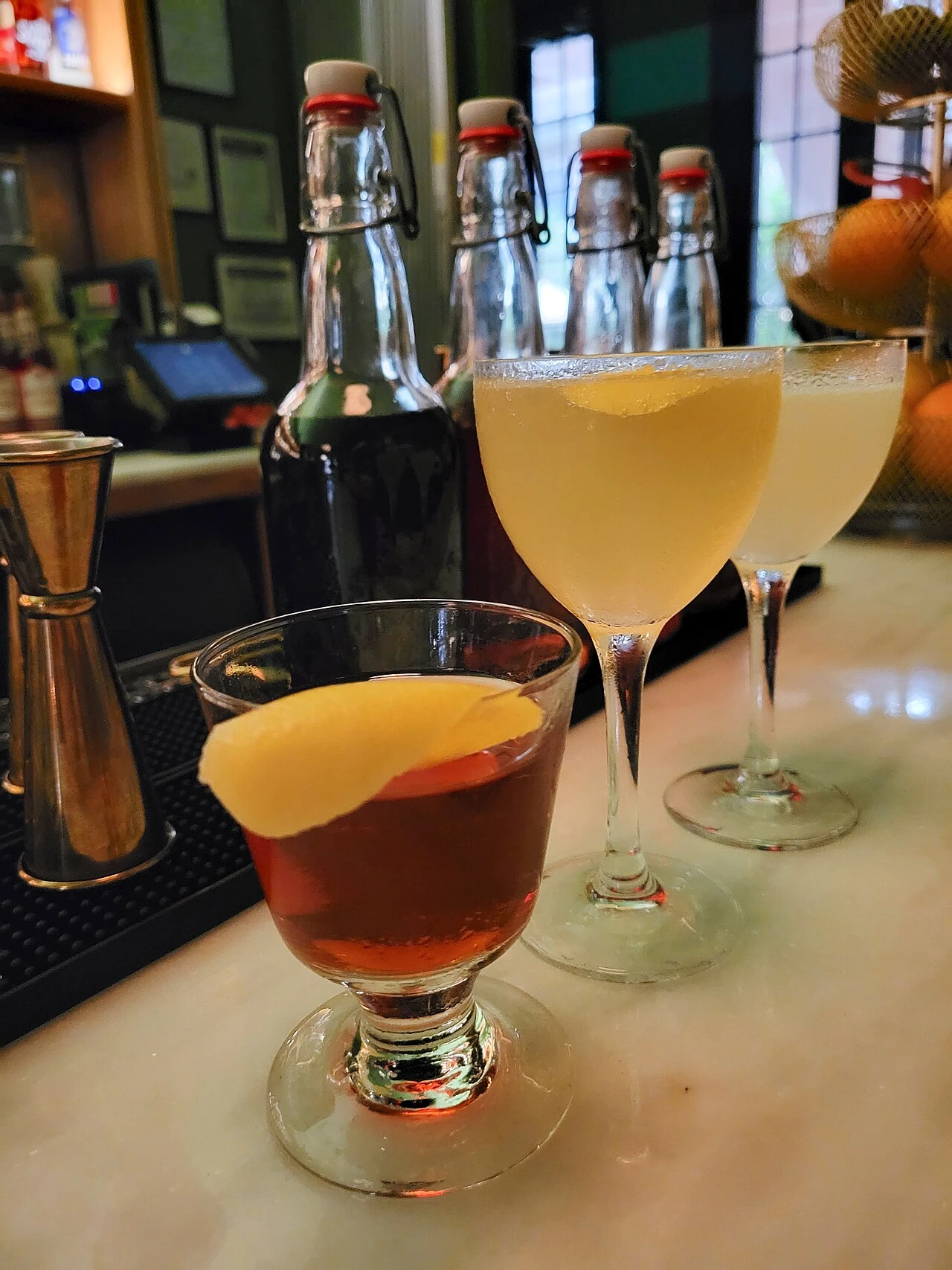
For this New Orleans classic cocktails guide, build your ingredients around one flagship recipe first: the Sazerac. It teaches precision quickly. Then add bottles for the Ramos Gin Fizz, Vieux Carré, and Hurricane as your bar grows. You do not need a $400 shelf. You need fresh citrus, reliable spirits, and cold glassware.
Core Sazerac ingredients:
- 2 oz (60 ml) rye whiskey, 45-50% ABV, such as Sazerac Rye, Rittenhouse, or Woodford Reserve Rye
- 1 sugar cube or 1/4 oz (7.5 ml) rich simple syrup, made 2:1 with sugar and water
- 3 dashes Peychaud’s bitters, about 1/8 oz (3-4 ml)
- 1 dash Angostura bitters, optional but useful for spice
- 1/4 oz (7.5 ml) absinthe or Herbsaint for rinsing the glass
- 1 lemon peel, about 2 x 1 inch (5 x 2.5 cm), expressed over the drink
- Ice for stirring, ideally dense cubes from a freezer at 0°F (-18°C)
Expansion bottles for the wider city set:
- 2 oz (60 ml) London dry gin, 40-47% ABV, for Ramos Gin Fizz and French 75
- 1 oz (30 ml) cognac or brandy, 40% ABV, for Vieux Carré and Brandy Crusta
- 2 oz (60 ml) aged rum, 40-46% ABV, for Hurricanes
- 1 oz (30 ml) sweet vermouth, refrigerated after opening
- 1 oz (30 ml) fresh lemon or lime juice, never bottled if you can avoid it
If you are newer to whiskey drinks, read best whiskey cocktails for beginners before buying three ryes at once. I’d skip bargain vermouth that has been open for months. It ruins otherwise excellent drinks.
How To Make A New Orleans Classic Cocktails Guide Drink
If you make only one drink from this New Orleans classic cocktails guide, make the Sazerac first. It is unforgiving in the best way. Too much sugar? You taste it. Too little dilution? It burns. Warm glass? The aroma feels flat.
- Chill a rocks glass for at least 10 minutes, ideally to 32-41°F (0-5°C).
- Add 1/4 oz (7.5 ml) absinthe or Herbsaint to the chilled glass, rotate to coat, then discard the excess.
- In a mixing glass, add 1 sugar cube with 3 dashes Peychaud’s bitters and 1 dash Angostura. Muddle until the sugar softens.
- Add 2 oz (60 ml) rye whiskey and fill the mixing glass with ice.
- Stir for 20-30 seconds, aiming for roughly 20-25% dilution. The outside of the glass should feel cold, not merely cool.
- Strain into the rinsed rocks glass without ice. Traditionalists serve it neat.
- Express a lemon peel over the surface. Rub the rim lightly, then discard the peel or drop it in if you prefer a brighter aroma.
In my experience, rich syrup makes the drink more consistent at home than a sugar cube. Use 1/4 oz (7.5 ml), then adjust down to 1 teaspoon (5 ml) if your rye is soft or your palate runs dry.
Want a quicker weeknight path? The same discipline helps simple drinks like the ones in 10 vodka cocktails you can make in under 5 minutes. Measure. Chill. Taste. Then decide.
Pro Tips From Testing New Orleans Drinks
Here’s the thing: New Orleans drinks reward restraint as much as flair. In my experience, the home version fails when people chase drama before temperature, acidity, and dilution. Cold tools matter. Fresh citrus matters more. Your garnish matters when it is aromatic, not when it is huge.
For a Sazerac, keep the rinse light. You want anise on the nose, not a mouthful of absinthe. With 50% ABV rye, stir slightly longer than you think: 25-30 seconds with solid ice usually smooths the edges without making the drink watery. If you use 40% ABV rye, cut the stir to about 18-22 seconds.
For a Ramos Gin Fizz, use cold cream straight from the fridge at about 35-40°F (2-4°C). Dry shake without ice for 15 seconds, then shake with ice for 45-60 seconds. After testing both methods, I prefer adding soda to the empty chilled Collins glass first, then straining the drink slowly over it. The foam climbs beautifully.
For Hurricanes, use real passion fruit syrup or puree. Funkin, Reàl, and Liber & Co. are common options, usually $8-18 in the US or £8-15 in the UK. Avoid fluorescent bottled mixes unless nostalgia is the whole point. This is easily one of the best party drinks when you balance 2 oz (60 ml) rum with 1 oz (30 ml) passion fruit and 3/4 oz (22 ml) lime.
If you want lower-proof options for a long Sunday lunch, pair this guide with 11 low alcohol cocktail recipes.
Variations For A New Orleans Classic Cocktails Guide
This New Orleans classic cocktails guide is not a museum case. Once you understand the originals, variations become useful. Keep the structure. Change one thing at a time. That is how you learn instead of guessing.
Cognac Sazerac
- 1 1/2 oz (45 ml) cognac, 40% ABV
- 1/2 oz (15 ml) rye whiskey
- 1/4 oz (7.5 ml) rich simple syrup
- 3 dashes Peychaud’s bitters
- 1/4 oz (7.5 ml) absinthe rinse
This tastes softer and more rounded than the all-rye version. I like it in winter, especially after roast pork or mushroom dishes.
Dry French 75
- 1 oz (30 ml) gin
- 1/2 oz (15 ml) fresh lemon juice
- 1/4 oz (7.5 ml) simple syrup
- 3 oz (90 ml) chilled brut Champagne or sparkling wine
Use a £12-18 cava or a $15-25 brut if Champagne feels excessive. The drink should snap, not taste like lemonade.
Modern Hurricane
- 2 oz (60 ml) aged rum
- 1 oz (30 ml) passion fruit syrup
- 3/4 oz (22 ml) lime juice
- 1/2 oz (15 ml) orange juice
This is far better than syrupy party punch. Serve over crushed ice for Mardi Gras, summer barbecues, or any loud kitchen gathering.
Vodka Creole Highball
- 1 1/2 oz (45 ml) vodka, such as Tito’s at 40% ABV
- 3/4 oz (22 ml) lemon juice
- 1/2 oz (15 ml) passion fruit syrup
- 3 oz (90 ml) soda water
It is not canonical. It is useful. For more vodka ideas, see the Madras cocktail.
Common Mistakes With New Orleans Classic Cocktails
The biggest mistake is treating every New Orleans drink as a sweet vacation drink. Let’s be honest, the city does have party fuel. But its best cocktails are structured. The Sazerac is a precision drink. The Vieux Carré is a layered stirred cocktail. The Ramos Gin Fizz is a texture test. They all punish lazy measuring.
Mistake one: warm glassware. A Sazerac served in a room-temperature glass loses its perfume fast. Chill the glass at least 10 minutes, or pack it with ice water while you prepare everything else. At 72°F (22°C), a neat stirred cocktail warms quickly.
Mistake two: dead vermouth. Sweet vermouth is wine-based. Once opened, refrigerate it and use it within about four to six weeks for best flavor. If your Vieux Carré tastes muddy, the vermouth may be the problem, not the rye or cognac.
Mistake three: bottled citrus. Fresh lime and lemon change the drink immediately. Bottled juice tastes flat, metallic, or cooked. For a Hurricane, fresh lime keeps passion fruit syrup from taking over.
Mistake four: overbuilding the bar. You do not need every obscure liqueur on day one. Start with rye, gin, rum, cognac, bitters, citrus, sugar, and one good vermouth. Then expand. If you enjoy retro drinking culture, 90s drinks where are they now is a useful reminder that trends age quickly, but balance lasts.
Finally, watch strength. The NIAAA publishes alcohol research and harm-reduction information, and UK readers can also check Drinkaware. Responsible drinking is part of good hosting: measure pours, offer water and food, never pressure guests to drink, and make sure everyone has a safe way home.
Batching New Orleans Cocktails For Guests
Batching is where a New Orleans classic cocktails guide becomes genuinely useful for parties. The trick is knowing which drinks tolerate advance prep and which ones need last-minute attention. Hurricanes are easy. French 75 bases are manageable. Vieux Carrés can be pre-diluted carefully. Sazeracs are possible but less forgiving. Ramos Gin Fizzes should be made to order unless you enjoy disappointing foam.
For a six-serving Hurricane batch, combine 12 oz (360 ml) aged rum, 6 oz (180 ml) passion fruit syrup, 4 1/2 oz (135 ml) fresh lime juice, and 3 oz (90 ml) orange juice. Chill the mixture for at least two hours. Do not add crushed ice until serving or you will flatten the acidity and weaken the fruit. Pour 4 oz (120 ml) of the chilled batch over crushed ice, then garnish with orange and cherry if you want the full party look.
For a Vieux Carré batch, combine equal parts rye, cognac, and sweet vermouth, then add Benedictine, Peychaud’s, and Angostura in proportion. Add about 20% filtered water by volume if you plan to pour straight from the freezer or fridge. That pre-dilution matters because stirred cocktails are not just chilled by ice; they are finished by water. Without enough dilution, the drink tastes hot and angular.
For a French 75, batch only the gin, lemon, and syrup. Keep the sparkling wine separate and cold. Add bubbles at the last second so the drink stays bright. I would not batch the Ramos Gin Fizz because citrus, cream, egg white, and soda all have timing problems. If guests want the show, make two at a time and accept that the drink is a performance.
Good batching also supports responsible drinking. Label each pitcher, keep serving sizes clear, and make one zero-proof or low-proof option with the same care as the alcoholic drinks. A passion fruit, lime, bitters, and soda highball can feel festive without pretending to be a cocktail.
Pairings And Occasions For New Orleans Cocktails
A good New Orleans classic cocktails guide should tell you when to serve each drink, not just how to make it. The Sazerac is a pre-dinner drink. Serve it before steak, roast chicken, gumbo, boudin, or a sharp cheddar board. It likes fat and salt. It does not need dessert.
The Ramos Gin Fizz is brunch-friendly, but it is not casual labor. Make it when you have time, cold cream, and two to four guests. It pairs beautifully with crab cakes, smoked salmon, eggs Florentine, or lemon pancakes. The texture is the point. Do not rush it because people are waiting.
The Vieux Carré belongs to colder nights, jazz records, and slow conversations. Rye, cognac, vermouth, Benedictine, Peychaud’s, and Angostura make it rich enough for duck, charcuterie, blue cheese, or sticky glazed ribs. I would serve it in autumn or winter, not during a 95°F (35°C) patio lunch.
The Hurricane is your party drink. Batch the rum, passion fruit, lime, and orange in a jug, then shake or pour over crushed ice to order. It works for Mardi Gras, Halloween, summer cookouts, and football Sundays. If portability matters, use the same planning mindset as portable picnic drinks.
The French 75 is the celebration move: Christmas Eve, New Year’s Eve, birthdays, weddings, or a sharp 5 p.m. aperitif. Use chilled sparkling wine at 38-45°F (3-7°C). Small detail. Big difference.
Quick Reference New Orleans Classic Cocktails Guide
Use this New Orleans classic cocktails guide cheat sheet when you are shopping, batching, or deciding what to serve first. Measurements are written in US ounces and UK-friendly millilitres so you can work with a jigger on either side of the Atlantic.
| Cocktail | Base | Core Measurements | Glass | Strength |
|---|---|---|---|---|
| Sazerac | Rye whiskey | 2 oz (60 ml) rye, 1/4 oz (7.5 ml) syrup, 3 dashes Peychaud’s, absinthe rinse | Chilled rocks | High, about 32-38% ABV served |
| Ramos Gin Fizz | Gin | 2 oz (60 ml) gin, 1/2 oz (15 ml) lemon, 1/2 oz (15 ml) lime, 1 oz (30 ml) cream, egg white, soda | Collins | Medium, about 10-16% ABV served |
| Vieux Carré | Rye and cognac | 3/4 oz (22 ml) rye, 3/4 oz (22 ml) cognac, 3/4 oz (22 ml) sweet vermouth, 1/4 oz (7.5 ml) Benedictine | Rocks | High, about 28-34% ABV served |
| Hurricane | Rum | 2 oz (60 ml) aged rum, 1 oz (30 ml) passion fruit, 3/4 oz (22 ml) lime, 1/2 oz (15 ml) orange | Hurricane or tall | Medium-high, about 14-20% ABV served |
| French 75 | Gin and sparkling wine | 1 oz (30 ml) gin, 1/2 oz (15 ml) lemon, 1/4 oz (7.5 ml) syrup, 3 oz (90 ml) brut sparkling wine | Flute or coupe | Medium, about 12-16% ABV served |
Here is my honest buying advice: spend on bitters, citrus, and one dependable rye before you chase luxury cognac. A $30 rye and fresh lemon will beat a $90 bottle dragged down by tired supermarket juice. Keep notes. Your palate will sharpen fast.
Final Checks Before You Serve
Before you pour the first round, do a short service check. Are the glasses cold? Is the citrus fresh? Is the vermouth refrigerated? Is the ice clean and plentiful? These details sound small, but they decide whether a New Orleans drink tastes polished or merely boozy. A Sazerac needs a chilled glass and a restrained rinse. A Hurricane needs enough lime to keep the syrup lively. A French 75 needs sparkling wine that has not been sitting open since yesterday.
Think about pacing as much as flavor. Many classic New Orleans cocktails are compact, aromatic, and spirit-heavy, so one properly made drink can feel bigger than two casual highballs. Serve food early, keep water on the table, and avoid topping up glasses without asking. If you are hosting, taste with intention instead of turning the recipe session into a speed round. That approach is better hospitality and better cocktail making.
Storage also matters. Fresh citrus is best the day it is squeezed, but it can survive a few hours in the fridge. Vermouth should be capped, chilled, and dated. Syrups should be kept cold in clean bottles and discarded if they smell fermented or cloudy. Egg whites and cream need normal food-safety care, especially if you are making Ramos Gin Fizzes in warm weather.
The final lesson is simple: New Orleans cocktails have personality because they are disciplined. Their drama comes from aroma, texture, history, and balance, not random oversized pours. Get those fundamentals right and the drinks feel generous without losing control.
That is the practical heart of this New Orleans classic cocktails guide: choose the right drink for the moment, measure in oz and ml, keep everything cold, and respect how strong these classics can be. For a smarter setup before your next Mardi Gras party, winter dinner, or Friday night tasting, use the free home bar starter checklist.
Ask AI about this article
Pick a prompt, copy it, or open ChatGPT with this article preloaded.
Frequently Asked Questions
What is a New Orleans classic cocktail?
A New Orleans classic cocktail is a drink strongly tied to the city’s bar culture, hotel bars, restaurants, Mardi Gras season, or Creole drinking history. The Sazerac, Ramos Gin Fizz, Vieux Carré, Hurricane, Brandy Crusta, and French 75 are the usual anchors. Some histories are disputed, so treat origin stories as usef.
What is the best New Orleans cocktail for beginners?
The Sazerac is usually the best beginner choice because it teaches dilution, bitters, sugar, glass preparation, and aromatic rinsing in one compact recipe. It is strong, though, often around 32-38% ABV after stirring. If you want something softer, start with a French 75 or a low-proof Hurricane variation.
Do I need absinthe for a Sazerac?
Absinthe gives the Sazerac its anise perfume, but you only need a rinse, about 1/4 oz (7.5 ml) or less. Herbsaint is a very New Orleans-friendly substitute. I would not skip the aromatic rinse entirely because the drink becomes a rye old fashioned with Peychaud’s rather than a proper Sazerac.
How strong are New Orleans classic cocktails?
They vary widely. A Sazerac or Vieux Carré can land near 28-38% ABV after dilution, depending on proof and pour size. A Ramos Gin Fizz usually drinks lighter because it includes cream, citrus, egg white, soda, and more dilution. Hurricanes can become deceptively strong when made with 4 oz (120 ml) rum.
What glassware do I need?
You can cover most drinks with three glasses: a rocks glass for Sazeracs, a tall Collins glass for Ramos Gin Fizz or Hurricane-style serves, and a coupe or flute for French 75s. Chill glasses at 0-5°C (32-41°F) when possible. Cold glassware buys you texture, aroma control, and slower dilution.
What are common mistakes with a Ramos Gin Fizz?
The usual mistakes are using warm cream, skipping orange flower water, under-shaking, or adding too much soda too quickly. Use cold ingredients, dry shake first, then shake with ice until the tin feels painfully cold. Add soda gently down the side so the foam lifts instead of collapsing.
Are these drinks good for parties?
Yes, but choose wisely. Hurricanes batch well for Mardi Gras, barbecues, and summer parties. Sazeracs are better made one at a time because aroma and dilution matter. French 75s work for New Year’s Eve or brunch. Ramos Gin Fizzes are impressive but slow, so I would serve them for two to four guests, not twenty.
Comments 0
Login to Post comments