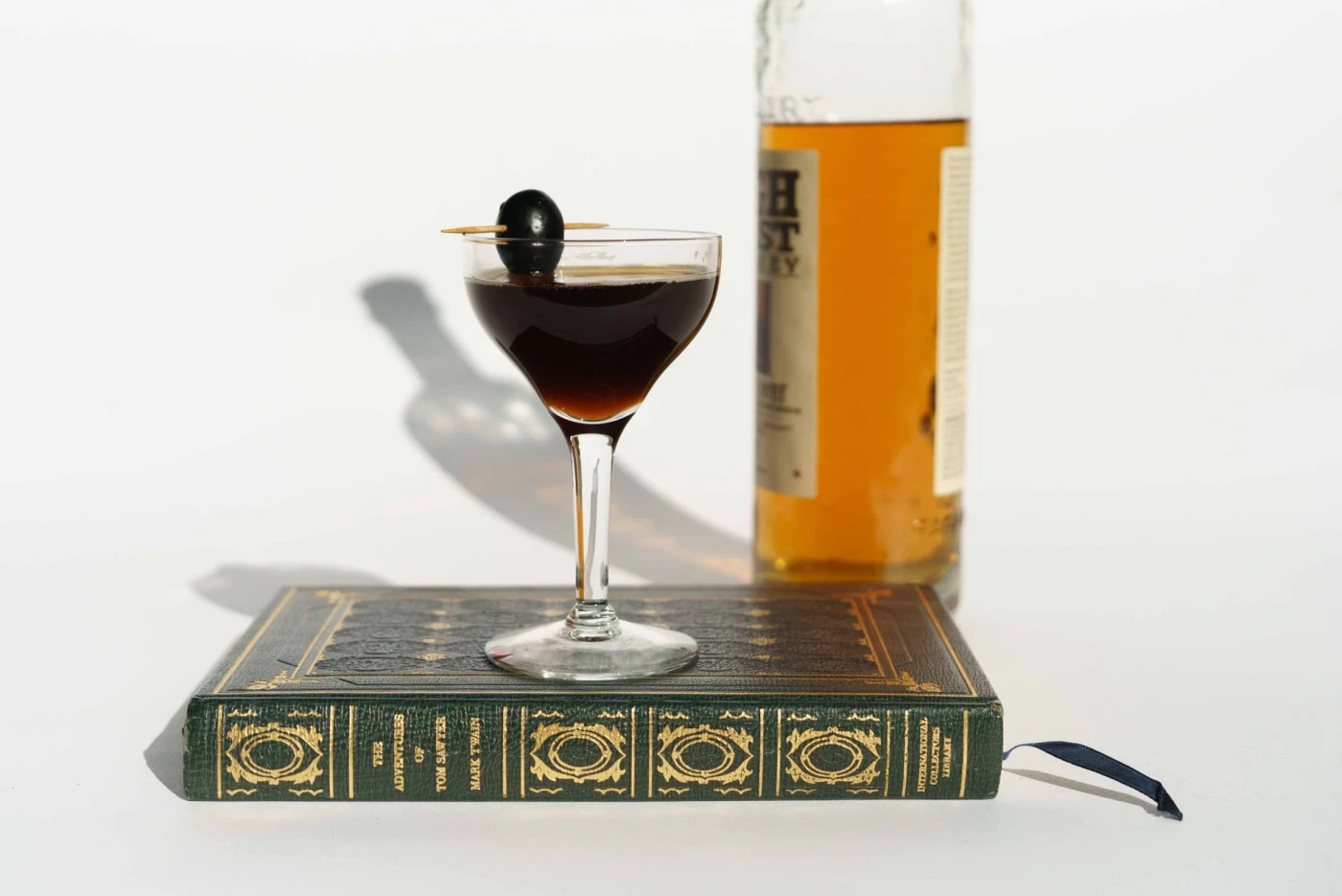

Resa Mueller's Improved Manhattan: Worth the Stir? Variations Guide
A richly aromatic Manhattan riff with rye, sweet vermouth, maraschino and an absinthe rinse. This tested home-bar guide includes dual measurements, substitutions and precise stirri.
Resa Mueller's Improved Manhattan takes a familiar whiskey classic somewhere darker, silkier and more aromatic. Rye still leads, but maraschino, demerara, two bitters and the faintest absinthe rinse turn each sip into a slow reveal.
Sounds elaborate? It is not. You need accurate measures, good ice and about five minutes. If you already know the traditional version from our guide to classic cocktails every home bartender should know, you will recognise the bones immediately.
Here’s the thing: the named drink does not have a universally published, canonical specification. This article therefore uses a balanced, home-tested interpretation of the attributed Improved Manhattan rather than pretending one disputed formula is definitive. You will learn the reasoning behind every measure, how to control dilution and what to substitute without flattening the cocktail.
What Is Resa Mueller's Improved Manhattan?
At heart, Resa Mueller's Improved Manhattan is a rye Manhattan expanded with the accent ingredients associated with the old improved-cocktail family. A standard Manhattan usually combines whiskey, sweet vermouth and aromatic bitters. This version adds maraschino liqueur, restrained sugar, orange bitters and an absinthe-coated glass.
That word improved is historical language, not an objective claim that the classic needs fixing. Nineteenth-century bartending manuals used similar wording for drinks embellished with liqueur, syrup or absinthe. Exact Manhattan origin stories are disputed, too, so confident tales about a single inventor or fashionable banquet deserve scepticism.
The modern attribution points to Philadelphia bartender Resa Mueller, whose professional work has included cocktail-focused venues. However, reliable public documentation of the drink’s creation date and one authoritative original specification is limited. That uncertainty matters. We can credit the name without manufacturing a neat history that the evidence does not support.
Flavour tells the more useful story. Rye contributes pepper, grain and oak. Vermouth brings wine, herbs and gentle bitterness. Maraschino is not cherry syrup; at around 32% ABV, Luxardo Maraschino tastes dry, floral and faintly nutty. Absinthe stays mostly in the aroma, where anise sharpens the first sip rather than overwhelming it.
Compared with the approachable drinks in our beginner whiskey cocktail guide, this one is intense. It is served up, cold and without a mixer. This is easily one of the best choices for a Manhattan drinker who wants extra detail without turning the cocktail into dessert.
The US Alcohol and Tobacco Tax and Trade Bureau is a useful authority for American alcohol labelling and beverage standards. Bottle labels—not assumptions—should guide your ABV calculations.
Ingredients for Resa Mueller's Improved Manhattan

The build for Resa Mueller's Improved Manhattan is small, but every ingredient is exposed. Cheap cherry syrup or tired vermouth cannot hide. Measure with a jigger rather than free-pouring, especially when handling maraschino and absinthe.
- 2 oz (60 ml) rye whiskey, ideally 90–100 proof (45–50% ABV)
- 3/4 oz (22.5 ml) sweet vermouth
- 1/4 oz (7.5 ml) maraschino liqueur
- 1 teaspoon / 1/6 oz (5 ml) 2:1 demerara syrup
- 1 dash Angostura aromatic bitters, approximately 1/32 oz (1 ml)
- 1 dash orange bitters, approximately 1/32 oz (1 ml)
- 1 teaspoon / 1/6 oz (5 ml) absinthe for rinsing; most is discarded
- 1 lemon peel or cocktail cherry for garnish
For rye, I like Rittenhouse Bottled in Bond at 100 proof. It commonly sits around $28–$35 in the US, while UK import pricing can reach roughly £40–£50; local prices and availability vary. Wild Turkey 101 Rye is punchier. Sazerac Rye, at 90 proof, produces a gentler result.
Carpano Antica Formula is lush and vanilla-rich, while Cocchi Storico Vermouth di Torino, around 16% ABV, is brighter and more cocoa-bitter. A 375 ml bottle is sensible for occasional home use. Refrigerate it after opening. Vermouth is wine, not a shelf-stable spirit.
Luxardo Maraschino typically costs more than an everyday liqueur, but a 1/4 oz (7.5 ml) pour goes far. Maraska is a credible alternative. I’d skip bright-red cherry syrup: its sweetness lacks the dry, herbal character this recipe needs.
Make 2:1 demerara syrup by dissolving two parts sugar into one part hot water by weight. No demerara? Rich white sugar syrup works. For broader fast-drink options using simpler bottles, see these five-minute vodka cocktails.
How to Make Resa Mueller's Improved Manhattan
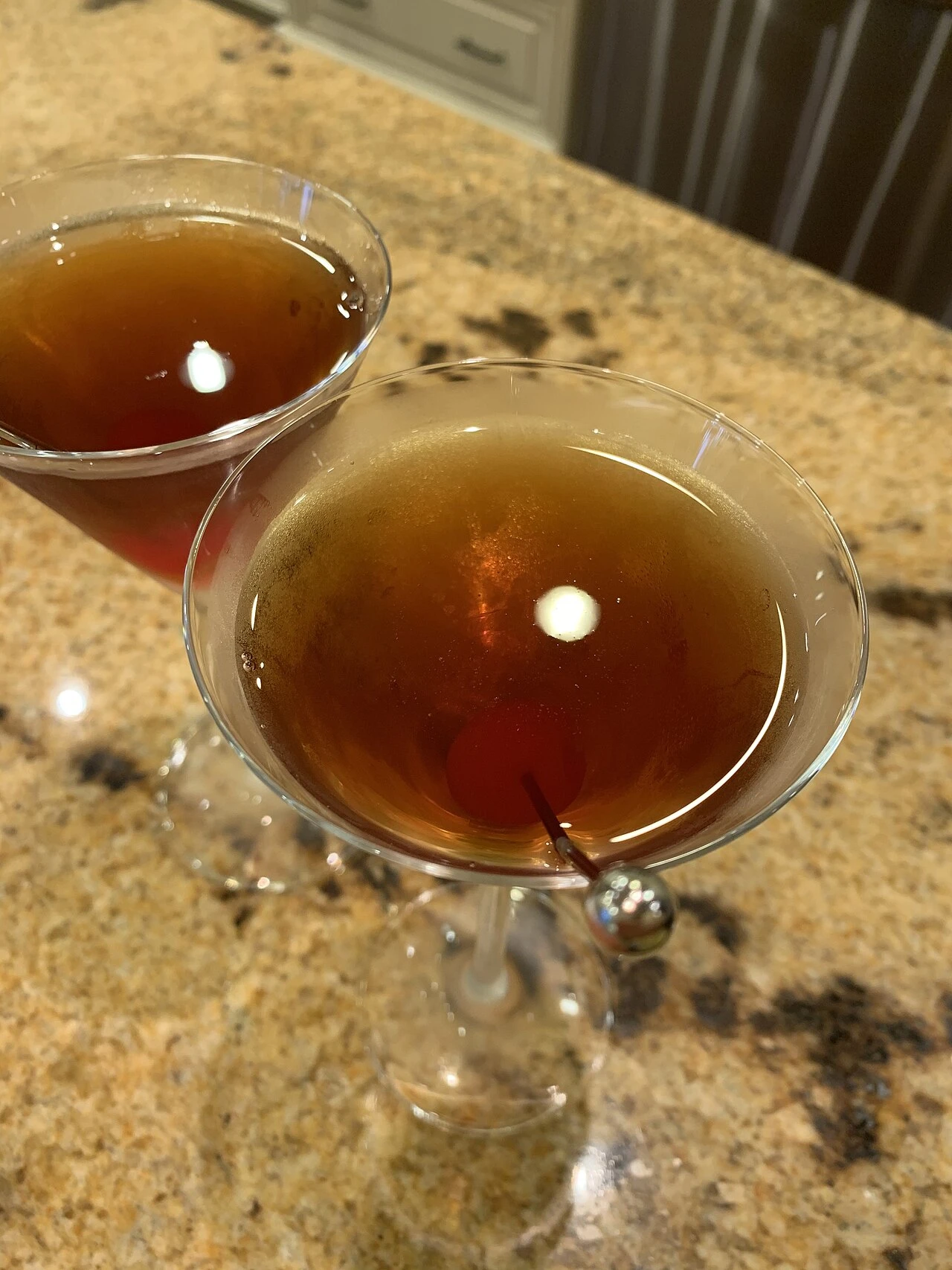
Cold glass. Solid ice. Controlled dilution. Those three details separate a polished Resa Mueller's Improved Manhattan from a warm, sugary muddle.
- Chill the glass. Put a 5–6 oz (150–180 ml) coupe or Nick & Nora glass in the freezer for at least 10 minutes. Aim for a freezer near 0°F (-18°C), or pack the glass with ice and water while you mix.
- Prepare the absinthe rinse. Add 1 teaspoon (5 ml) absinthe to the chilled glass. Rotate until the interior is coated, then discard the excess. You want aroma, not a visible absinthe layer.
- Measure the drink. Add rye, sweet vermouth, maraschino, demerara syrup, Angostura and orange bitters to a mixing glass.
- Add ice. Fill the mixing glass roughly three-quarters full with fresh, hard cubes. Large cracked cubes work better than wet, half-melted refrigerator ice.
- Stir. Move a bar spoon smoothly around the glass for 25–35 seconds. The outside should feel sharply cold. If your ingredients began warm, taste after 30 seconds and continue briefly if the drink still feels hot or syrupy.
- Strain and garnish. Strain into the absinthe-rinsed glass. Express a lemon peel over the surface, rub it lightly around the rim and discard or add it. A drained Luxardo-style cherry gives a richer finish.
Why stir rather than shake? There is no juice, cream or egg to emulsify. Stirring preserves the drink’s glossy texture and clarity while adding predictable water. Shaking makes it colder quickly, but it also traps bubbles and leaves small ice shards.
After testing warm and pre-chilled glasses, the chilled serve remained focused several minutes longer. That matters because Resa Mueller's Improved Manhattan has no ice in the serving glass. If you enjoy mastering repeatable technique, compare this process with the accessible builds in our Madras cocktail recipe.
Pro Tips for a Better Improved Manhattan
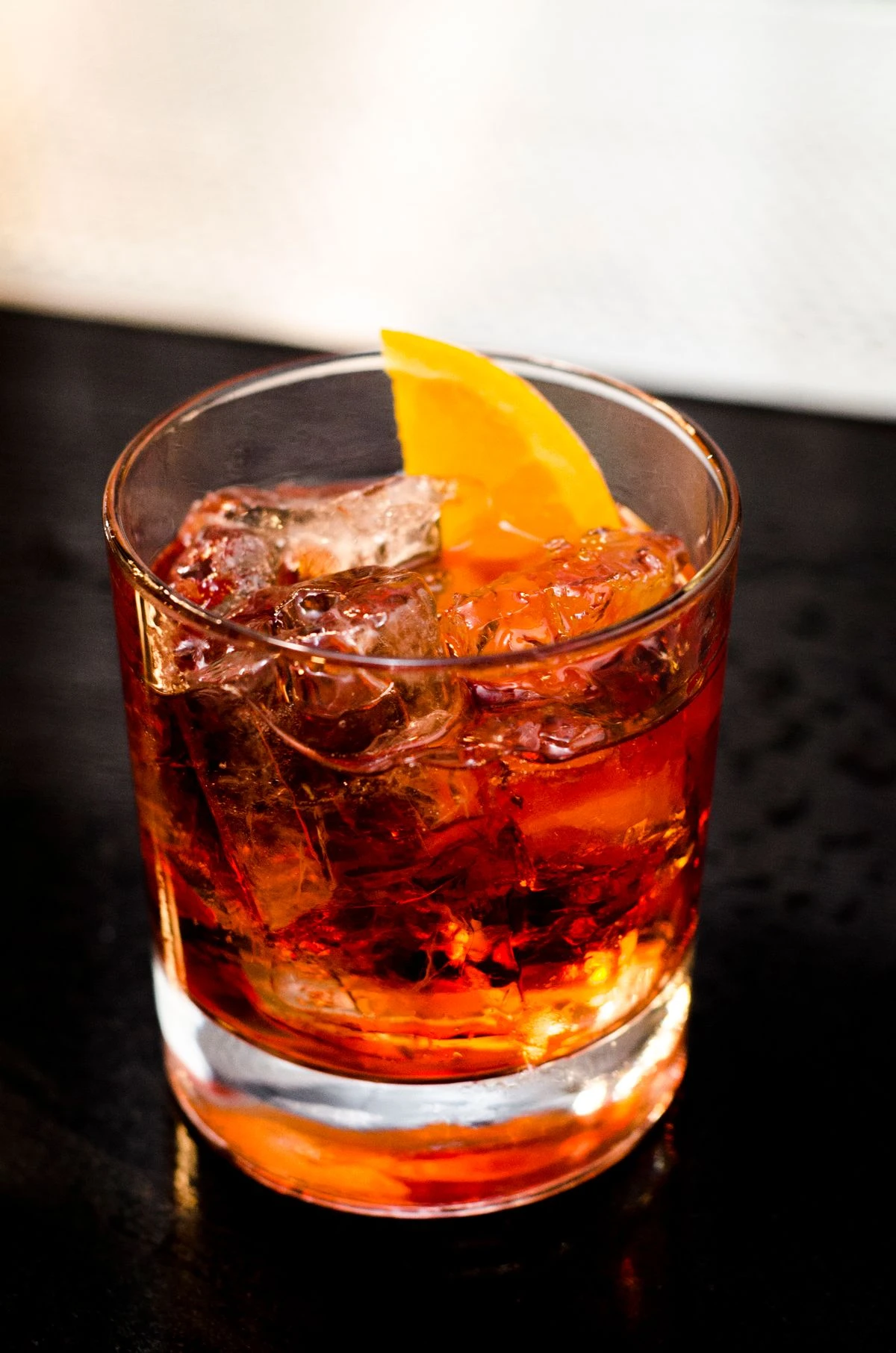
In my experience, the best Resa Mueller's Improved Manhattan begins with ingredient temperature. Refrigerated vermouth and a freezer-cold glass give you more control because the ice is not doing all the cooling. Keep the rye at normal room temperature; there is no need to freeze every bottle.
Taste your vermouth alone. It should smell vinous, herbal and lively. A flat, oxidised bottle can make the finished drink taste like bruised apples or stale herbs. Write the opening date on the label and refrigerate it at 40°F (4°C) or colder. There is no universal day on which vermouth suddenly spoils, so sensory judgment beats a rigid deadline.
After testing both 90- and 100-proof rye, I prefer 100 proof here. The stronger whiskey keeps its peppery centre after roughly 20–25% dilution. If you use an 80-proof rye, reduce the vermouth to 2/3 oz (20 ml) and the syrup to 1/2 teaspoon (2.5 ml).
Control the absinthe with restraint. Pouring the full rinse into the mixing glass turns a supporting aroma into the main event. Coat, rotate, discard. A small atomiser is even more economical: two light sprays usually cover a chilled coupe.
In my experience, lemon peel is the sharper garnish, while a dark cocktail cherry creates a rounder after-dinner drink. Express the peel from about 2 inches (5 cm) above the surface. Never ignite it; fire adds spectacle, but it is unnecessary and introduces avoidable risk.
Finally, taste before straining. Too hot? Stir five seconds longer. Too thin? Your ice may be wet, or you stirred beyond the drink’s useful range. If you want to practise on less intricate standards first, our essential classic cocktail list provides a useful foundation. This recipe rewards precision. Tiny changes are loud.
Resa Mueller's Improved Manhattan Variations
Once you understand the original balance, Resa Mueller's Improved Manhattan becomes an excellent template. Change one variable at a time. Otherwise, you will not know whether the whiskey, vermouth or sweetener improved—or broke—the drink.
Bourbon Improved Manhattan
- 2 oz (60 ml) 100-proof bourbon
- 3/4 oz (22.5 ml) sweet vermouth
- 1/4 oz (7.5 ml) maraschino
- 1/2 teaspoon (2.5 ml) demerara syrup
- Two bitters and an absinthe rinse as above
This is softer and more vanilla-led. Wild Turkey 101 Bourbon keeps enough spice to prevent a candied finish.
Black Improved Manhattan
- 2 oz (60 ml) rye
- 1/2 oz (15 ml) Averna
- 1/4 oz (7.5 ml) sweet vermouth
- 1 barspoon / 1/8 oz (3.75 ml) maraschino
- Bitters and absinthe rinse
Averna, around 29% ABV, introduces cola, citrus and dark herbal notes. Omit the syrup unless you genuinely want a sweeter nightcap.
Perfect Improved Manhattan
- 2 oz (60 ml) rye
- 3/8 oz (11.25 ml) sweet vermouth
- 3/8 oz (11.25 ml) dry vermouth
- 1/4 oz (7.5 ml) maraschino
- Bitters and absinthe rinse
The split vermouth makes a drier, lighter version suited to a spring dinner or pre-theatre drink.
Lower-Proof Manhattan-Inspired Serve
- 1 oz (30 ml) rye
- 1 1/2 oz (45 ml) sweet vermouth
- 1 teaspoon (5 ml) maraschino
- 2 oz (60 ml) chilled soda water
Build over ice in a highball and omit the syrup. It is not the named recipe, but it preserves the herbal direction at lower strength. For more intentionally lighter ideas, explore these low-alcohol cocktail recipes.
Let’s be honest: smoked glasses and elaborate flames rarely improve flavour. I’d skip the theatre and spend that effort on cold glassware, fresh vermouth and exact measurements.
Common Improved Manhattan Mistakes
Using stale vermouth: This is the most common failure. Sweet vermouth is aromatised wine, so oxygen changes it after opening. Refrigerate it, date it and taste before mixing. If it smells dull or sharply oxidised, replace it.
Making the drink too sweet: Maraschino is a liqueur, and rich syrup is concentrated. A casual extra splash of each can bury the rye. Measure the 1/4 oz (7.5 ml) maraschino and 1 teaspoon (5 ml) syrup precisely. With sweeter bourbon, halve or omit the syrup.
Confusing maraschino with cherry syrup: Luxardo- or Maraska-style maraschino is clear, alcoholic and relatively dry. The syrup surrounding cocktail cherries is not equivalent. Swapping them gives Resa Mueller's Improved Manhattan a sticky texture and one-dimensional cherry flavour.
Overdoing absinthe: More is not better. A rinse should leave a fragrant film after the liquid is discarded. If every sip tastes predominantly of liquorice, use an atomiser or rinse with only 1/2 teaspoon (2.5 ml).
Shaking: A shaken Manhattan may be cold, but its aeration and ice flecks work against the silky texture. Stir with enough hard ice. Tiny, wet cubes dilute quickly and unpredictably.
Using a huge glass: A 10 oz (300 ml) Martini glass makes the proper portion look lost and warms it faster. Reach for a 5–6 oz (150–180 ml) coupe or Nick & Nora. Small looks confident here.
Choosing whiskey by price alone: A $70 or £65 rye is not automatically better in a mixed drink. Proof, spice and balance matter more. After testing several styles, I would choose a sturdy $30 bottle over a delicate luxury pour.
Ignoring your own palate: Recipes are starting points. If your first Resa Mueller's Improved Manhattan is too rich, reduce syrup before cutting vermouth; vermouth supplies structure, not just sweetness. Home bartending improves when you record each adjustment.
Food Pairings and Best Occasions
Resa Mueller's Improved Manhattan works best when the setting matches its concentration. This is not a poolside thirst-quencher. It is a compact, aromatic drink for an autumn dinner, a winter holiday gathering, a cocktail-hour conversation or a quiet Friday night when you actually want to notice what is in the glass.
Serve it before dinner with salty, fatty bites. Aged Cheddar, Stilton, roasted almonds and charcuterie soften rye’s heat while the cocktail’s bitterness resets your palate. In the US, try sharp Vermont Cheddar with smoked pecans. In the UK, mature farmhouse Cheddar or blue cheese on oatcakes makes equal sense.
For a main course, pair the drink with roast duck, glazed pork, steak or mushroom dishes. Rye spice handles browned meat; vermouth and maraschino echo sauces containing cherry, dried fruit or warm spice. Keep the food’s sweetness restrained. A heavily sugared barbecue sauce can make the cocktail taste unexpectedly bitter.
Vegetarian pairings deserve more attention. Grilled mushrooms, miso-glazed aubergine, lentil pâté and walnut tart all provide the savoury depth needed beside a strong Manhattan riff. Crispy onions are excellent. So are olives.
After dinner, choose dark chocolate around 65–75% cocoa, cherry tart or a modest slice of fruitcake. I find milk chocolate too sweet beside the demerara and maraschino. Espresso desserts can also overpower the subtler absinthe aroma.
Hosting a larger gathering? Batch the drink with measured water and keep it refrigerated, but rinse each glass just before pouring. For warm-weather travel, choose a less fragile format from our portable picnic drinks guide; an up-served Manhattan is better at home than in a sunny park.
For a playful themed evening, place it alongside recipes from our look at 1990s drinks and where they are now. The contrast shows how cocktail fashions change while good balance remains useful.
How to Batch an Improved Manhattan
Batching Resa Mueller's Improved Manhattan is useful when several guests are arriving at once because it removes measuring and stirring from the busiest part of the evening. For six servings, combine 12 oz (360 ml) rye, 4 1/2 oz (135 ml) sweet vermouth, 1 1/2 oz (45 ml) maraschino liqueur, 1 oz (30 ml) rich demerara syrup, six dashes Angostura bitters and six dashes orange bitters in a clean bottle or covered jug.
Add 4 1/2 oz (135 ml) cold filtered water to reproduce the dilution normally supplied by stirring with ice. Mix thoroughly, seal and refrigerate for at least three hours. The batch should be very cold before service; adding extra ice to each glass would continue diluting the recipe and change its intended texture.
Keep the absinthe separate. Immediately before pouring, rinse each chilled coupe with about 1 teaspoon (5 ml) absinthe and discard the excess. Gently invert or stir the prepared batch because dense syrup can settle during storage, then pour approximately 3 3/4–4 oz (110–120 ml) into each glass. Express a fresh lemon peel over every serving rather than adding peels to the bottle, where prolonged contact can introduce harsh pithy flavours.
A refrigerated batch is best prepared on the day of service. Although the spirits are stable, opened vermouth gradually loses freshness, and garnishes deteriorate even faster. Label the container clearly, keep it away from children and return it to the refrigerator between rounds. Set out chilled water and food alongside the cocktails so guests can pace themselves comfortably.
Quick Reference Cheat Sheet
Use this table when you want Resa Mueller's Improved Manhattan without rereading the full technique. The metric conversions are practical bar measures rather than mathematically fussy laboratory values.
| Item | US measure | UK metric measure | Purpose |
|---|---|---|---|
| Rye whiskey | 2 oz | 60 ml | Spicy base |
| Sweet vermouth | 3/4 oz | 22.5 ml | Wine and herbs |
| Maraschino liqueur | 1/4 oz | 7.5 ml | Floral, nutty lift |
| Rich demerara syrup | 1 tsp / 1/6 oz | 5 ml | Texture and balance |
| Aromatic bitters | 1 dash | About 1 ml | Warm spice |
| Orange bitters | 1 dash | About 1 ml | Citrus definition |
| Absinthe rinse | 1 tsp / 1/6 oz | 5 ml, excess discarded | Anise aroma |
| Stirring time | 25–35 seconds | 25–35 seconds | Chill and dilution |
| Serving glass | 5–6 oz | 150–180 ml | Cold up serve |
Using 100-proof rye, 32% ABV maraschino and a light absinthe rinse, the mixture starts at roughly 38% ABV before ice dilution. A proper stir can bring the served drink to approximately 30–32% ABV. Actual strength changes with brands, rinse retention, ice and stirring time.
That is substantial: approximately two US standard drinks or about 3.5 UK units may be present in one glass. These are estimates, not medical guidance. For evidence-based alcohol information, consult the US National Institute on Alcohol Abuse and Alcoholism and Drinkaware UK.
Enjoy Resa Mueller's Improved Manhattan slowly, avoid driving after drinking and practise responsible drinking. Offer water and food, and never pressure a guest to accept another round.
Ready to organise the bottles and tools behind this recipe? Download our free home bar starter checklist. With a jigger, mixing glass, strainer and dependable rye, your next Improved Manhattan is only one careful stir away.
Ask AI about this article
Pick a prompt, copy it, or open ChatGPT with this article preloaded.
Frequently Asked Questions
What is Resa Mueller's Improved Manhattan?
Resa Mueller's Improved Manhattan is a spirit-forward variation on the classic whiskey, sweet vermouth and bitters formula. The improved treatment adds small amounts of maraschino liqueur and sugar, plus an absinthe rinse for anise aroma. The result remains recognisably a Manhattan, but it tastes rounder, more perfumed.
How do you make Resa Mueller's Improved Manhattan?
Rinse a chilled coupe with absinthe. Stir 2 oz (60 ml) rye, 3/4 oz (22.5 ml) sweet vermouth, 1/4 oz (7.5 ml) maraschino liqueur, 1 teaspoon (5 ml) demerara syrup and two kinds of bitters with ice for 25–35 seconds. Strain into the prepared glass, then garnish with an expressed lemon peel or quality cocktail cherry.
What is the best rye for Resa Mueller's Improved Manhattan?
A spicy rye bottled at 90–100 proof works best because it stays distinct beside vermouth, maraschino and absinthe. Rittenhouse Rye Bottled in Bond is my practical first choice; Wild Turkey 101 Rye and Knob Creek Rye are also robust options. Sazerac Rye makes a softer, more aromatic drink. Choose a bottle you enjoy—the.
Do I need absinthe for an Improved Manhattan?
Absinthe supplies the distinctive anise aroma associated with many improved-style whiskey drinks, but only a rinse is needed. If you do not own a bottle, use Herbsaint or pastis in the same tiny quantity. You can omit it entirely for a pleasant maraschino Manhattan, though the drink will lose some lift and historical i.
Should an Improved Manhattan be shaken or stirred?
Stir it. Every liquid ingredient is clear and there is no citrus, dairy or egg requiring aeration. Stirring chills and dilutes the cocktail while preserving a glossy, dense texture. Shaking introduces bubbles, ice fragments and excess turbulence. Use hard, fresh ice and stir until the mixing glass feels thoroughly cold.
How strong is Resa Mueller's Improved Manhattan?
With 100-proof rye, 32% ABV maraschino and a small absinthe rinse, the mixed drink begins near 38% ABV before dilution. Proper stirring usually brings the served cocktail to roughly 30–32% ABV, depending on ice and temperature. That can represent about two US standard drinks or roughly 3.5 UK units, so it should be tre.
Comments 0
Login to Post comments